
























by InTrieste
In the region of Friuli Venezia Giulia, some of the most striking landscapes lie underground. Beneath the Karst plateau, alpine valleys and forested hillsides is a network of caves, former mines and geological sites that reveal both the natural history of the region and centuries of human activity.
Many of these sites, accessible through guided tours and equipped pathways, have become part of a growing form of tourism that combines geology, archaeology, history and local folklore.
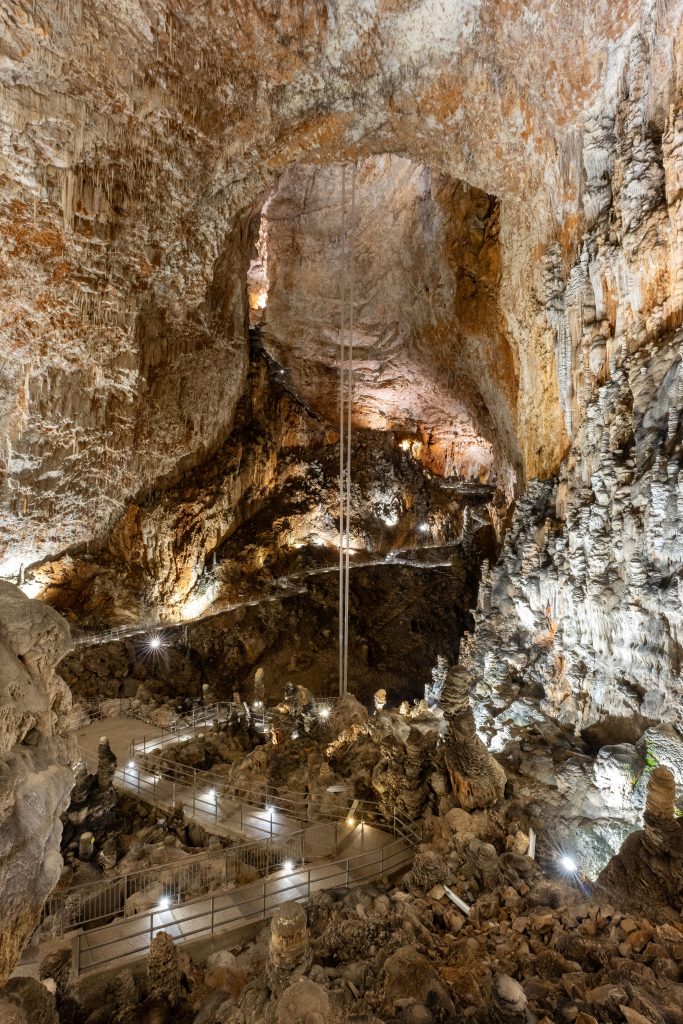
Among the best known is the Grotta Gigante, near Trieste. Recognized by Guinness World Records in 1995 as the world’s largest tourist cave with a single chamber, it descends into a vast cavern nearly 100 meters high, filled with stalactites and stalagmites formed over millennia. The site also includes a speleology museum and educational center.
Elsewhere on the Trieste Karst, the Grotta delle Torri di Slivia is known for its towering limestone formations, some reaching eight meters in height. Visitors descend about 60 meters underground through a staircase hidden in the woods.
In the Torre Valley, the Grotta Nuova di Villanova stretches for more than nine kilometers and is considered Europe’s largest visitable “contact cave,” formed between two different types of rock. Guided routes pass underground streams, calcite formations and narrow canyons.
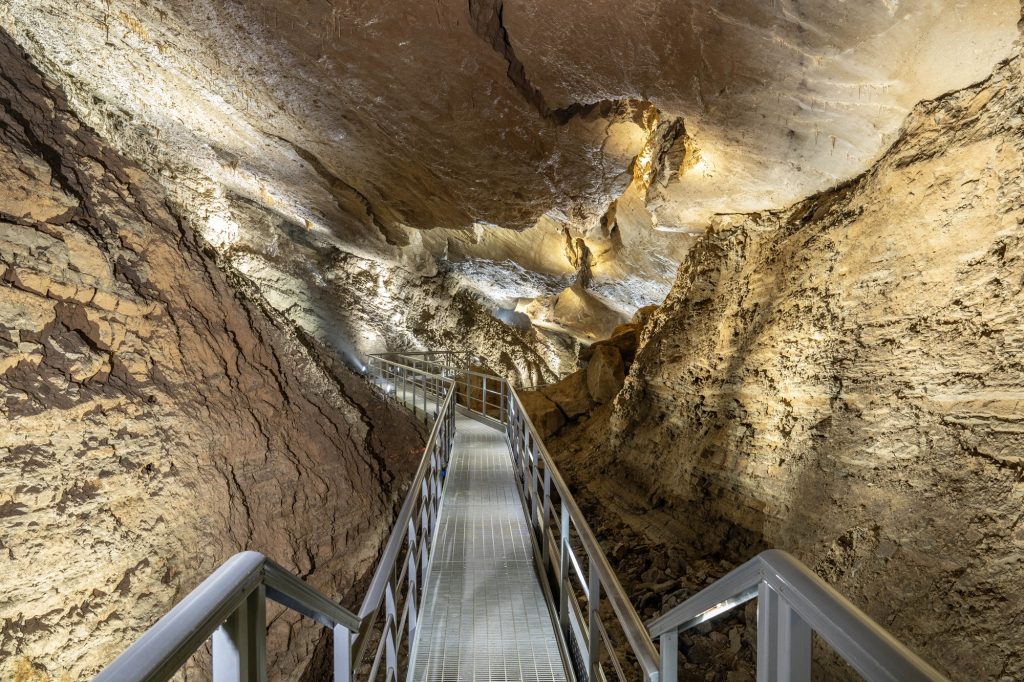
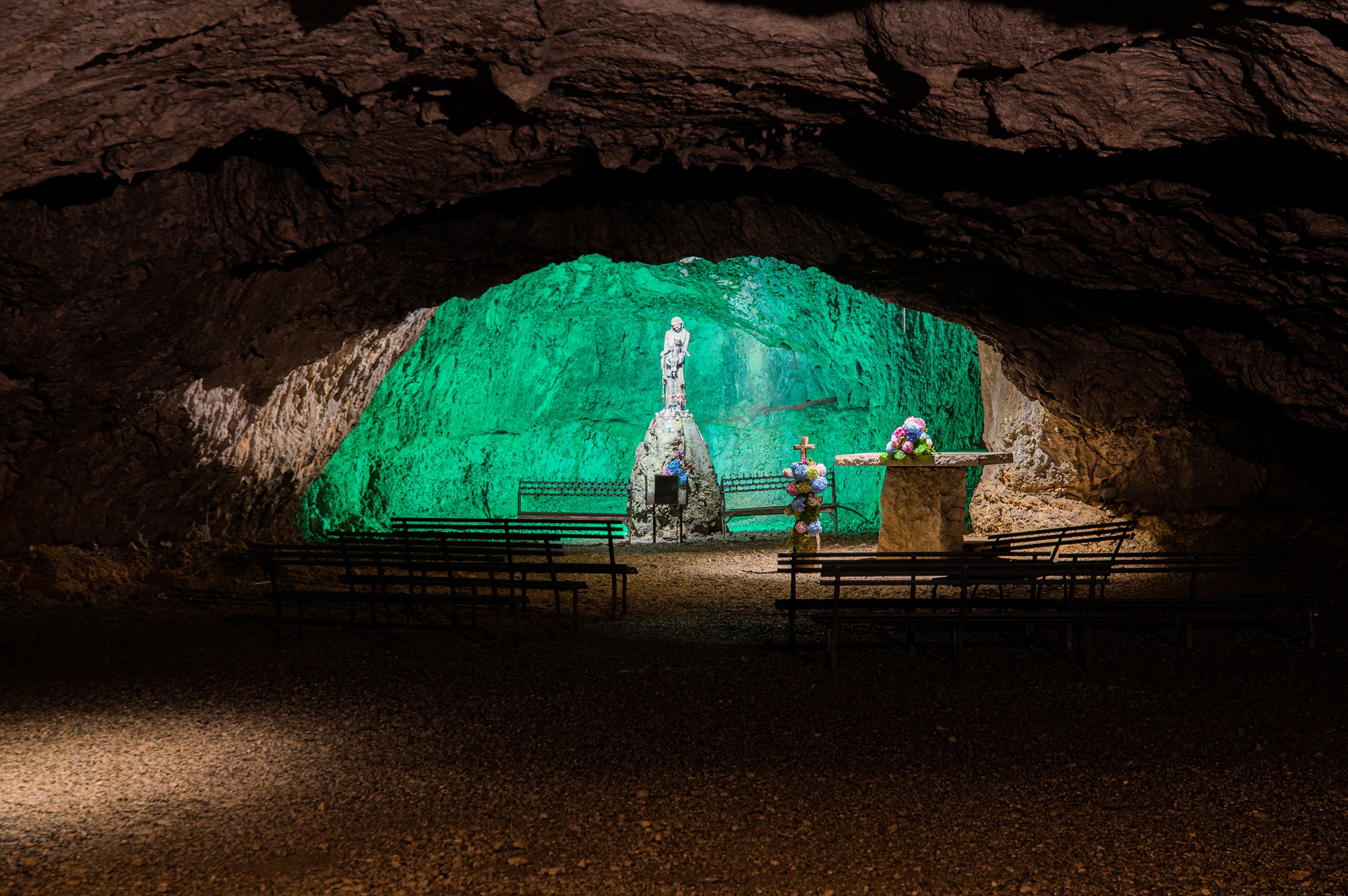
Farther west, the Grotte di Pradis, long frequented since prehistoric times, contain archaeological and paleontological remains. The caves, reached by descending more than 200 steps into a gorge carved by the Cosa stream, also house religious symbols including a crucifix and a statue of the Madonna.
Near Cividale del Friuli, the Grotta di San Giovanni d’Antro blends geology with spirituality and legend. Used as a refuge and place of worship since at least the eighth century, the cave contains a chapel and a wooden altar attributed to a Slovenian workshop. Local folklore tells of a queen who tricked besieging enemies by throwing grain from the cave entrance to suggest abundant food supplies.
The region’s underground heritage also includes former mining sites that preserve the memory of industrial communities. In the Canal del Ferro area, the Mostra della Miniera del Rio Resartico documents the extraction of bituminous rock through photographs, tools and reconstructed tunnels.
In Carnia, the Miniera di Cludinico allows visitors to walk through restored coal mine galleries once connected to a network extending roughly 150 kilometers. A museum displays objects donated by former miners and their families.
Near the Slovenian border, the Miniera di Raibl, once one of Europe’s major lead and zinc mines, has been transformed into a geomining park. Visitors can explore sections of the tunnels aboard a restored mining train while learning about the daily lives of generations of workers.
Some underground sites are tied more closely to myth than industry. The Grotta del Mitreo, near Duino, was used in Roman times for the cult of Mithras and is considered unique in Europe because the sanctuary was established inside a natural cave rather than a man-made chamber.
In Carnia, the Grotta di Attila is linked to the legend that Attila the Hun hid treasure there during his campaigns in northern Italy in the fifth century.
Regional authorities and tourism officials are increasingly coordinating efforts to promote these sites, with new educational projects, accessibility improvements and cultural initiatives planned around the International UNESCO Day of Caves and Karst, observed annually on Sept. 13.
Together, the caves and mines of Friuli Venezia Giulia offer a different perspective on the region — one shaped not by mountain peaks or coastal views, but by the landscapes hidden beneath them.