




















by InTrieste
Twelve young adults of Friulian heritage from Argentina and Brazil arrived in Udine this week to take part in a specialized educational program aimed at strengthening connections between Friuli Venezia Giulia and its global diaspora.
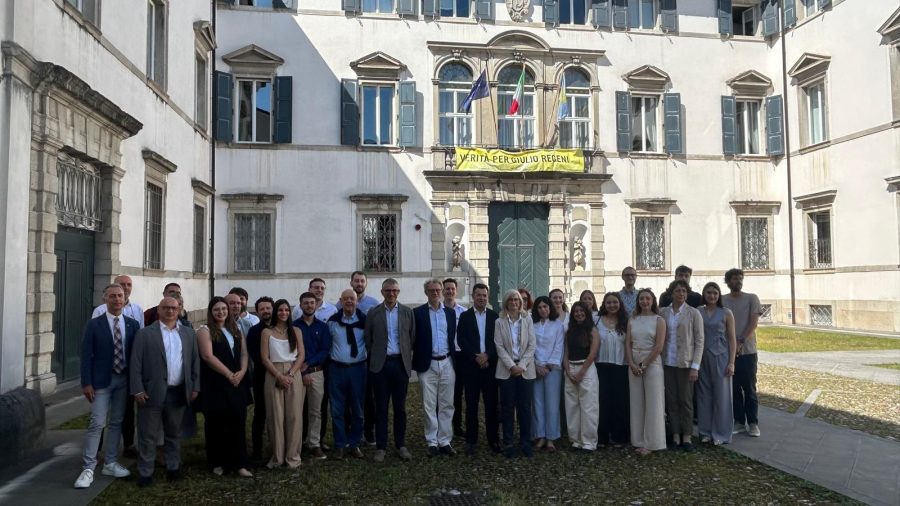
The initiative, now in its 17th edition, was officially inaugurated Sunday at Palazzo Florio, headquarters of the University of Udine. Titled Identity Values and Entrepreneurship, the advanced training course examines the role of the Italian and Friulian languages within expatriate communities in South America while introducing participants to the region’s history, culture and economic landscape.
The program is organized by the University of Udine with support from the regional government and the association Ente Friuli nel Mondo, which works to maintain links between Friulian communities abroad.
Speaking at the opening ceremony, regional councilor Pierpaolo Roberti highlighted the long-standing relationship between Friuli Venezia Giulia and the descendants of emigrants who settled overseas. He noted that the region continues to support initiatives designed to preserve cultural ties and encourage younger generations to engage with their ancestral homeland.
Migration has played a defining role in the history of Friuli Venezia Giulia. Large waves of emigration during the late 19th and early 20th centuries led many residents to seek opportunities abroad, while the postwar period saw further population movements from the area historically known as Venezia Giulia. Today, descendants of those emigrants maintain active cultural associations in numerous countries, particularly in South America.
This year’s edition of the course coincides with the approaching 50th anniversary of the devastating 1976 Friuli earthquake, an event widely regarded as a turning point in the region’s modern development. Roberti described the disaster as the catalyst for a period of reconstruction and transformation that helped shape contemporary Friuli Venezia Giulia.
The University of Udine itself was founded in the aftermath of the earthquake and is often cited as one of the most visible outcomes of the region’s recovery efforts. Over the decades, Friuli Venezia Giulia has evolved from a predominantly rural economy into one characterized by manufacturing, innovation and export-oriented industries.
Regional officials also see the program within the context of broader demographic challenges. Like many parts of Italy, Friuli Venezia Giulia faces declining birth rates and an aging population, creating concerns about future workforce shortages despite relatively strong economic performance.
Supporters of the initiative argue that educational exchanges can help participants develop professional networks while fostering future collaborations between the region and communities abroad.
The 2025 cohort includes ten participants from Argentina and two from Brazil, all of Friulian descent. Five trace their family origins to Gemona del Friuli, one of the towns most severely affected by the 1976 earthquake.
As part of the program, participants will visit several sites significant to the region’s history and culture, including Gemona del Friuli and Venzone, both closely associated with the earthquake and reconstruction efforts. Additional visits are scheduled to the archaeological site of Aquileia, the Tiepolo Galleries, Udine Castle, the Municipality of Udine and the Friulian Philological Society.
The inauguration ceremony was attended by University of Udine Rector Angelo Montanari, Ente Friuli nel Mondo President Franco Iacop and Laura Pani, deputy director of the university’s Department of Humanities and Cultural Heritage.