


















by InTrieste
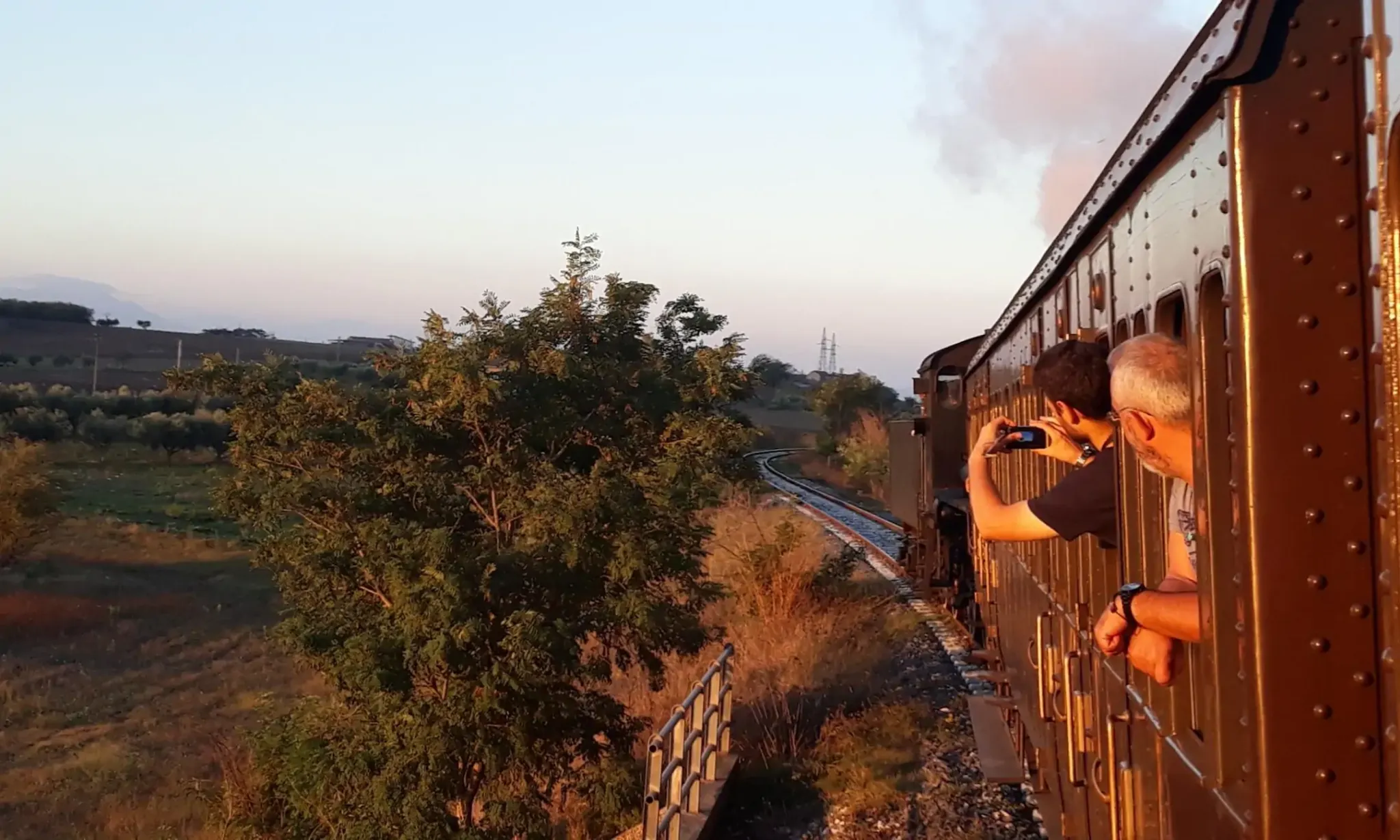
On a spring morning in Friuli Venezia Giulia, the past departs on schedule. The train—its wooden carriages lined with rows of narrow doors that earned it the nickname Centoporte, or “hundred doors”—pulls out of the station with a low hum, carrying passengers not simply across the region but through layers of history, culture and collective memory. Inside, the pace is unhurried, the windows wide open to a landscape that unfolds in vineyards, medieval towns and Alpine foothills.
This is slow tourism, deliberately so.
On April 12, a new season of historic train journeys began across this northeastern corner of Italy, an initiative promoted by the regional government in collaboration with the railway group FS Treni Turistici Italiani and the tourism agency PromoTurismoFVG. Between now and December 20, 38 routes will crisscross the region, linking festivals, cultural landmarks and lesser-known destinations in a program that blends heritage preservation with contemporary travel.
But this year’s journeys carry particular weight.
A Region Remembers
Nearly every itinerary in 2026 is shaped, in some way, by the 50th anniversary of the devastating 1976 Friuli earthquake—a disaster that killed nearly 1,000 people and left entire towns in ruins. The trains serve as moving observatories of that history, stopping in places where reconstruction became a model of resilience.
In Gemona del Friuli, one of the hardest-hit communities, the scars of the earthquake have long since given way to carefully restored stone buildings and a renewed civic life. Nearby Venzone, often cited as a triumph of post-disaster reconstruction, rises again in meticulous detail, its medieval walls rebuilt stone by stone. Other stops trace similar arcs of recovery, from the hilltop fortress of Osoppo to the cultural centers of Cividale del Friuli and San Daniele del Friuli.
Taken together, the routes form a kind of narrative map—one that charts not only destruction, but the enduring cohesion of the communities that rebuilt.
Toward a Cultural Future
If the trains look backward, they also gesture ahead. Several new itineraries in 2026 focus on Pordenone, which is preparing to become Italy’s Capital of Culture in 2027. One August journey will bring passengers directly into the city for guided walks and cultural visits, while another will coincide with Pordenonelegge, the internationally known literary festival that transforms the city each year into a hub of readings and debate.
The juxtaposition is intentional: a region that has rebuilt itself now positioning its cultural identity on a national stage.
Tracks Through Culture and Landscape
The appeal of these historic trains lies as much in their destinations as in the experience itself. Some routes are thematic, weaving together UNESCO-listed sites like Aquileia, Palmanova and Cividale, while others follow the shifting identities of borderlands or delve into the region’s folk traditions.
On July 5, a train will carry passengers to Folkest, an international folk music festival, while another journey climbs toward the dramatic scenery of the Friulian Dolomites, passing through forests and valleys to reach remote villages like Barcis. Late summer brings medieval-themed itineraries to towns such as Sesto al Reghena and Valvasone, where festivals revive centuries-old traditions.
Wine and food, inevitably, are part of the journey. A September route to Cormons coincides with the Festa dell’Uva, pairing vineyard visits with a stop at the ancient Abbey of Rosazzo.
And as the year draws to a close, the trains take on a festive air, with routes dedicated to Christmas markets, nativity scenes and even the Alpine folklore of the Krampus.
A Popular Return to the Rails
The program’s growing popularity suggests a shift in how travelers—both local and foreign—are choosing to experience the region. In 2025, nearly 13,400 passengers boarded these trains, a 20 percent increase from the previous year, with many departures selling out.
Part of the appeal is accessibility. Tickets are modestly priced, starting at €10 round-trip for standard routes, and often include guided tours and activities. Bicycles are welcome on board, encouraging passengers to continue exploring beyond the tracks.
Yet comfort is not the point. These restored carriages, many dating to the 1930s, lack modern amenities like air conditioning. The experience asks for a degree of adjustment—open windows instead of climate control, the rhythm of the rails instead of digital distractions.
It is, in other words, a different way of traveling.
The Journey as Destination
On a recent Sunday, a train bound for Trieste carried passengers from inland towns to the Adriatic coast. The itinerary included visits to the city’s maritime museum and its historic hydrodynamic power station, reminders of a port that once connected Central Europe to the wider world.
For many on board, however, the destination was secondary. Families leaned out of windows, tracing the contours of the landscape; older passengers recalled journeys from decades past; children moved from carriage to carriage, discovering the novelty of a train that felt almost like a museum in motion.
In Friuli Venezia Giulia, the past is not static. It moves—slowly, deliberately—along tracks that connect memory with the present, and perhaps, with what comes next.