














video report by Maximiliano Crocamo
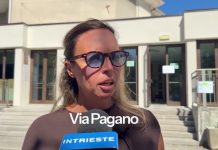
Interviews: Cristina Amirante , FVG Councilor for Infrastructure and Territory; Barbara Zilli, FVG Councilor for Finance;Mario Anzil, Vice President and Councilor for Culture and Sports
Officials in Friuli Venezia Giulia region said on Friday that projects financed through Italy’s National Recovery and Resilience Plan (PNRR) remain on schedule, with roughly 70% of allocated funding already spent ahead of the program’s Dec. 31, 2026 deadline.
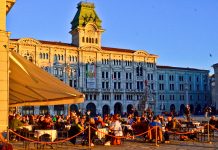
Presenting the latest figures in Trieste, Regional Finance Councilor Barbara Zilli, alongside Deputy Governor Mario Anzil and regional councilors Cristina Amirante, Sebastiano Callari and Stefano Zannier, said the region had activated more than €3.4 billion in investments, including €2.8 billion from the European Union-backed recovery plan and €607 million from Italy’s complementary national fund.
According to regional data, 13,911 projects had been registered as of July 2026. By the end of 2025, 73% of planned interventions had been completed, while spending had reached about 70% of total allocated resources.
Regional officials said Friuli Venezia Giulia ranks among Italy’s leading regions in meeting implementation deadlines and payment targets for PNRR-funded projects.
The investment program spans infrastructure, education, healthcare, agriculture, culture, environmental sustainability and digitalization.
Among the completed or ongoing projects, the region reported the construction of 38.9 kilometers (24.2 miles) of cycling routes, the purchase of 20 electric buses and three zero-emission trains, upgrades to the Udine-Cividale railway line, and the renovation of 826 public housing units through the complementary plan.
In education, funding has supported work on 46 nurseries and preschools, renovations of 56 school buildings and the construction of six new primary schools. Employment initiatives financed through the recovery plan have involved 111,000 people under Italy’s GOL workforce program, with 27,000 completing training, while eight employment centers have been modernized.
Healthcare investments totaling €201.7 million include 23 community health centers, seven community hospitals, 12 territorial operations centers, the replacement of 45 major medical devices, and expanded home care services for nearly 18,000 residents aged 65 and older.
Agricultural funding has provided €5.2 million to support 250 farms with precision farming equipment, more efficient irrigation systems and electric vehicles, while also financing upgrades to two olive oil mills.
Officials also highlighted restoration work on 96 rural heritage sites, regeneration projects in Gorizia’s Borgo Castello and four historic villages, environmental remediation projects, investments in wastewater infrastructure, and a €15.8 million hydrogen valley initiative. Regional universities are receiving €28 million through the iNEST innovation ecosystem.
On digital transformation, the region reported €12.2 million in investments focused on cybersecurity and digital public services. Officials said 135 digital assistance centers have helped more than 60,000 residents, while the national “1,000 Experts” initiative has reduced average administrative processing times by 47% and cut procedural backlogs by 87%, according to regional figures.