

















by Alessadra Ressa
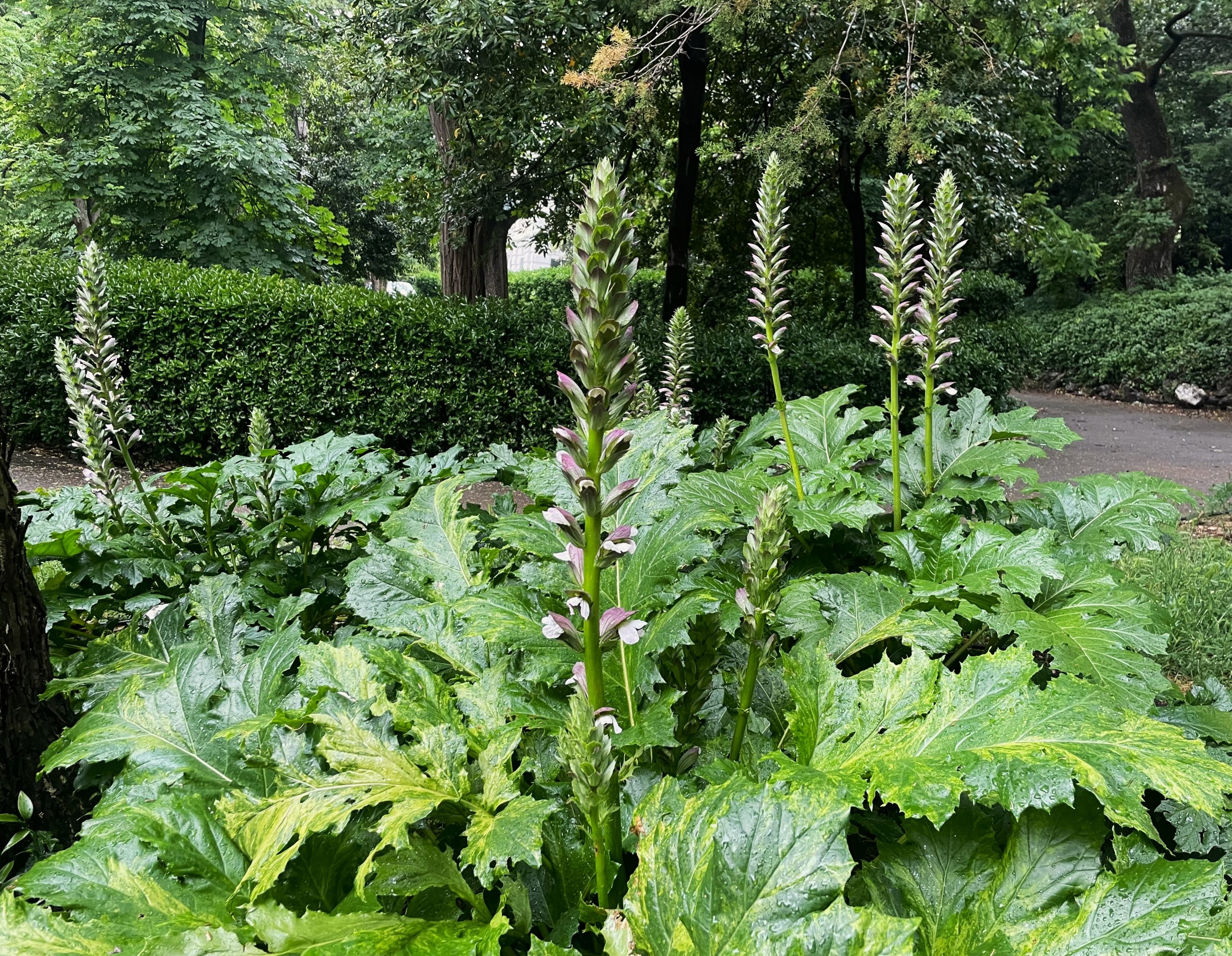
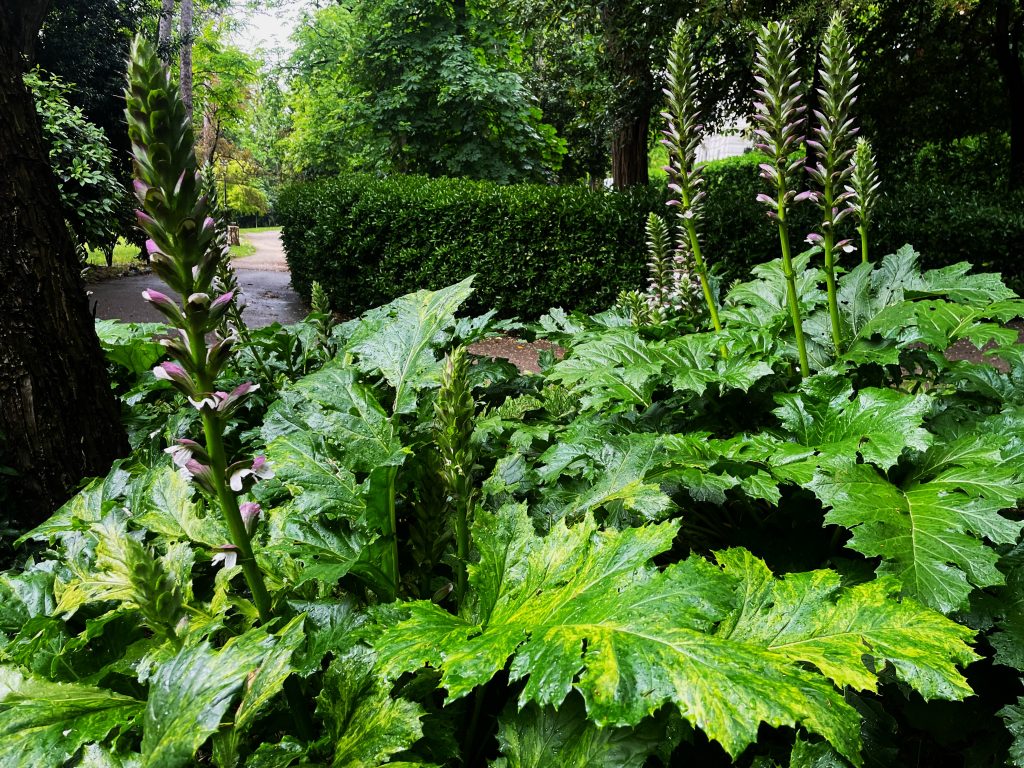
These days the park of the former San Giovanni psychiatric hospital in Trieste is once again filled with the striking blooms of the acanthus plant, one of the most iconic ornamental species of the Mediterranean world. Along the paths of the vast public park, now considered one of the city’s most beloved green spaces, the plant’s large glossy leaves and tall violet-white flower spikes stand out among roses, ancient trees and spring vegetation.
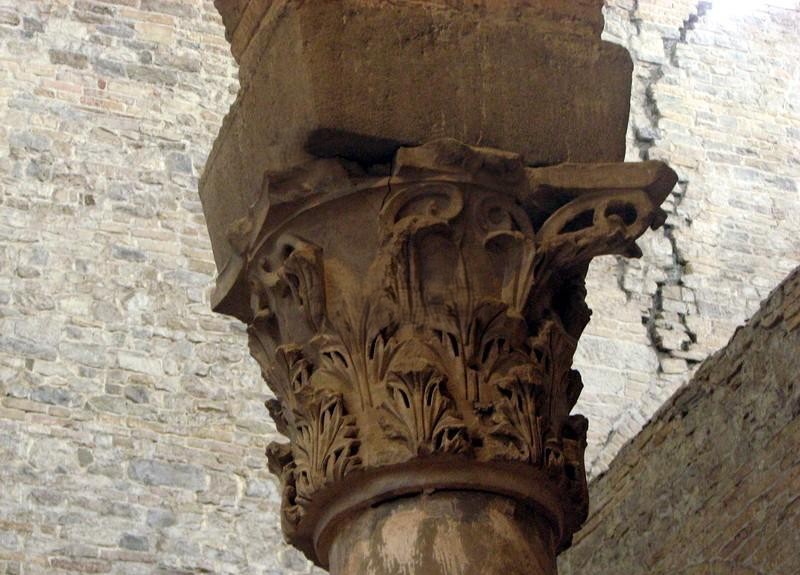
But the acanthus is far more than a decorative plant. For over two thousand years it has been deeply connected to the history of classical art and architecture. Its distinctive curled leaves inspired the famous Corinthian capitals of ancient Greece and Rome, becoming one of the most recognizable decorative motifs of the classical world.
According to the Roman architect Vitruvius, the sculptor Callimachus created the first Corinthian capital after seeing an acanthus plant growing around a funerary basket in ancient Corinth. From that moment onward, acanthus leaves became a symbol of elegance and rebirth in architecture, appearing on temples, monuments, churches and palaces throughout Europe.
Trieste itself preserves many examples of these decorations. Acanthus motifs can still be seen carved into Roman capitals and archaeological fragments displayed around the hill of San Giusto and inside its museums, where the city’s Roman past is still clearly visible among columns, inscriptions and stone ornaments. The curled leaves remain one of the defining elements of classical decoration preserved in the archaeological collections of Trieste.
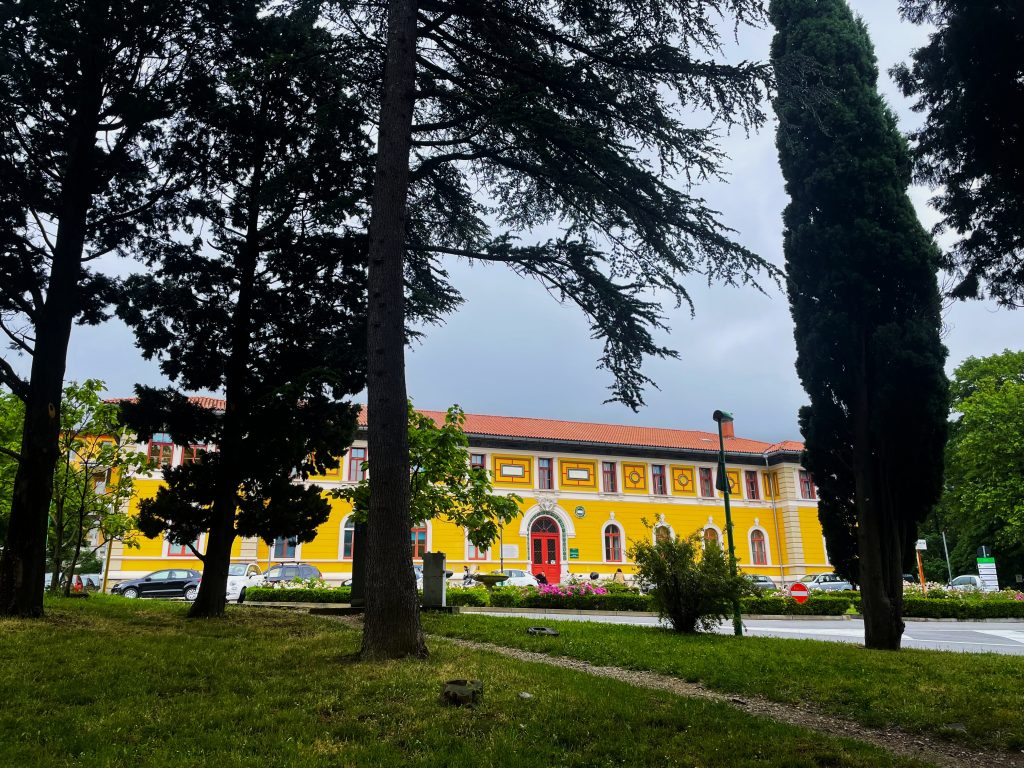
Walking today through San Giovanni Park, the blooming acanthus creates an unexpected link between nature and history. In a place transformed from a former asylum into a public park and cultural space after Franco Basaglia’s reforms, the plant quietly reconnects the city with its ancient Mediterranean roots. Beneath the May sunlight, its leaves and flowers continue to evoke the same shapes once carved into the stone capitals of Roman Trieste.