






















by Nina Vaclavikova
Interview: Guido Alfani, Bocconi professor and author of As Gods Among Men: A History of the Rich in the West
At a time when widening inequality is reshaping political and economic debates across the globe, scholars at the University of Trieste gathered this week to examine a question with deep historical roots: how have the wealthy fared during times of crisis?“
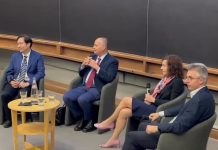
Held Thursday morning in the university’s Sala Bachelet, the event — titled “I ricchi in tempo di crisi. Dalla peste nera al Covid-19 e oltre” (“The Rich in Times of Crisis: From the Black Death to Covid-19 and Beyond”) — brought together historians and political thinkers to discuss the evolution of economic inequality from medieval Europe to the present day.
The discussion was organized by the research group “Le scienze sociali di fronte alle sfide della crisi climatica e della transizione ecologica” (“Social Sciences in the Face of the Challenges of Climate Crisis and Ecological Transition”), part of the Department of Political and Social Sciences.
Among the speakers was Guido Alfani, professor of economic history at Bocconi University and author of As Gods Among Men: A History of the Rich in the West, a study tracing the role and influence of wealth in Western societies over centuries. The book has attracted international attention and has been discussed by outlets including The New York Times and BBC.
Joining Alfani were Fabio Andreozzi, professor of economic history, and Fabio Raimondi, professor of history of political thought, both from the University of Trieste.
In an interview following the event, Professor Alfani said that crises have historically tended to amplify existing inequalities rather than erase them. While catastrophic events such as the Black Death temporarily altered the distribution of wealth in Europe, he argued that modern crises often strengthen the position of those who already possess economic power.
“The idea that crises automatically level society is largely a myth,” Alfani said. “In many cases, the wealthy are able to protect themselves more effectively and recover more quickly.”
He noted that the COVID-19 pandemic exposed structural vulnerabilities already present in contemporary economies, from unequal access to healthcare and education to disparities in remote work opportunities and financial resilience.
The conversation also touched on climate change and the ecological transition, themes increasingly linked to debates about wealth concentration and social justice. Participants discussed whether future environmental crises could deepen social divides unless accompanied by broad public investment and inclusive policymaking.
For students and attendees, the event offered a rare opportunity to place today’s economic anxieties within a longer historical framework — one stretching from medieval pandemics to the uncertainties of the 21st century.