


















by Nina Vaclavikova
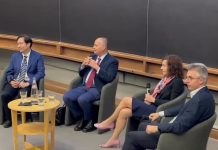
Interviews: Elisa Lodi, Trieste Councilor for Real Estate Heritage and Sports; Luca Foti, CEO of Monticolo&Foti
The city has unveiled progress on the renovation of the lower secondary school “G. Caprin,” a notable example of postwar Italian architecture designed between 1968 and 1972 by Aldo Rossi with Giorgio Grassi, Francesco Tentori and Renzo Agosto.
Long considered both an architectural and civic landmark, the building reflects Rossi’s view of architecture as a public instrument shaping urban identity. Known for its inward-facing layout, use of Aurisina stone and exposed concrete, and interior galleries lit by circular skylights, the school occupies a significant place in Trieste’s cultural landscape.
City officials said the restoration is part of a broader effort to modernize school infrastructure while preserving historically important structures. The project focuses on improving safety, energy efficiency and the quality of learning spaces without altering the building’s original design.
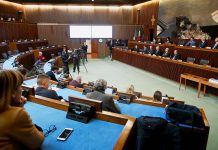
At a press conference on Friday, Mayor Roberto Dipiazza and local officials outlined the status of the work, expressing satisfaction with progress. The first phase, financed through Italy’s National Recovery and Resilience Plan, was completed on March 31, meeting deadlines and funding requirements.
The overall investment totals about €10.4 million, including €6.2 million from national recovery funds and additional regional financing. To date, more than €8.5 million in construction work has been carried out.
The renovation includes seismic upgrades, fire safety compliance, new electrical and mechanical systems, and energy-efficiency improvements such as window replacement and enhanced insulation. A long-troubled gymnasium has also been fully restored and designed with independent access, allowing use beyond school hours.
A second phase of work is underway to address additional needs identified during construction, with officials saying the adjustments will not affect the project’s overall scope or funding.
Students, temporarily relocated during the works, are expected to return for the start of the 2026–27 school year.
Officials described the project as a balance between modernization and preservation — restoring a historic school while adapting it to contemporary standards and community use.