










by InTrieste
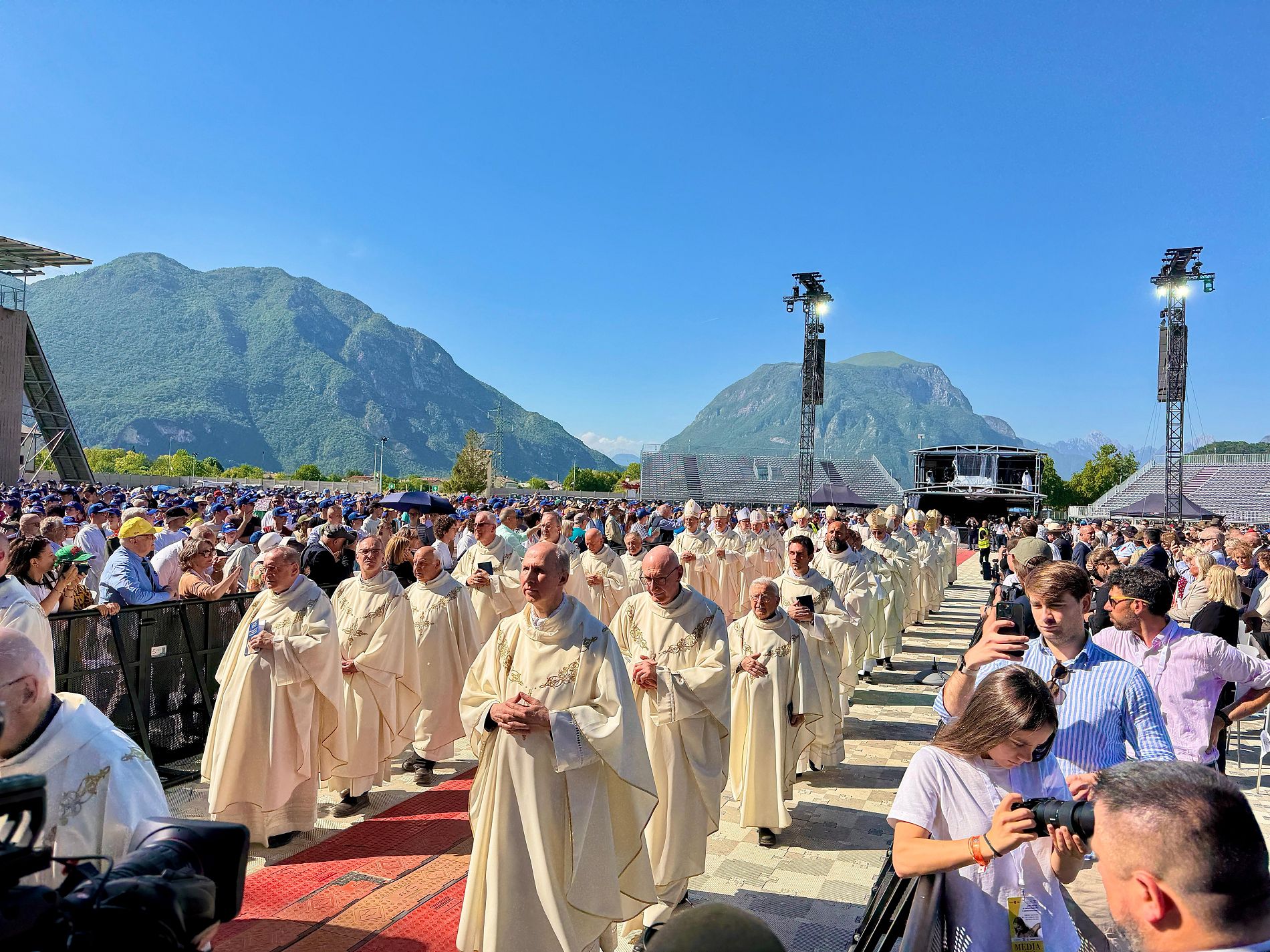
Beneath a wide spring sky and in the shadow of a newly restored military barracks, hundreds gathered this Sunday for a solemn Mass that blended remembrance with a forward-looking message of resilience, marking the 50th anniversary of the devastating 1976 Friuli earthquake.
The ceremony, held at the Goi-Pantanali barracks, drew an extraordinary assembly of clergy and faithful. It was presided over by Matteo Zuppi, president of the Italian Bishops’ Conference, and included nearly 200 concelebrating priests and 19 bishops, among them Giuseppe Betori. Messages of unity extended beyond Italy’s borders, with bishops from Slovenia and Austria also in attendance, underscoring the international dimension of both the tragedy and the recovery that followed.
The Mass served as the opening moment of a week of commemorations leading up to May 6, the date when a powerful earthquake struck northeastern Italy in 1976, killing nearly 1,000 people and leaving tens of thousands homeless. In the decades since, the region of Friuli Venezia Giulia has often been cited as a model for post-disaster reconstruction, rebuilding its towns with a combination of local determination and international support.
In his homily, Cardinal Zuppi invoked the words of the late Archbishop Alfredo Battisti, who, in the aftermath of the earthquake, urged survivors to reject hatred and violence in favor of compassion. “Love is the only thing that matters,” Battisti had said — a message Zuppi echoed as both remembrance and exhortation.
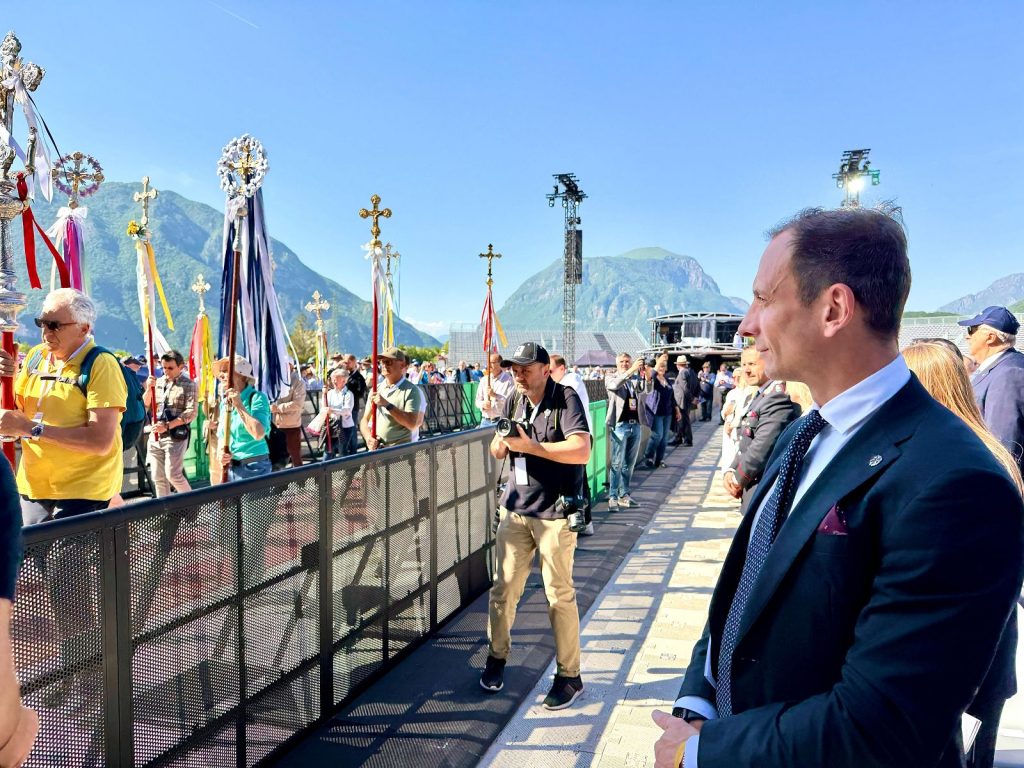
Among those in attendance was the governor of the Friuli Venezia Giulia region, Massimiliano Fedriga, who described the ceremony as “the highest moment” of tribute to the victims and to the collective effort that followed.
“This land transformed tragedy into an international model of rebirth,” Fedriga said after the Mass, pointing to the solidarity that defined the region’s recovery. He recalled how aid arrived not only from across Italy but from abroad, and how entire communities were rebuilt through partnerships with towns in other regions.
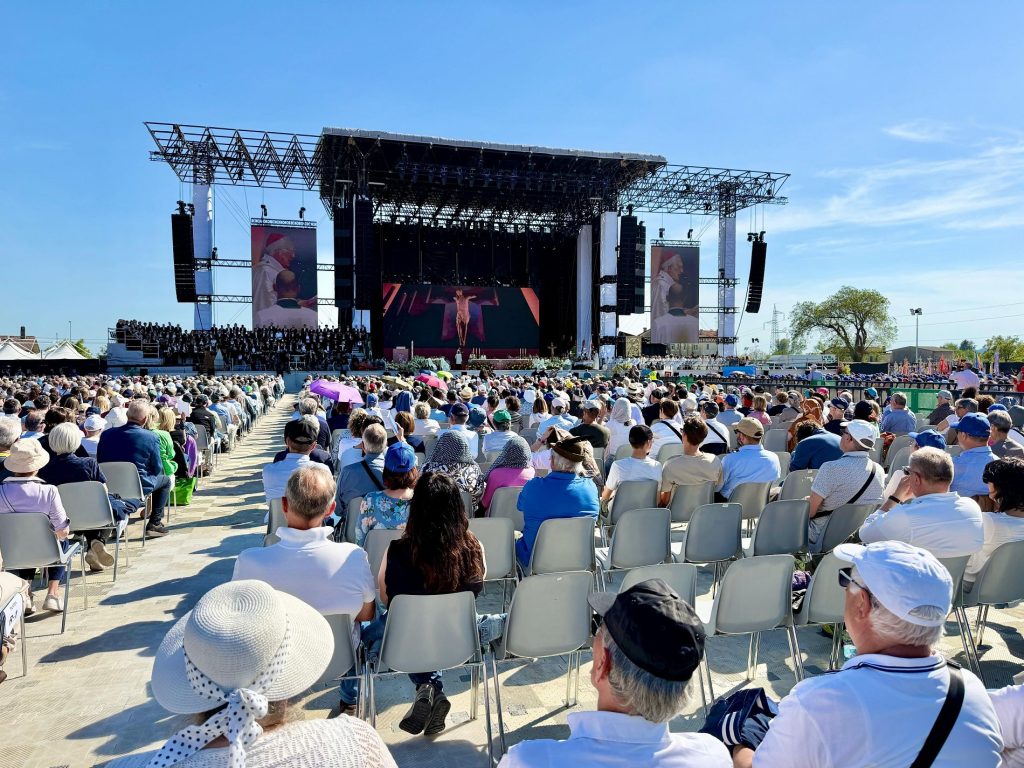
The scale of Sunday’s ceremony reflected that enduring spirit. A choir of 200 voices, accompanied by a 30-piece orchestra, filled the open space with music, while delegations from dozens of “twin” communities — municipalities that helped rebuild Friuli after the earthquake — returned to reconnect with the people they once supported.
For many, the memory of the disaster remains inseparable from the story of renewal. Fedriga highlighted a passage from Zuppi’s homily that focused on the Friulian word “fruts,” meaning children — a symbol, he said, of continuity and hope. It was the younger generation, those who lived through the quake as children, who carried forward the determination to rebuild.
“The shock could have crushed hope,” Fedriga said. “Instead, it was the energy and resilience of the young that gave adults the strength to begin again.”
Regional officials emphasized both the symbolic and practical effort behind the event. Riccardo Riccardi noted the logistical complexity of hosting thousands at the Goi-Pantanali site, which recently underwent a €2 million renovation. Barbara Zilli described the commemoration as a moment of shared gratitude — not only toward those who lost their lives, but toward the many who came to Friuli’s aid in its darkest hours.
As the anniversary week begins, the message from Gemona is clear: the memory of destruction endures, but so too does the example of what followed — a reconstruction rooted not just in infrastructure, but in solidarity, community, and an enduring belief in renewal.