












by InTrieste
An initiative aimed at strengthening ties between the European Union and the countries of Southeast Europe was formally introduced in Trieste on Monday, marking the Friuli Venezia Giulia’s capital growing role as a forum for regional dialogue.
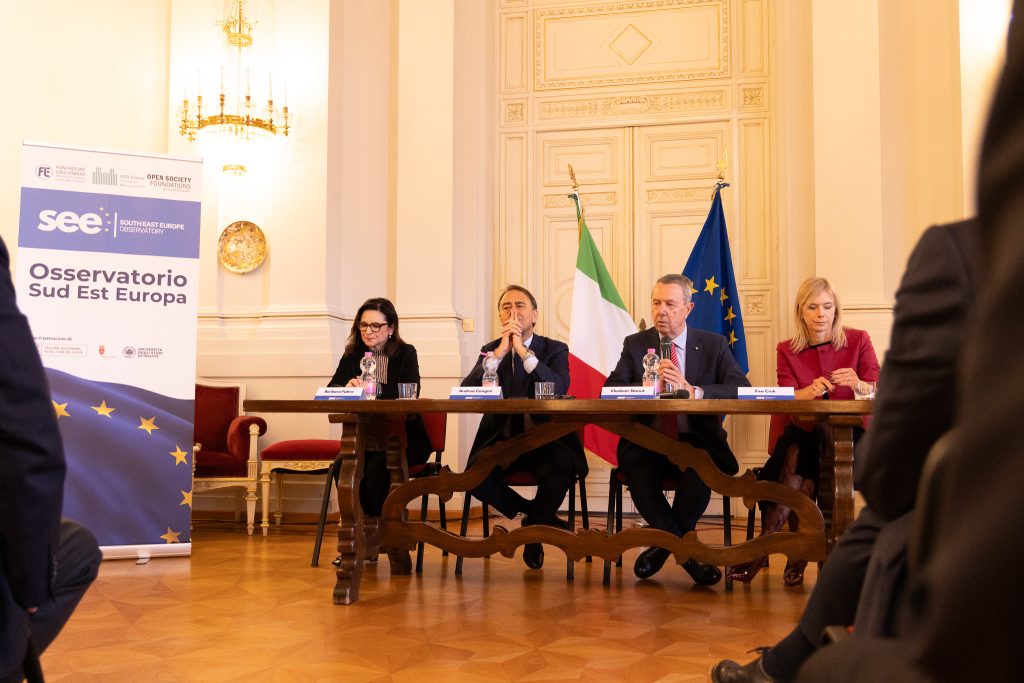
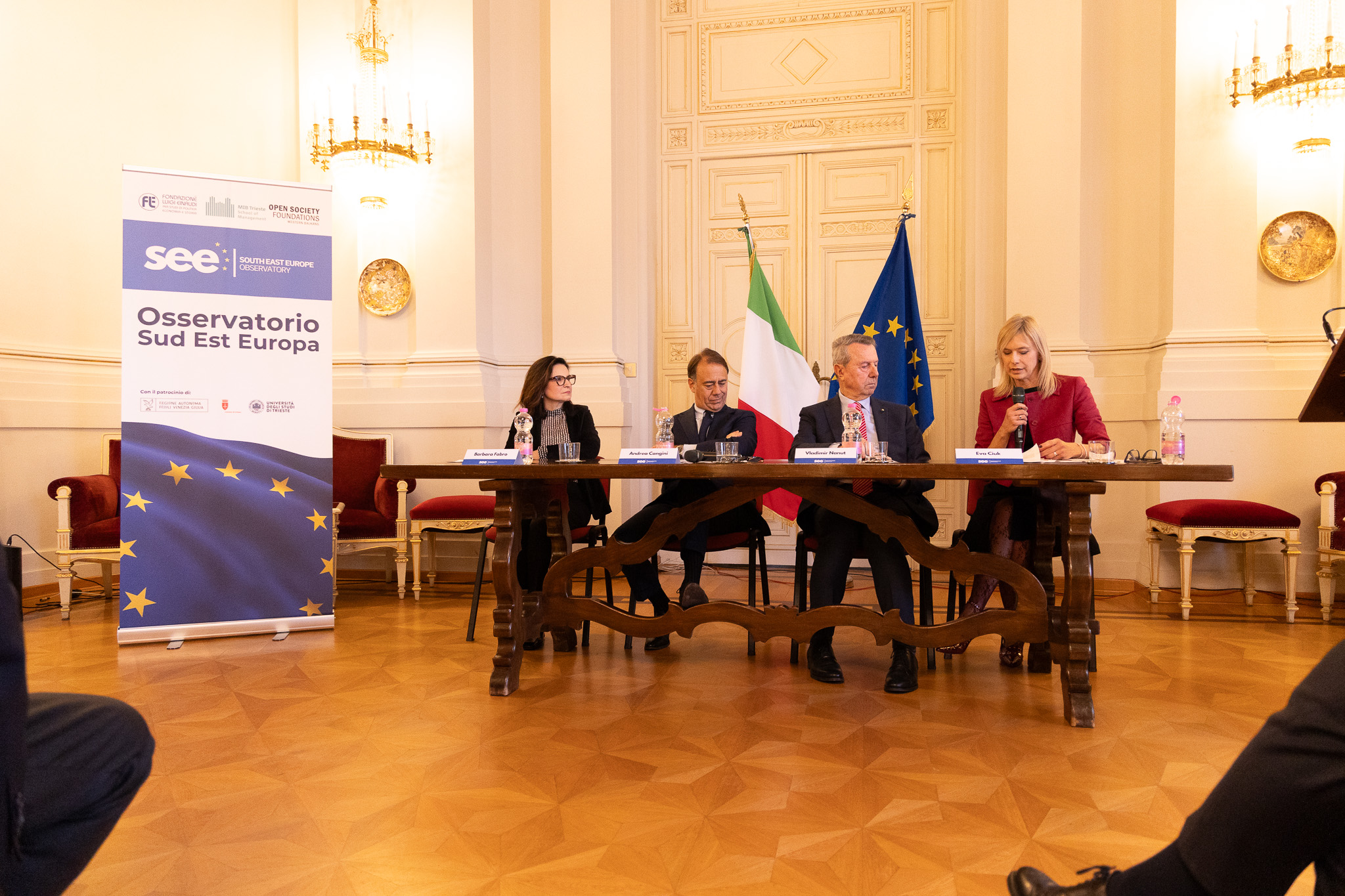
The Southeast Europe Observatory, known as SEE, was presented at the Prefecture of Trieste following its debut in Rome. The project is a partnership between the Fondazione Luigi Einaudi and the MIB Trieste School of Management, with support from Open Society Foundations and Generali. The observatory will be headquartered in Trieste, a port city long seen as a crossroads between Italy, Central Europe and the Balkans.
Organizers say the observatory’s mission is to encourage dialogue among countries in Southeast Europe, promote exchanges between political leaders and civil society, and contribute to the European Union accession process for Balkan nations that have yet to join the bloc.
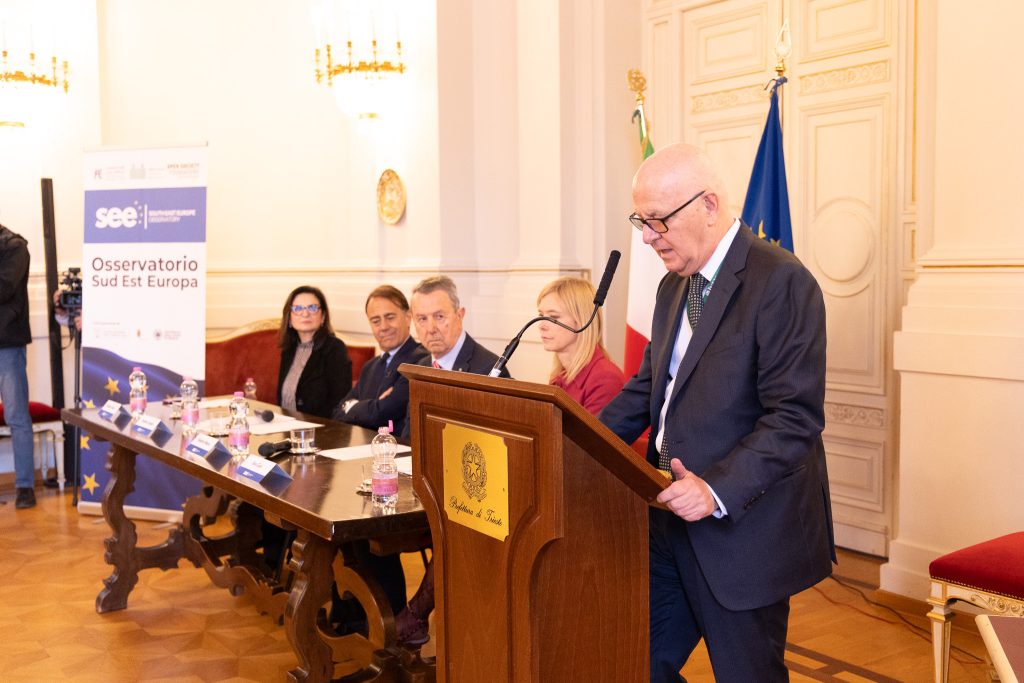
Andrea Cangini, secretary general of the Fondazione Luigi Einaudi and director of the SEE Observatory, said the project draws inspiration from the ideas of the Italian economist and statesman Luigi Einaudi, who viewed European integration as a safeguard against the resurgence of nationalism and conflict. Cangini warned that the Balkan region remains vulnerable to political fragmentation, disinformation and external influence, particularly from China and Russia, and argued that accelerating integration into the European Union is in the interest not only of Balkan countries but of Italy and the broader E.U.
The observatory’s program will include research initiatives, policy discussions and educational projects. Among its first undertakings is “Liberal Dialogues,” a series of lectures and public discussions organized in collaboration with local academics in several Balkan capitals. The initiative is intended to introduce young participants to liberal political thought, market economics, individual rights, media freedom and the European integration process.
Vladimir Nanut, founder and chief executive of the MIB Trieste School of Management, said the school has, since its establishment in 1988, positioned itself as a link between Italy and Central and Eastern Europe. The observatory, he said, builds on that tradition by combining academic training with engagement between younger generations and European businesses.
Giuseppe Benedetto, president of the Fondazione Luigi Einaudi, described the observatory as a strategic investment in European security and stability. He said that without a shared political culture grounded in liberal democratic principles, integration risks becoming a purely technical exercise.
Trieste’s mayor, Roberto Dipiazza, emphasized the symbolic significance of locating the observatory in the city, citing Trieste’s history as a meeting point of cultures and trade routes. A united Europe, he said, remains essential to long-term stability and economic development.
Barbara Fabro, senior executive officer of the Central European Initiative, also expressed support for the project, noting that her organization shares similar priorities in promoting regional cooperation, institutional dialogue and European integration. She said collaboration could focus in particular on youth engagement and educational policies.
Beginning in 2026, the observatory plans to host an annual international conference in Trieste dedicated to questions of European enlargement and the future of the European Union.
According to Eva Ciuk, coordinator of the observatory’s scientific committee, the Liberal Dialogues series will begin this month. The first event is scheduled for March 10 in Trieste at the MIB Trieste School of Management and will examine the roots of liberal political thought and the contribution of the Einaudi tradition to European integration. Subsequent meetings are planned in Ljubljana on March 31, Belgrade on April 14, Podgorica on May 5 and Tirana on May 19, each focusing on themes including liberal economics, media and rights, European constitutionalism and youth entrepreneurship.
Organizers describe the program as the first phase of a broader effort that will combine research, training and institutional dialogue in support of a stronger European perspective for the Balkan region.