





















by InTrieste
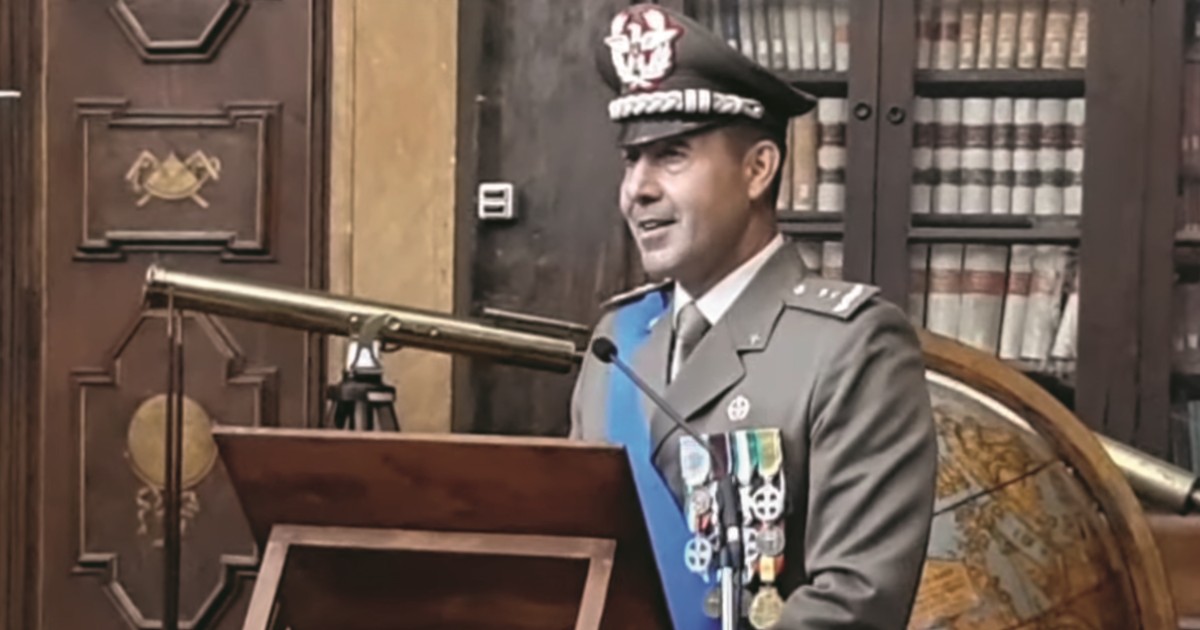
Roberto Vannacci, the former army general whose provocative political rhetoric helped make him one of Italy’s most recognizable figures on the right, is rapidly building a new political movement that could complicate Prime Minister Giorgia Meloni’s path to reelection in 2027.
Vannacci, 57, formally launched his party, Futuro Nazionale (National Future), earlier this year after a high-profile split with the right-wing Lega party. Since then, the movement has attracted a growing number of lawmakers from Italy’s governing coalition and has begun to register in opinion polls, raising questions about the future balance of power on the country’s conservative flank.
The emergence of Futuro Nazionale presents a challenge for Meloni, whose coalition currently relies on cooperation among her party, the right-wing Fratelli d’Italia, Lega and the center-right Forza Italia.
Vannacci first entered electoral politics in 2024 as a candidate for Lega in the European Parliament elections. A former paratrooper and military commander, he had gained national prominence following the publication of Il Mondo al Contrario (“The World Upside Down”), a self-published book that sparked controversy for its views on immigration, identity and social issues.
In the European election, he received more than 530,000 preference votes, making him one of Italy’s most successful individual candidates. The result strengthened his position within Lega, and party leader Matteo Salvini appointed him deputy secretary in 2025. The promotion, however, exposed divisions within the party, where some members viewed Vannacci’s growing influence with concern.
By February 2026, the relationship had unraveled. Vannacci announced the creation of Futuro Nazionale, while Salvini publicly criticized the move as a betrayal.
The new party has expanded quickly. Vannacci recently said that membership had surpassed 100,000, a figure that would place the organization among the larger parties on Italy’s right despite its lack of electoral experience. The party is scheduled to hold its founding assembly in Rome on June 13 and 14, where leaders are expected to present a broader political platform covering immigration, education, energy and public security.
The party’s growth has been accompanied by a series of defections from coalition partners. In recent weeks, several lawmakers from Lega and Forza Italia have joined the movement, giving it a small but growing parliamentary presence.
At a news conference in Viareggio, Vannacci introduced five new recruits, including members of Parliament from both coalition parties and Antonio Maria Rinaldi, an economist and former European lawmaker who previously belonged to Lega.
The additions increased Futuro Nazionale’s representation in the lower house to eight deputies.
“It is not us who are going looking for them,” Vannacci said. “They came to us because they believe in the project.”
Appearing on Italian television this week, Vannacci described his parliamentary allies as politicians who had found little space in their former parties. Referring to the 1967 film The Dirty Dozen, he remarked that he was comfortable assembling a movement from what he called “the leftovers of others.”
Vannacci has also sought to distinguish his movement from Meloni’s party while rejecting characterizations of Futuro Nazionale as far right. Instead, he describes it as representing an “authentic right,” arguing that many of the policies championed by conservatives have yet to be fully implemented by the current government.
Although he has left open the possibility of future electoral alliances, Vannacci has said that negotiations would occur only closer to the next general election and would depend on agreement over issues including immigration, security and European environmental policies.
Leaders within Meloni’s coalition have responded cautiously but increasingly critically.
Speaking in Parliament on June 11, Meloni accused members of Futuro Nazionale of repeatedly voting against her government and argued that their actions had benefited the opposition.
“The real right is never useful to the left,” she said, rejecting suggestions that her party lacked conservative credentials.
Giovanni Donzelli, a senior official in Fratelli d’Italia, also dismissed speculation about cooperation with Vannacci, saying there was little reason to discuss an alliance with a movement that frequently opposes the government.
Criticism has come from other coalition partners as well. Marina Berlusconi, whose views carry significant weight within Forza Italia, has reportedly expressed opposition to Vannacci’s political agenda. Meanwhile, leaders of the centrist party Noi Moderati have argued that his positions are incompatible with the coalition’s more pro-European traditions.
Behind the public exchanges lies a practical political concern: electoral math.
Recent polls place Futuro Nazionale between roughly 4.5 and 5 percent nationally, not far behind Lega. While those numbers remain modest, analysts note that even a relatively small shift in support on the right could affect the outcome of a closely contested election.
The party may also complicate local races. Vannacci has announced plans to field an independent mayoral candidate in Milan, where the center-right hopes to regain control after more than two decades in opposition. He has also suggested that the party could contest Rome’s mayoral election independently.
Political analysts say Meloni’s strategy appears to rest on the assumption that Vannacci’s appeal may diminish before voters return to the polls. Whether that happens remains uncertain.
For now, the rise of Futuro Nazionale has introduced a new variable into Italian politics, testing the cohesion of the governing coalition and raising questions about how Italy’s right will be configured by the time the country heads toward its next national election.