


















by InTrieste
As the 61st Venice Biennale prepares to open next month, the event’s international jury has announced that it will not consider Russia or Israel for its top awards, citing arrest warrants issued by the International Criminal Court against the leaders of both countries.
The decision, made public on Thursday, comes as the Biennale faces growing political scrutiny over the participation of both nations and increasing pressure from European institutions over Russia’s return to the exhibition.
In a statement, the five-member jury said it felt a responsibility to uphold “the defence of human rights” as part of its role in selecting the recipients of the prestigious Golden and Silver Lion awards.
“This jury will refrain from the consideration of those countries whose leaders are currently charged with crimes against humanity by the International Criminal Court,” the statement said, without naming the countries directly.
The move applies to Russia, whose president, Vladimir Putin, has been wanted by the ICC since 2023 over allegations related to the unlawful deportation and transfer of Ukrainian children during the war in Ukraine. It also applies to Israel, whose prime minister, Benjamin Netanyahu, became the subject of an ICC arrest warrant in 2024 over alleged war crimes and crimes against humanity during the war in Gaza.
While the decision does not prevent either country from participating in the Biennale, it removes them from contention for official prizes, including the Golden Lion for Best National Participation.
The jury, chaired by Solange Farkas, founder and artistic director of Associação Cultural Videobrasil, is composed entirely of women this year. Its members also include Elvira Dyangani Ose, Zoe Butt, Marta Kuzma and Giovanna Zapperi. The panel is responsible for awarding two Golden Lions—one for the best national pavilion and one for the best artist in the international exhibition—as well as the Silver Lion and other distinctions.
In a separate statement, La Biennale di Venezia emphasized that the jury acts independently and with full autonomy.
“The decision is a natural expression of the freedom and autonomy that La Biennale guarantees,” the institution said.
The announcement arrives amid heightened controversy over Russia’s return to the exhibition. This marks the first time Russia is participating since the start of its full-scale invasion of Ukraine. In 2022, the artists selected to represent Russia withdrew and closed the pavilion in protest. In 2024, Russia temporarily ceded its pavilion to Bolivia.
Its return this year has triggered tension with the European Union, which has threatened to suspend €2 million in funding for the Biennale over Russia’s participation. Organizers have reportedly been given 30 days to respond.
Israel’s presence has also drawn attention. Although the country maintains a permanent pavilion in the Giardini, officials said the structure is undergoing renovations, and its exhibition this year will instead be presented in the Arsenale.
At the 2024 Biennale, Israeli artist Ruth Patir kept her country’s pavilion closed on opening day, saying it would reopen only after the release of hostages taken by Hamas and the establishment of a cease-fire in Gaza.
The Biennale has consistently maintained that it cannot exclude nations officially recognized by Italy and has said it “rejects any form of exclusion or censorship of culture and art.”
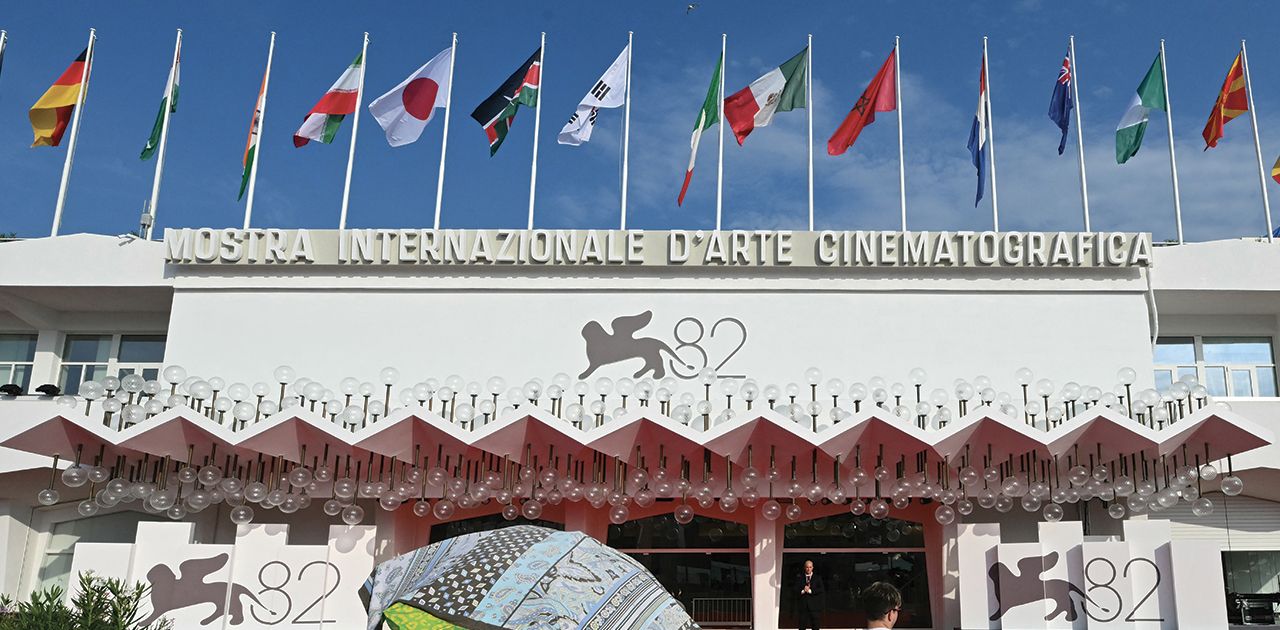
This year’s exhibition, titled “In Minor Keys,” will run from May 9 through November 22 across the Giardini and the Arsenale in Venice.