














by Nina Vaclavikova
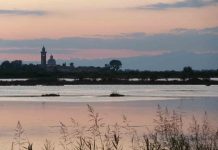
A traveling exhibition and a series of commemorative events will mark the 80th anniversary of the Vergarolla tragedy, one of the deadliest episodes involving civilians in the eastern Adriatic in the years following World War II.
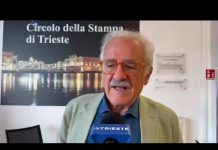
The initiative, titled “Pola, Ricordi” (“Pola, Memories”), was presented Tuesday at Sala Bazlen in Palazzo Gopcevich in Trieste. Organized by the Gruppo Ermada Flavio Vidonis with support from the Autonomous Region of Friuli Venezia Giulia, the project seeks to examine the 1946 explosion and place it within the broader history of Pola, Istria and the postwar transformation of the eastern Adriatic.
The centerpiece will be a traveling exhibition featuring photographs, documents and archival material. It will explore daily life in Pola before and after the war, the Vergarolla tragedy and the exodus of Italians from Istria, Fiume and Dalmatia.
The exhibition is being developed with the Foundation for the Preservation and Study of the Historical Sporting Heritage of the Società Nautica Pietas Julia, along with several cultural and community organizations.
Vergarolla has particular significance for the Pietas Julia, a nautical society founded in Pola in 1886 and now based in the Bay of Sistiana. On Aug. 18, 1946, the society was holding its traditional Coppa Scarioni swimming competitions on the beach at Vergarolla when a series of explosives left over from the war detonated. The blast killed at least 65 people, according to historical accounts, although estimates of the death toll have varied.
The exhibition will also examine the history of the Regia Guardia di Finanza’s Naval School, founded in Pola in 1926 and later transferred to Gaeta, as part of its centenary commemorations.
The first exhibition will open Aug. 26 at 6 p.m. at the Trieste section of the Lega Navale Italiana, at Molo Fratelli Bandiera 9. It will remain on display through Sept. 30 before moving to Monfalcone, where it will be shown at Palazzo Veneto from Oct. 5 to Nov. 4. A further stop in Gaeta is planned for November.
The Trieste exhibition has brought together the municipalities of Trieste, Muggia and Monfalcone, the Lega Navale Italiana, the Società Nautica Pietas Julia, associations representing Istrian, Fiuman and Dalmatian exiles, and a number of cultural and civic organizations.
“This project is intended to give a voice to the people, families and communities who experienced the tragedy of Vergarolla and its aftermath,” said Massimo Romita, president of the Gruppo Ermada Flavio Vidonis. “It is not simply about remembering a date, but reconstructing the historical, civic and human context that profoundly affected Pola, Istria and the entire eastern Adriatic.”
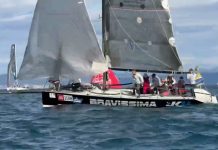
The commemorations will extend beyond the exhibition. A sailing event connecting Pola and Sistiana will be held in August as part of the 140th anniversary celebrations of the Pietas Julia. Events will begin in Pola on Aug. 13, with the regatta departing Aug. 14 and arriving in the Bay of Sistiana on Aug. 15.
Organizers describe the voyage as a symbolic link between two places separated by the political and demographic upheavals of the postwar period.
Commemorative events are also planned in Trieste and Pola on Aug. 18, the 80th anniversary of the explosion.
From September through December, the program will include historical conferences, concerts, publications, educational activities for schools, cultural excursions between Trieste and Pola and radio programs devoted to the subject. A concert featuring the ANA “Nino Baldi” choir and other performers is scheduled for Oct. 2 at the Church of San Mauro in Borgo San Mauro, followed by another event in Muggia.
Organizers say particular emphasis will be placed on younger generations. Students from the Rainer Maria Rilke Comprehensive Institute in Duino Aurisina and schools serving the Italian minority in Pola are expected to participate.
The stated aim is to use the history of Vergarolla and the wider experience of the eastern Adriatic not only as an exercise in remembrance, but also as an opportunity to discuss peace, coexistence and mutual understanding.
The project comes at a time when the memory of the postwar border changes, the exodus and the violence that accompanied the region’s political transformation remains an important and sometimes contested part of public life in northeastern Italy and Croatia.