

















by Maximiliano Crocamo
Interviews: Alessia Rosolen, FVG Councilor for Labor, Education, Training, and University; Donata Vianelli, Rector, University of Trieste
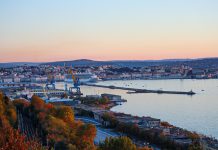
Trieste Next, the city’s annual science festival, opened Friday for its 15th edition, bringing together hundreds of researchers, academics and public figures for three days of discussions exploring the relationship between human intelligence and emerging technologies.
Held from September 25 to 27, the festival features more than 100 events and approximately 300 speakers under the theme “The Shape of Thought: Interactions Between Brains and Intelligences.” Most events are free and livestreamed, reinforcing the festival’s longstanding mission of making scientific research accessible to the public.
The opening ceremony took place in Piazza Unità d’Italia, following Thursday evening’s screening of Budinich, il pirata della scienza, a documentary celebrating the life of Trieste physicist Paolo Budinich.
This year’s program spans neuroscience, artificial intelligence, medicine, physics and philosophy. Among the featured guests are Oxford archaeo-anthropologist Lambros Malafouris, psychiatrist Vittorino Andreoli, sociolinguist Vera Gheno, artificial intelligence scholar Nello Cristianini, and former Italian university minister Maria Chiara Carrozza. The festival also presents DNA, a multidisciplinary performance combining science, music and philosophy with philosopher Telmo Pievani, the band Deproducers, and Fondazione AIRC.
On Saturday, the festival will award its annual Science Book of the Year prize, recognizing one of five finalists: Antonella Fioravanti, Vincenzo Levizzani, Beatrice Mautino, Daniela Minerva and Marta Paterlini.
A Meeting Place Between Research and Society
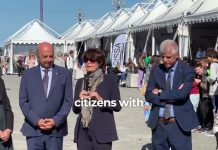
Speaking at the inauguration, Alessia Rosolen, the Friuli Venezia Giulia regional councilor for labor, education, training and university, said the festival offers an important opportunity to strengthen dialogue between scientific institutions and the wider community.
Rather than extending the event itself, Rosolen said the ambition is to prolong the encounters it creates among students, researchers and citizens throughout the year. She added that the region’s network of research institutions plays a central role in shaping Friuli Venezia Giulia’s future and that public conversations about science have increasingly expanded beyond outreach into broader philosophical questions about its role in society.
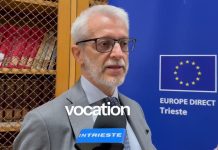
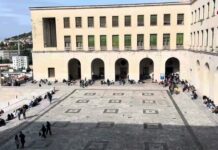
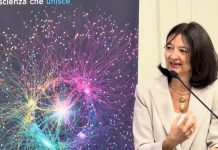
Donata Vianelli, rector of the University of Trieste, described the festival as one of the university’s most significant moments of public engagement, emphasizing the importance of connecting academic research with everyday life through open discussion and interdisciplinary collaboration.
Trieste Next is organized by the City of Trieste, the University of Trieste, Gruppo NEM, Area Science Park, OGS and SISSA, with the Autonomous Region of Friuli Venezia Giulia serving as co-promoter. The complete schedule is available on the festival’s official website.