


























by InTrieste
Regional and national officials in Friuli Venezia Giulia met on Friday to examine possible reforms to Italy’s civil protection system, following a recent tragedy in the mountain town of Preone that has raised broader concerns about legal responsibility and operational structures.
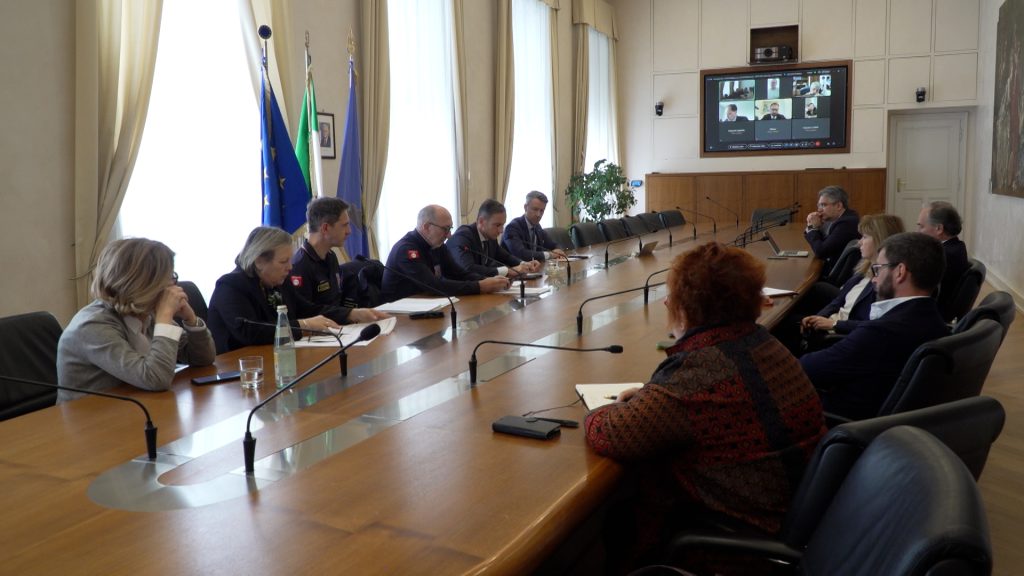
The governor of the region, Massimiliano Fedriga, and the regional councillor for civil protection, Riccardo Riccardi, held talks with members of the national government and lawmakers representing the region. Among those attending were Luca Ciriani, minister for relations with Parliament; Vannia Gava, deputy minister for the environment; and Sandra Savino, undersecretary for the economy and finance.
The meeting also included several members of Parliament from Friuli Venezia Giulia, reflecting what officials described as a coordinated institutional response to an issue of growing urgency.
At the center of the discussion were the legal and organizational frameworks governing Italy’s civil protection system, particularly in light of the events in Preone and a recent court ruling that resulted in convictions for the town’s mayor and a local civil protection coordinator. The case has prompted questions about liability and the extent of responsibility borne by local officials and volunteers during emergency operations.
Speaking after the meeting, Mr. Fedriga and Mr. Riccardi said that a bill currently under review in the Italian Senate could offer a path forward. The proposed legislation, introduced by the national government, aims to strengthen protections for civil protection volunteers, their coordinators, and mayors who oversee emergency responses.
Regional authorities said they would conduct a coordinated review of the bill and consider proposing amendments. Any revisions, they added, would be presented with unified support from the region’s parliamentary delegation.
Officials also noted that further action could follow once the full reasoning behind the court’s decision is made public. Should the ruling reveal systemic issues, lawmakers may seek to address them before the legislative process is completed.
The discussions underscore the delicate balance between ensuring accountability and safeguarding the volunteer-based system that underpins much of Italy’s emergency response infrastructure.