















by InTrieste
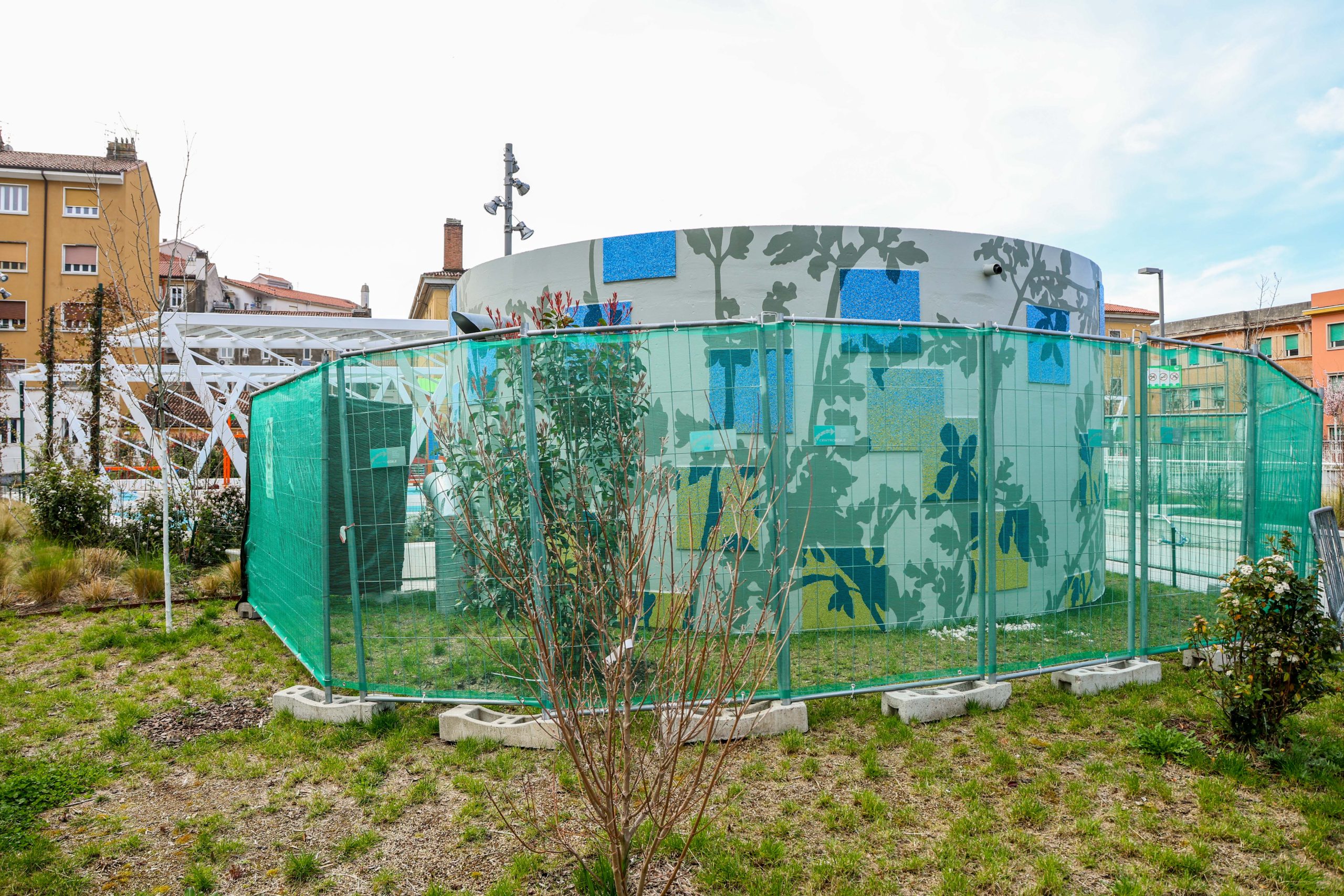
A new mosaic will be unveiled on Monday, March 16, transforming a previously utilitarian architectural feature at the former Roiano Barracks into a prominent public artwork. The installation is part of an ongoing redevelopment of the site and stems from a unique Italian law dating back to 1949, which requires a portion of public construction budgets to be devoted to art.
The law, officially Law No. 717 of July 29, 1949, was enacted during Italy’s postwar reconstruction period to promote the nation’s cultural heritage. Known as the “2% law,” it mandates that public buildings constructed by state entities allocate a set percentage of funds to artworks integrated into the architecture.
Elisa Lodi, Trieste’s councilor for Real Estate Assets, expressed satisfaction with the project, which has spanned more than eight years and multiple contracts. “We are returning to the city a space of significant environmental value, a new green area, and a point of social gathering with spaces for play and interaction,” she said.
The mosaic occupies a semicylindrical structure originally designed as a simple staircase within the new garage of the redeveloped site. The broader redevelopment included the completion of two new buildings in 2025—a nursery and a garage—as well as the surrounding landscaping. The mosaic was chosen as part of a design competition evaluated by a panel of two artists, the project manager, the site’s lead designer, and a representative from the local heritage authority.
The artwork was realized through collaboration between a local architecture studio and an artist, with execution by a regional mosaic school and an experienced decorator-restorer from Friuli Venezia Giulia. Its design features a series of plant motifs depicted in silhouette, as if viewed from the shade of a tree looking toward the sky. The mosaic primarily employs Venetian smalti and eco-friendly smalti tiles, each measuring 60 by 60 centimeters, which cover the stairwell walls. Between the tiles, subtle outdoor-resistant paint connects the composition.
The mosaic, visible from the surrounding sidewalks, adds a distinctive visual character to the building while reflecting sunlight and highlighting the site’s revitalized identity. With the removal of the protective fencing, pedestrians will be able to view the work in its entirety starting Monday.