



















by InTrieste
The project, presented in New York, aims to transform the facility into an international hub for scientific research, conferences and education by 2029.
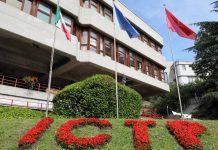
The Friuli Venezia Giulia regional government will contribute €4.25 million toward the renovation of the Adriatico Guesthouse, a facility operated by the International Centre for Theoretical Physics (ICTP) in Trieste, as part of a broader effort to strengthen the city’s role in international scientific research and cooperation.
The project was presented Thursday at the Flatiron Institute in New York by Alessia Rosolen, the regional councillor responsible for education, research and universities, alongside David Spergel, president of the Simons Foundation International; Marco Gilli, president of the Compagnia di San Paolo Foundation; and Atish Dabholkar, director of the ICTP.
The renovation aims to transform the building into a multipurpose scientific complex by 2029, with facilities for research, conferences, training programs and accommodation for visiting scholars.
The initiative brings together the regional government, the ICTP, the Compagnia di San Paolo Foundation and the Simons Foundation International. A key step came last year when the property was acquired by the foundation, securing its availability for the center’s activities through 2056.
Funding includes a $15 million contribution from the Simons Foundation International, tied to a mechanism intended to generate an additional $15 million in resources, as well as the ICTP 2.0 fundraising campaign, which has already raised more than €8 million. The regional government’s €4.25 million allocation will support urgent maintenance and safety work, technical planning, and structural, energy-efficiency and functional upgrades.
An international competition will be held to select the architectural design, with an emphasis on environmental sustainability, modern technology and improved spaces for teaching and scientific collaboration.
Built in the 1970s, the Adriatico Guesthouse has 100 rooms, conference halls, laboratories, offices and dining facilities. It hosts more than 40 percent of the lectures and seminars organized by the ICTP and supports a center whose activities involve about 4,000 scientists annually from more than 150 countries.
Rosolen said the investment was intended to help Trieste continue attracting researchers and developing international scientific partnerships. She also linked the project to the city’s broader ambitions in scientific diplomacy and its role within the UNESCO system.
The renovation is expected to build on the ICTP’s more than six decades of work connecting researchers from around the world, while expanding the facilities available for scientific exchange and training.