




















by InTrieste
A permanent exhibition in Porto Vecchio-Porto Vivo explores centuries of cultural life before the Istrian-Dalmatian exodus
A new chapter in Trieste’s waterfront regeneration begins on Sept. 30 with the opening of the Museum of Istrian, Fiuman and Dalmatian Civilization, a permanent institution dedicated to the history and cultural heritage of the eastern Adriatic.
Housed inside Magazzino 26 in the redeveloped Porto Vecchio–Porto Vivo district, the museum was presented to the press on Saturday by Mayor Roberto Dipiazza, alongside municipal museum officials and representatives of the Regional Institute for Istrian, Fiuman and Dalmatian Culture (IRCI), which has preserved much of the collection for decades.
The museum opens officially on Sept. 29, with public admission beginning the following day. Entry will remain free through Dec. 31, 2026.
From abandoned belongings to a broader historical narrative
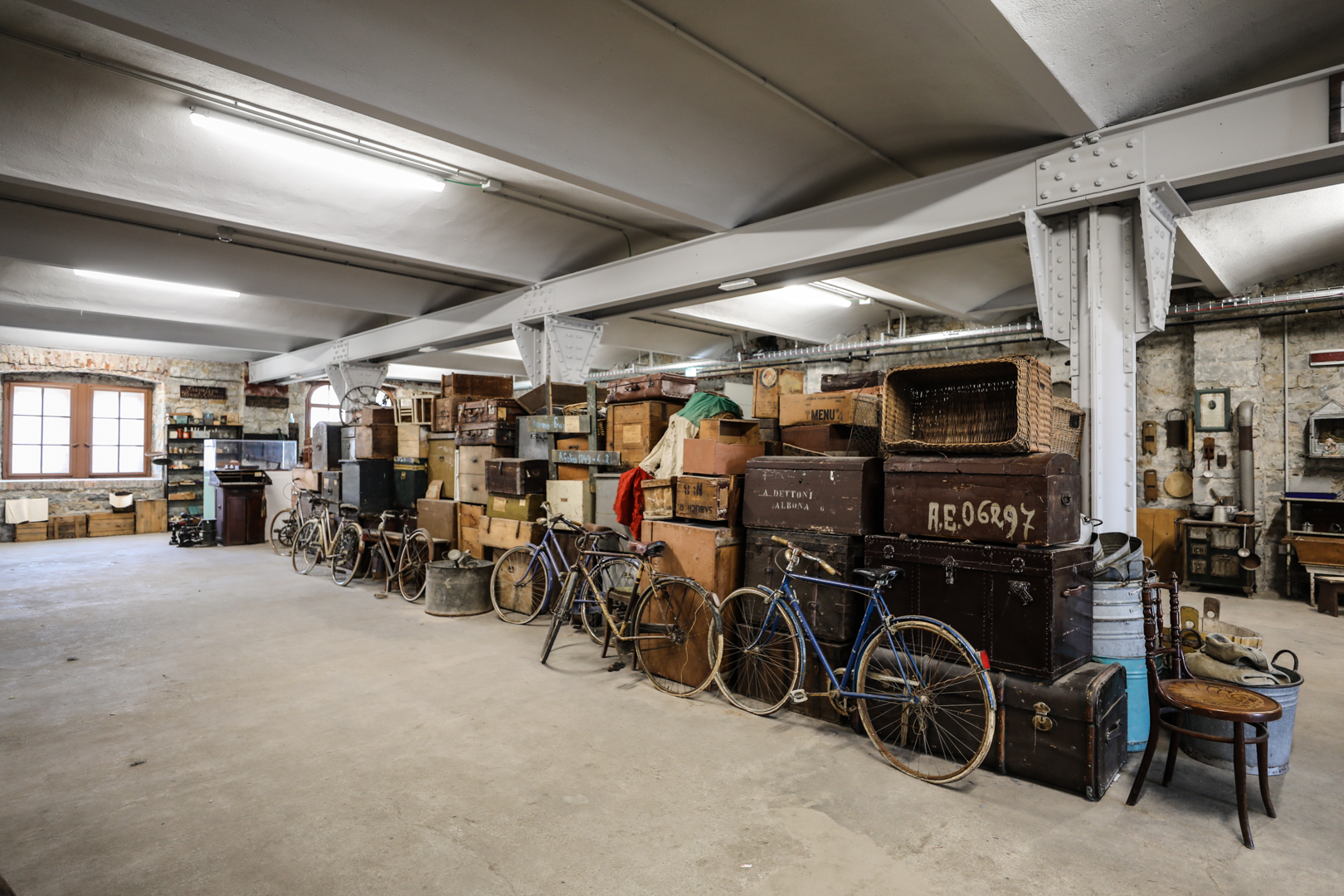
The new museum stands beside the well-known Magazzino 18, whose preserved household belongings tell the story of the roughly 300,000 Italians who left Istria, Fiume and Dalmatia after the Second World War.
Its curators say the new institution seeks to widen that perspective by documenting the region’s civilization across millennia rather than focusing solely on the exodus.
Many of the objects on display were rescued from destruction by IRCI after being abandoned during the postwar displacement. Donated by the Prefecture in 1988, the collections moved between warehouses in Trieste before returning permanently to Magazzino 26 in 2021. The museum itself was first established in 2015 in Via Torino and has now been relocated to its larger waterfront home.
A journey spanning 8,000 years
Occupying a large exhibition hall adjacent to the ethnographic collections, the museum follows a chronological path beginning in the Stone Age and continuing through Roman, medieval, Venetian and modern periods.
Visitors are welcomed by a large timeline introducing the succession of cultures and political powers that shaped the peninsula. Archaeological sections include prehistoric stone tools dating to the sixth millennium B.C., Bronze Age weapons and ceramics, Roman sculptures and glassware, and medieval funerary artifacts from the area around present-day Buzet.
Among the exhibition’s highlights are the restored stone reliefs from Motovun and Rab, the lantern of the Capodistrian galley Liona con Mazza—which participated in the Battle of Lepanto in 1571—and historical maps illustrating centuries of changing borders and administrations.
As the exhibition reaches the late 19th and 20th centuries, the narrative shifts from chronology to thematic galleries exploring tourism, music, literature, public and private memory, and the 1919–1920 occupation of Fiume. Historic photographs, documents, multimedia installations and literary excerpts invite visitors to explore individual stories at their own pace.
A final, intentionally restrained room introduces the subject of the Istrian-Dalmatian exodus through a short film, creating a thematic bridge to the neighboring Magazzino 18 exhibition.
Part of a larger cultural district
The museum represents another step in the transformation of Magazzino 26, a former Austro-Hungarian warehouse that the City of Trieste is converting into a multidisciplinary cultural hub. The building already hosts several civic museum collections and exhibition spaces, forming part of the broader redevelopment of the historic port.
The new installation and exhibition design cost approximately €337,000, according to the municipality.
Visiting the museum
The Museum of Istrian, Fiuman and Dalmatian Civilization is located in Magazzino 26, Porto Vecchio–Porto Vivo in Trieste.
Opening hours
- Until March 31: Monday, Tuesday, Friday, Saturday and Sunday, 10 a.m.–5 p.m.
- April 1–Oct. 11: Monday, Tuesday, Friday, Saturday and Sunday, 10 a.m.–6 p.m.
The museum is about a 20-minute walk from Trieste Central Station and is also served by bus lines 6, 19, 20 and 36. Admission is free through Dec. 31, 2026.
Contact: museoistriano@comune.trieste.it
Visits to the adjacent Magazzino 18 exhibition are available by reservation through IRCI via email at irci.ierioggidomani@gmail.com or WhatsApp at +39 351 759 0343.