








by Nina Vaclavikova
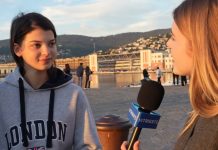
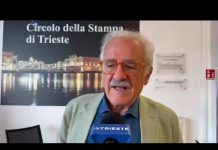
Interview: Donata Vianelli, rector of the University of Trieste; Maurizio De Blasio, Councilor for Education and Schools
Trieste Next, the city’s annual science research festival, will celebrate its 15th edition from Sept. 25 to 27, bringing together hundreds of scientists, researchers and science communicators to explore one of the defining questions of the digital age: What does it mean to think?
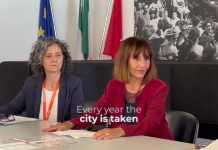
The festival, presented Tuesday at the Urban Center in Trieste, will center on the theme “The Shape of Thought: Interactions Between Brains and Intelligences,” examining the relationship between biological intelligence, artificial intelligence and complex systems.
Organizers said this year’s program will investigate intelligence as a plural concept—natural, artificial, emotional and collective—reflecting advances in neuroscience, cognitive science and AI that increasingly blur traditional distinctions between human and machine learning.
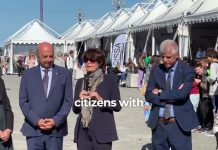
Maurizio De Blasio, Trieste’s councilor for education and family policies, described the festival as an important platform for engaging young people with scientific research and promoting public participation in knowledge and culture.
The presentation featured representatives from many of Trieste’s leading scientific institutions, including Donata Vianelli, rector of the University of Trieste; Andrea Romanino, director of SISSA; Paola Del Negro, director general of the National Institute of Oceanography and Experimental Geophysics (OGS); and Antonio Maconi, director of Trieste Next. Officials from Area Science Park, Generali, AcegasApsAmga, Insiel and other partner organizations also attended, alongside Maurizio Molinari, head of the European Parliament Office in Milan, who joined remotely.
Beyond lectures and public discussions, the festival will also announce the winner of the fourth Science Book of the Year Award, recognizing outstanding scientific literature. As in previous editions, the program will include workshops, exhibitions and meetings with international researchers designed to make scientific discovery accessible to the broader public.
Full program can be found here.