


















by Maximiliano Crocamo
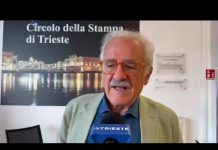
Interview: Everest Bertoli, Trieste Councilor for Finance and Budget
For the first time in recent memory, the municipality of Trieste is lowering its waste tax instead of increasing it, marking a notable reversal in a trend that has characterized both local and national fiscal policy in recent years.
Presenting the 2026 tariff framework in the City Hall’s executive room, the councilor for financial policies Everest Bertoli described the move as a break with the past. “This year, for the first time, the waste tax will decrease for both households and businesses,” he said, framing the decision as counter to developments seen across the region and in previous municipal budgets.
According to the data presented, over the five-year period from 2020 to 2025, the average Tari bill in Trieste rose only marginally—from €344 to €345 annually—compared with sharper increases in other cities of Friuli Venezia Giulia. In Gorizia, the average rose from €350 to €435; in Pordenone, from €188 to €222; and in Udine, from €191 to €224.
Municipal officials attributed the new reduction largely to intensified efforts to combat tax evasion. The city estimates that €3.657 million will be returned through adjustments, bringing the total Tari revenue requirement to €39.706 million. Household users account for 56% of the total burden, with non-domestic users covering the remainder.
For families, the reductions will vary depending on household size, ranging from a modest -0.69% for two-person households to as much as -3.54% for five-member families—equivalent to nearly €18 in annual savings in some cases. Businesses are also expected to see a decline, though more limited, between -0.60% and -0.90%.
The system, officials emphasized, remains structurally unchanged in terms of payment deadlines and collection procedures, which continue to be managed through coordination between the municipality and its contracted collection service, Esatto.
Alongside the local measures, officials also highlighted a national policy component: a newly introduced “social waste bonus” providing a 25% discount on Tari bills for households with an ISEE below €9,796, or below €20,000 for families with at least four dependent children.
While the reductions are relatively modest in absolute terms, the political signal is more significant. In a policy area typically associated with gradual increases driven by service costs, inflation, and waste management expenses, Trieste’s shift positions the city as an exception within a broader national pattern of upward pressure on local taxation.