











by InTrieste
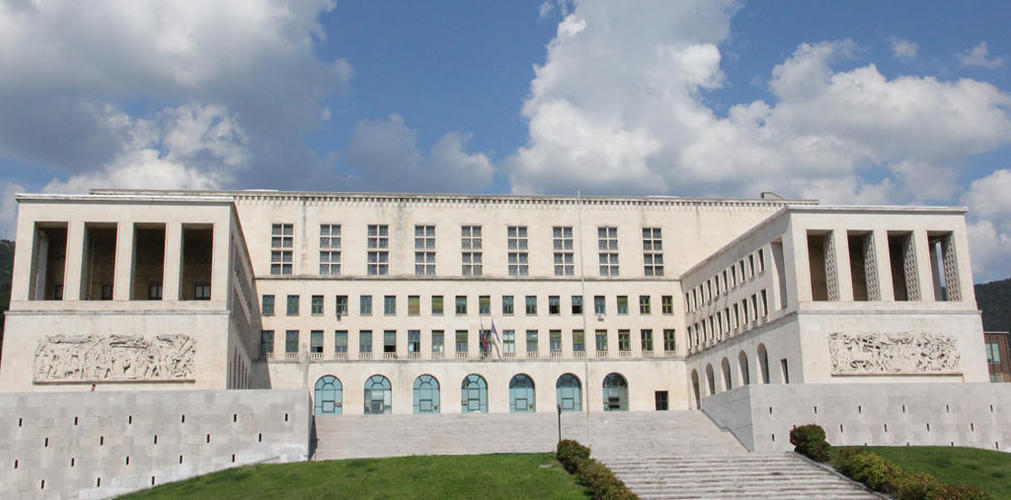
The University of Trieste will host a “Week for Peace” from April 13 to 17, offering a series of open lectures aimed at promoting a culture of peace through multiple academic perspectives. Organized under the Network of Universities for Peace (RUNIPACE), the initiative will bring together faculty and researchers from ten departments to explore peace-related themes in diplomacy, genetics, law, economics, neuroscience, pedagogy, and sustainability.
The lectures, accessible to both students and the public—including online attendees—will address topics ranging from the dual-use nature of scientific research and major twentieth-century peace negotiations, to the value of genetic diversity, the implications of Italy’s constitutional commitment to peace, mathematical models of cooperation and conflict, the influence of values in corporate decisions, the intersection of sustainability and war, the neuropsychology of violence, and the role of education in fostering peaceful coexistence.
“The Week for Peace is designed to provide a space for discussion and dialogue,” said Professor Giuseppe Pascale of the Department of Political and Social Sciences, who coordinates the event. “It approaches peace not as an abstract concept, but through the lenses and tools of diverse scientific disciplines. The program highlights peace as a historical and political issue, a constitutional principle, an educational responsibility, a balance between cooperation and conflict, and a challenge that intersects with science, technology, mental health, economic ethics, and sustainability.”
Lecture Highlights
- Monday, April 13, 9 a.m.–11 a.m.: Physics Between War and Peace: From the Manhattan Project to Quantum Technologies — Professors Daniele Coslovich, Fabio Benatti, and Fulvio Parmigiani will examine the complex relationship between physics and warfare, from early nuclear research to contemporary quantum technologies with both civilian and military potential.
- Monday, April 13, 4 p.m.–5 p.m.: Fragile Peace: A Brief Analysis of Major 20th-Century Peace Negotiations — Professor Giulia Caccamo will review the successes and limitations of peace agreements following global conflicts, from the League of Nations to the post–Cold War era.
- Tuesday, April 14, 9 a.m.–10 a.m.: Genetic Diversity and Human Populations — Professor Pio D’Adamo will discuss how population genetics illustrates human interconnectedness, offering a scientific perspective on shared history and cultural diversity.
- Tuesday, April 14, 11:15 a.m.–12:45 p.m.: Article 11 of the Italian Constitution: National and Supranational Perspectives — Professors Gian Paolo Dolso, Paolo Giangaspero, and Stefano Amadeo will explore Italy’s constitutional commitment to peace and its relevance amid contemporary geopolitical tensions.
- Tuesday, April 14, 2 p.m.–3 p.m.: Non-Cooperative Game Theory: Peace and Conflict — Professor Michele Cirafici will examine strategic interactions in social and political contexts, demonstrating how cooperation can emerge or fail.
- Wednesday, April 15, 9 a.m.–11 a.m.: Peace as a Prerequisite for Research, Development, and Education — Professor Raffaela Cefalo and visiting researcher Fikrey Tesfay Tewelde will discuss how peace supports scientific and educational advancement, citing examples including cartography, satellite navigation, drones, and educational access in Tigray, Ethiopia.
- Wednesday, April 15, 2 p.m.–4 p.m.: Values, Ethics, and Business Decisions — Professor Fabrizio Rossi will explore how cultural and ethical considerations influence corporate risk, governance, and sustainability.
- Thursday, April 16, 2 p.m.–3 p.m.: From Fertilizer to Chemical Weapons: The Legacy of Fritz Haber — Professor Federico Rosei will consider the dual impact of scientific innovation on sustainability and conflict.
- Thursday, April 16, 4 p.m.–6 p.m.: Psychology and Neuroscience for Peace — Professors Fabio Del Missier and Enrico Tongiorgi will examine neurobiological and psychological factors that contribute to violence or foster peace, including moral disengagement and the effects of trauma.
- Friday, April 17, 1 p.m.–3 p.m.: Education and Peace: Pedagogical Perspectives — Professor Giancarlo Gola will highlight the role of education in building a culture of nonviolence and cooperation, drawing on figures such as Maria Montessori, Aldo Capitini, Mario Lodi, and Johan Galtung.
The full program and remote participation details are available here.