




















by Nina Vaclavikova
Interview: Riccardo Riccardi — Regional Councilor for Health (Assessore alla Salute) of Friuli Venezia Giulia; Antonio Poggiana, director ASUGI
A new 24-hour community health center opened this week inside Trieste’s Ospedale Maggiore, marking the sixth Casa della Comunità (House of the Community) to be launched in the Friuli Venezia Giulia region as part of Italy’s broader effort to shift healthcare away from emergency rooms and toward neighborhood-based services.
The center, located at Via Gatteri 25/1, is designed to provide round-the-clock care for patients with chronic conditions and low-complexity medical needs, helping to reduce pressure on hospital emergency departments. It represents one of the most tangible outcomes so far of Italy’s national healthcare reform funded by the European Union’s post-pandemic recovery plan.
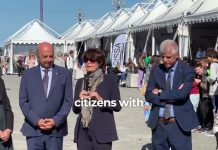
“This is no longer just a debate about how healthcare should be organized,” Riccardo Riccardi, the region’s health councillor, said at the opening ceremony. “It is now being implemented on the ground.”
The Friuli Venezia Giulia government plans to open about 30 such facilities across the region over the next few years, following national guidelines laid out in a 2022 ministerial decree aimed at reorganizing territorial healthcare services. The initiative is financed through a combination of Italy’s National Recovery and Resilience Plan (PNRR) and regional funding.
The Case della Comunità are intended to act as multidisciplinary hubs where patients can access primary care, nursing services, basic diagnostics and social services in a single location. They also serve as a link between hospitals, family doctors, social workers and home-care providers — a model increasingly seen as essential in an aging society with growing social and long-term care needs.
Regional officials say demand for healthcare is changing rapidly, with social and welfare-related needs now often outweighing strictly medical ones. The new centers are designed to reflect that shift by integrating health and social services under one roof.
One of the main goals of the Trieste facility is to reduce the number of people turning to emergency rooms for non-urgent care. According to regional data cited at the event, as many as 80 percent of patients who arrive at emergency departments are seeking services that could be handled elsewhere.
“Emergency rooms are under constant pressure because of inappropriate use,” Riccardi said. “These centers are meant to provide a more suitable alternative.”
The Trieste Casa della Comunità will offer nursing and outpatient services, basic diagnostic testing, blood draws, links to after-hours medical care, and coordination with municipal and district social services. It is open 24 hours a day, seven days a week.
The launch also coincides with the regional rollout of Italy’s national non-emergency medical helpline, 116117, which residents can call for medical advice and guidance outside of emergency situations. The service, which builds on a hotline already operating in Trieste, is now entering a trial phase in the Giuliano-Isontino area and is expected to be expanded across the region.
Health officials described the new model as not only an organizational change but a cultural one, requiring residents to rethink how and where they seek care.
“The system will only work if people understand how to use it,” Riccardi said. “That will take time and clear communication.”
With the opening of the Trieste center, Friuli Venezia Giulia has reached its target for 2025 ahead of schedule — a milestone in Italy’s ongoing attempt to build a healthcare system that is less hospital-centric and more rooted in the daily lives of its communities.