





















by Nina Vaclavikova
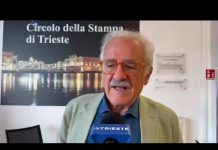
Interviews: Caterina de Gavardo, Councilor for Public Safety, City of Trieste; Walter Milocchi, Commander of the Trieste Local Police
Trieste’s local police conducted about 280 inspections of tourist accommodation and related businesses during the first nine months of 2026, identifying unregistered properties, missing national identification codes and other regulatory violations, city officials said Tuesday.
The inspections were carried out by the Local Police’s Commercial Police Unit as part of a broader effort to monitor a tourism sector that has expanded significantly in recent years.
The results were presented at Trieste City Hall by Caterina de Gavardo, the city’s councillor for public safety; Walter Milocchi, commander of the Local Police; and Pierluigi Marchetti, deputy commissioner and head of the Commercial Police Unit.
One of the main areas of focus was the National Identification Code, or CIN, which has been required for tourist accommodation since January 2025. According to the city, the proportion of registered accommodation facilities in Trieste with a CIN increased from 77 percent in March 2025 to 85 percent in April 2026 and more than 88 percent by September.
Officials said the figure was higher than the regional average, but inspections continued to uncover properties operating outside the regulatory framework.
Among the cases identified were 20 residential units operating without the required authorization and without a CIN, 13 authorized accommodation facilities that had not obtained a CIN, four allegedly unauthorized hotels and two unauthorized guesthouses.
Inspectors also found cases in which properties registered as tourist residential units were effectively operating in ways more closely resembling hotels, without the authorizations required for that type of business.
Penalties vary depending on the violation. Operating without the required SCIA administrative notification can result in a €1,600 fine, while failure to apply for a CIN can result in a €1,000 penalty. Additional fines can apply when the identification code is not properly displayed.
Inspectors also found violations involving mandatory signage, which can carry fines of up to €500.
The inspections extended beyond administrative compliance. Cooperation with the Local Police’s Building Enforcement Unit resulted in the identification of 13 properties with building-related irregularities, according to the city. Municipal private-building offices and the state property authorities were also involved in some cases, while the Labor Inspectorate was consulted when potential employment violations were suspected.
Checks on tourist guides
The Commercial Police Unit also carried out inspections involving tourist guides, another profession subject to specific licensing and registration requirements.
Three guides were identified as operating without the required authorization, officials said. The authorities did not provide further details about the individual cases.
Marchetti said the police’s role in tourism extends beyond accommodation providers to other businesses and services, including travel agencies and professional guides.
“Tourism involves different realities, from accommodation facilities to travel agencies,” he said, adding that inspections are intended to protect visitors and consumers while ensuring fair competition among businesses operating legally.
He also highlighted the role of Italy’s Consumer Code in establishing transparency and protections for customers.
The Ministry of Tourism has established national databases for accommodation facilities and tourist guides. The identification systems are intended to allow consumers and authorities to verify whether an accommodation provider or guide is properly registered.
For Trieste, officials said the system can also help authorities verify guides from outside Friuli Venezia Giulia who work in the city.
Milocchi described the CIN as an important tool for tracing accommodation facilities and improving transparency in the tourism market. Facilities are required to obtain the code, use it where required and display it visibly.
City officials said the inspections are intended to accompany the growth of tourism rather than restrict it, while ensuring that businesses comply with regulations and that visitors and consumers can distinguish authorized services from unauthorized ones.
De Gavardo said continued monitoring was necessary as Trieste’s tourism market evolves, particularly in a sector involving a growing range of accommodation models and services. Marchetti similarly said the police would continue to focus on unauthorized activity and consumer protection.
The city did not provide a comparison with the number of inspections or violations recorded during the same period in 2025.