























by Alessandra Ressa
There are streets in Trieste whose names are more than addresses. They are fragments of memory, clues left behind by vanished landscapes, forgotten trades and improbable dreams. Via Molino a Vento is one of them: a steep road climbing from Piazza Garibaldi toward San Giacomo and the Maddalena district, carrying in its very name the story of an ambitious experiment with the city’s most famous force — the Bora.
Today the street is lined with apartment buildings, small shops and old retaining walls. Yet in the eighteenth century this area was still largely open countryside outside the dense urban core of Trieste.
At some point in the mid-1700s, during the enlightened reforms of the Habsburg era, someone imagined turning the violent Bora wind into energy by building a windmill on the hillside. The idea sounded perfectly logical in one of the windiest cities in Europe. Unfortunately, the Bora proved too strong, too irregular and too unpredictable even for experienced millwrights.
The project failed quickly. By the end of the century only ruins remained. In 1798 another entrepreneur, Giovanni Duprè, tried again, obtaining a ten-year privilege to operate a second windmill nearby. That attempt failed as well. The Bora that shaped Trieste’s identity turned out to be impossible to tame.
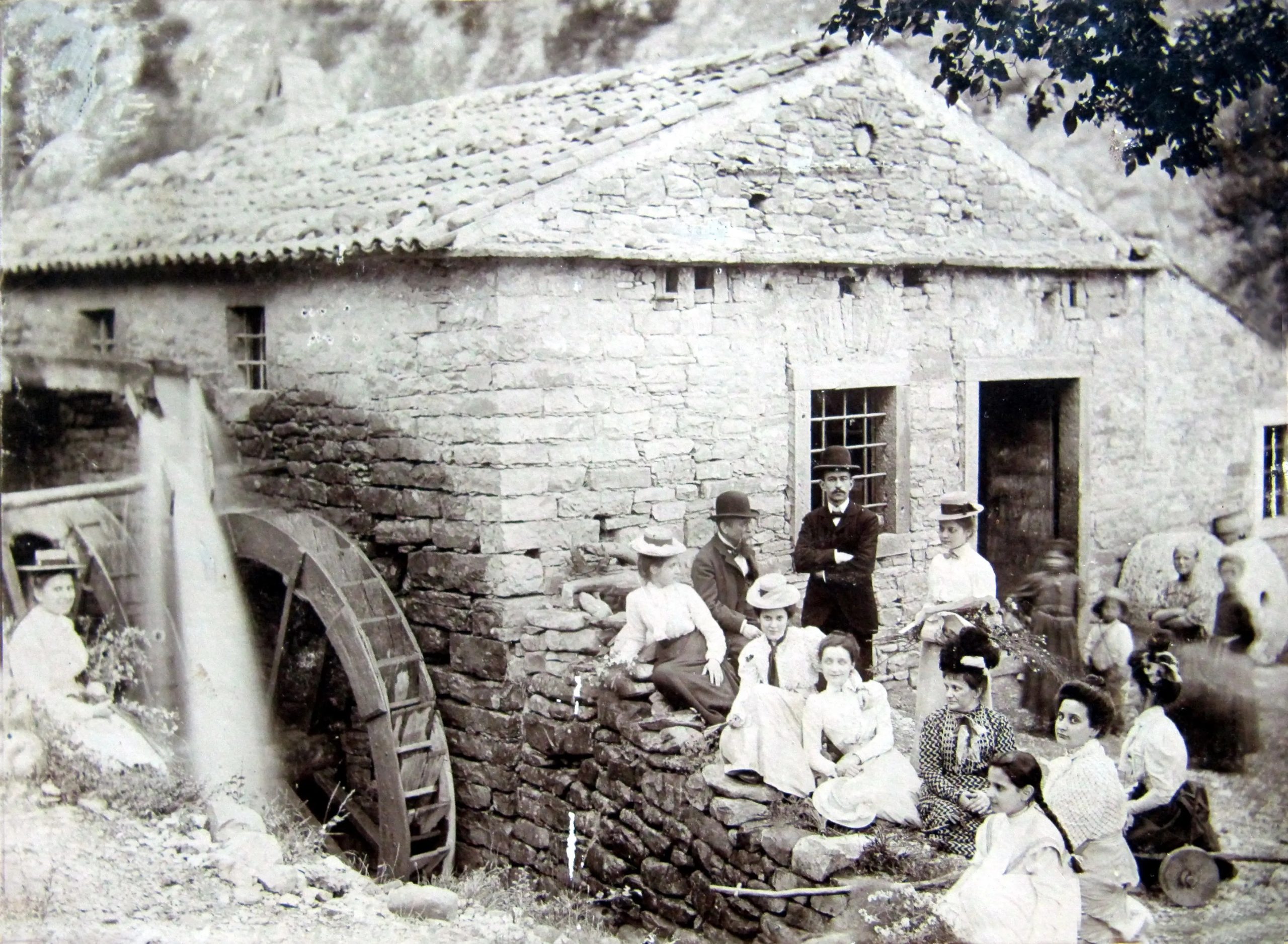
Yet the failed enterprise left behind something more durable than machinery: the name of the street itself. Via Molino a Vento, however, is not the only reminder of the city’s milling past. For centuries Trieste was crossed by streams descending from the Karst plateau toward the sea. Many of these waterways are now hidden underground beneath roads and buildings, but during the Middle Ages and early modern period they powered numerous watermills scattered around the outskirts of town.
The city still preserves traces of them in its toponymy: Via Molino Grande, Via del Molin Piccolo and Via del Molino a Vapore all recall mills that once ground grain for the growing port city. Some stood along the stream Scoglio before it was buried in the nineteenth century during large urban sanitation works. Others survived into the early twentieth century before disappearing beneath modern Trieste.
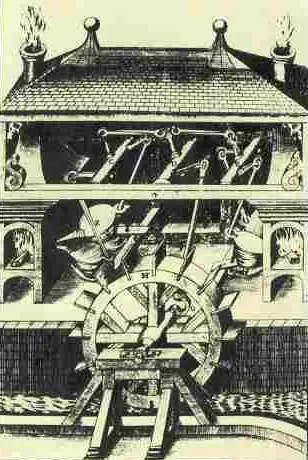
The story of these mills also tells the story of the city itself: from rural settlement to imperial port, from streams and vegetable gardens to stone embankments, factories and apartment blocks.
Soon after, Via Molino a Vento became one of the great working-class arteries of Trieste. During the nineteenth and early twentieth centuries it was crowded with peddlers, rag merchants, carpenters, blacksmiths and itinerant workers arriving from Istria and the Balkans.
Along the famous “mureto delle strazze,” near the beginning of the street, second-hand clothes were sold to migrants arriving in the city. Changing one’s clothes often meant beginning a new identity as a Triestine. The area became a crossroads of languages, dialects and poverty, suspended between the Karst villages above and the bustling harbor below. Even today, walking uphill, the street changes character block by block. Elegant late-Austrian buildings alternate with humble one-story houses, hidden courtyards and fragments of an older Trieste somehow spared from redevelopment.
A pleasant detour leads toward Via Bergamasco, a steep cobble-stone street named after the family from Bergamo who originally owned the land, and Via Rigutti, a quieter residential lane descending toward Via della Tesa. Here the atmosphere changes again. Traffic noise fades, replaced by stone walls, gardens and old stairways climbing between houses.
The most remarkable presence is vegetal rather than architectural: several ancient hackberry trees — bagolari in Italian — whose massive trunks and twisting branches dominate the street. These trees, likely more than a century old, survived wars, storms and urban expansion. In summer they cast deep shadows across the road, giving the area an almost rural feeling unusual so close to the city center.
The bagolari are part of that hidden botanical Trieste that often escapes visitors: a city where Central European architecture coexists with Adriatic vegetation and Karst landscapes.
Continuing downhill toward Via della Tesa, one eventually reaches one of the strangest hidden passages in the city. It appears almost by accident: a narrow slit opening in the retaining wall of the hill, dark and easily overlooked. Inside begins a tiny tunnel staircase climbing steeply upward toward Via del Veltro. Locals often describe it as the narrowest tunnel in Trieste.
The passage is little more than a stone crack through the hillside. Damp, shadowy and claustrophobic, it feels less like urban infrastructure and more like an entrance to a forgotten underground world. The staircase probably originated as a practical pedestrian connection between different levels of the rapidly expanding nineteenth-century city, where railways, retaining walls and steep slopes forced engineers into unusual solutions.
Today the gallery is neglected and often misused, sadly reduced to a makeshift latrine. Yet despite the decay, it retains an undeniable fascination. Walking through it means entering a secret Trieste made of hidden staircases, tunnels and improbable shortcuts — the same city that elsewhere conceals wartime shelters like the famous Kleine Berlin galleries beneath its streets.
This walk through Via Molino a Vento, Via Rigutti and Via della Tesa is not about monuments or grand squares. It is about another Trieste: the vertical city of retaining walls, windswept corners, workers’ houses, hidden passages and stubborn trees.