




by Nina Vaclavikova
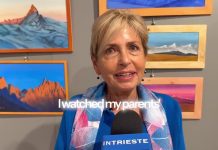
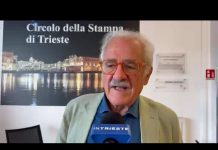
Interview: Marianna Accerboni, Art critic, exhibition curator and designer of the exhibition; Francesco Peroni, Vice President of the Board of Directors of the CRTrieste Foundation; Paola Sbisà, Daughter of Carlo and Mirella Sbisà
A new exhibition exploring the artistic and personal relationship between Carlo Sbisà and his wife, Mirella Schott Sbisà, will open Saturday at Magazzino 26 in Trieste’s Porto Vecchio, now known as Porto Vivo.
Titled Carlo & Mirella Sbisà: Love & Art, the exhibition will bring together about 200 works, including paintings, drawings, engravings, sculptures, ceramics, reliefs, jewelry and preparatory sketches for frescoes. Some of the pieces have rarely been shown publicly or have never been exhibited.
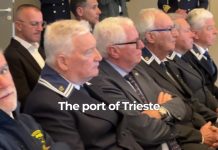
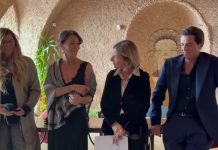
The exhibition was presented to journalists on Friday in the Sala Sbisà at Magazzino 26, with Mayor Roberto Dipiazza, Francesco Peroni, vice president of the CRTrieste Foundation’s board, curator Marianna Accerboni and Paola Sbisà, the artists’ daughter, in attendance.
Dipiazza said he envisioned the 38,000-square-meter building becoming a major cultural center for the city, comparable in ambition to the Deutsches Museum in Munich. He described the exhibition as an opportunity both to recognize two important figures in Trieste’s artistic history and to give new cultural purpose to the former port warehouses.
The CRTrieste Foundation supported the project financially and contributed works from its art collection, Peroni said. He described the exhibition as an opportunity to revisit an important period in 20th-century Triestine art while examining the relationship between artistic collaboration, family life and individual creative expression.
Carlo Sbisà was an established painter in Trieste and elsewhere in Italy between the two world wars. A friend of artists Arturo Nathan and Leonor Fini, whom he also taught, he produced portraits, landscapes and still lifes, as well as frescoes that can be found in several buildings in Trieste, including the Protti Gallery and the Museum of the Risorgimento.
After World War II, Sbisà turned increasingly to ceramics, exploring more experimental approaches alongside his wife. Mirella, who had trained in her husband’s studio, developed an independent artistic language characterized by dreamlike imagery and an interest in the relationship between humanity and nature. She worked extensively in painting and printmaking.
The exhibition traces both artists’ individual careers as well as their collaborations, some of which were signed under the joint name CMS, for Carlo Mirella Sbisà.
A section devoted to Carlo includes works spanning from his youth to the early 1960s, with portraits, landscapes, still lifes, drawings and engravings, alongside documentation of his frescoes, sculptures and ceramics.
Mirella’s work is represented through paintings, drawings and engravings created between the 1940s and 2014, the year before her death. A smaller section features paintings, graphic works and jewelry by their daughter, Paola, who spent much of her childhood in her father’s studio.
The exhibition is promoted by the Municipality of Trieste’s Department of Culture and Tourism, organized by Studio MAP and curated by Accerboni, who also designed the installation.
The opening will take place at 6 p.m. Saturday, Nov. 21, with musical performances and readings, followed by a reception featuring wines from the region.
An accompanying program of talks, guided tours and workshops will continue through Jan. 10. Among the events are a Dec. 4 discussion of the correspondence between Carlo Sbisà and Arturo Nathan during Nathan’s internment between 1940 and 1943, and a Dec. 13 conversation with the artists’ daughter about her family’s history.
Other events will explore the history of the School of Etching at the University of Popular Culture in Trieste, present a novel by writer Mariù Safier, and examine traditional printmaking techniques.
Drawing and painting workshops for adults and children will also be offered, inspired by works in the exhibition.
The exhibition closes Jan. 10, with a final event dedicated to printmaking and an awards ceremony for participants in the workshops.
Information and reservations: +39 335 6750946; marianna.accerboni@gmail.com. Further details are available at triestecultura.it.