















by Nina Vaclavikova
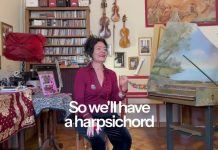
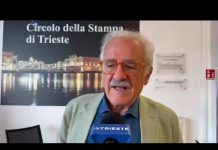
Interview: Paola Erdas – harpsichordist, musicologist and co-founder of the festival
Twenty years after its first concert in the restored Sala Costantinides at the Museo Sartorio, Trieste’s Wunderkammer Festival is returning with a program that brings together historically informed performances, contemporary interpretations and music education.
The 2026 edition, titled “Chimera,” will take place from Oct. 16 to 20, with a preview concert on Oct. 4. The festival was founded in 2006 by physicist Andrea Lausi, now scientific director of the SESAME synchrotron in the Middle East, and harpsichordist and musicologist Paola Erdas, who is the festival’s artistic director.
The organizers say the festival was created to present early music not simply as a historical repertoire, but as a living art form accessible to contemporary audiences.
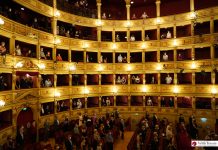
The anniversary program includes performances at the Teatro Miela, Museo Sartorio, Lutheran Church and other historic venues across Trieste. The festival is supported by the Friuli Venezia Giulia regional government, Fondazione CRTrieste and Starassociati, with partnerships including the Società dei Concerti di Trieste, Teatro Miela, the Port System Authority of the Eastern Adriatic Sea, Grandezze e Meraviglie and Ghislieri Musica Antica.
The festival will open its anniversary program on Oct. 4 at 4:30 p.m. at the Museo Sartorio, where Erdas will perform selections from her new recital “Chimère.” The program explores the adaptation for harpsichord of 17th-century French lute repertoire, including works by Gaultier, Mouton, Couperin and Froberger. An album based on the project is scheduled for release by Novantiqua in January 2027.
The main program begins on Oct. 16 at 8:30 p.m. at the Teatro Miela, with the medieval music ensemble laReverdie. The group, which is marking its 40th anniversary, will present “Venite alla danza!”, a program devoted to medieval dance music and linked to its newly released album on the Arcana label.
On Oct. 17, the festival will present a series of events. At 11:30 a.m. at the Lutheran Church, violinist Emmanuelle Dauvin will perform “OVNI – Orgue Violon Nouvelle Interprétation,” exploring a 17th-century German performance practice involving violin and organ pedal simultaneously, with works by Bach, Biber and Westhoff.
At 5:30 p.m. at the Teatro Miela, Valentino Pagliei and Tania Arcieri will present “Il BAR BABLÙ,” a production aimed at children and their companions that addresses themes of integration and emotional education.
The day will conclude at 8:30 p.m. at the Torre del Lloyd with SegretiArmonici, winners of the European S-Eeemerging+ program for emerging early-music ensembles. Led by Michele Barbieri, the group will perform “La guerra celeste,” featuring sacred and secular works from early Baroque Italy by composers including Caldara, Bassani, Predieri, Gabrielli and Albergati.
The program continues on Oct. 18 with two concerts. At 11:30 a.m. at the Museo Sartorio, Italian-Irish musician Giovanna Baviera will present “SOLOINDUE,” combining voice and viola da gamba in works by Caccini, Arcadelt, Luzzasco and Hume.
At 4:30 p.m. in the Sala 1954 of the Teatro Rossetti, mandolinist Bepi Santuzzo and guitarist Pina Sabatini will perform “TRA DUE GOLFI – Venezia e Napoli,” exploring musical connections between the two historic Italian port cities through both popular and classical repertoire.
The festival will close on Oct. 20 at 8:30 p.m. at the Teatro Miela with “ALLTID DENSAMME,” a production dedicated to the 400th anniversary of the birth of Christina of Sweden, the 17th-century queen who abdicated the throne and became known for pursuing an independent intellectual and cultural life.
The production is directed and performed by Deda Cristina Colonna, while internationally recognized historical-harp specialist Mara Galassi will provide the musical component, performing works by Philippe de la Hire, Arcadelt, Pasquini and Corelli. The title refers to the Swedish expression “Alltid densamme,” or “always the same,” associated with the motto of the Order of the Amaranth founded by Christina.
The festival’s 20th-anniversary program will continue beyond October. On Feb. 12, 2027, the “Carta Bianca” evening will feature renowned lutenist Hopkinson Smith, followed by a celebration of the European Day of Early Music on March 21.
Wunderkammer will also continue its educational activities with two historical-musical lectures for guests of I.T.I.S., using music and visual material to explore figures who influenced the development of early music. This year’s subjects will be Henry VIII and Christina of Sweden.
Now in its 20th year, the festival remains centered on the idea that early music can be approached through both historical research and contemporary performance, using Trieste’s museums, theaters and historic buildings as part of the setting for the music.