


















by InTrieste
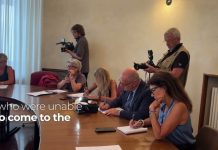
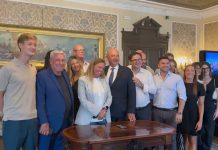
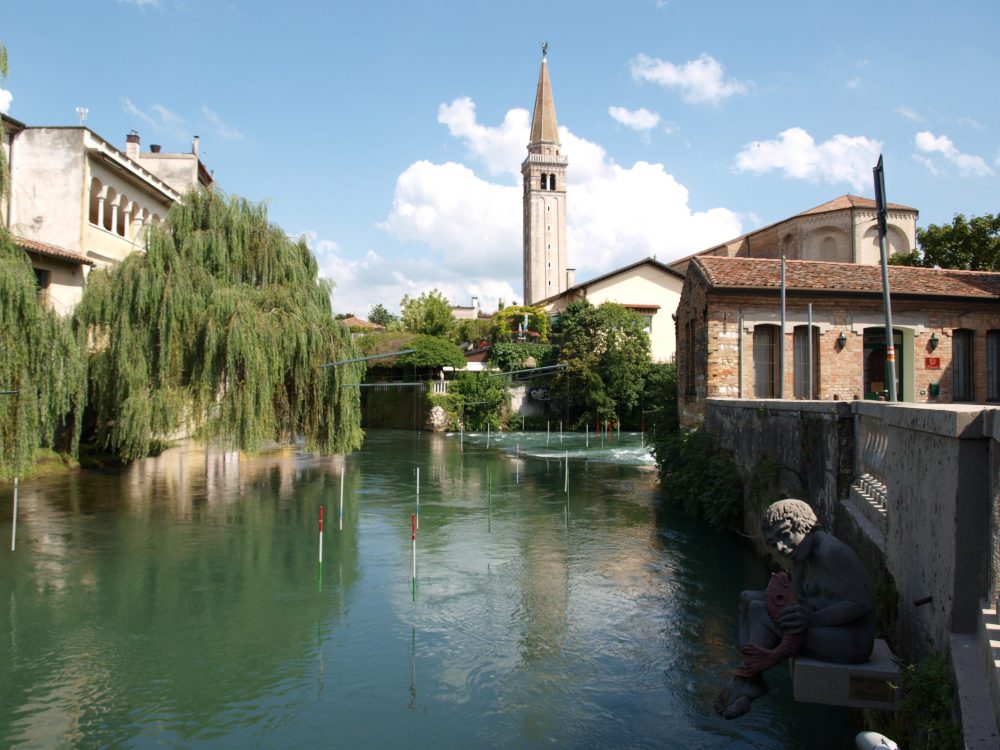
In the elegant halls of Palazzo Ragazzoni, a Renaissance palace overlooking the canals that wind through Sacile’s historic center, regional officials gathered this week to inaugurate a new tourist information office — a small but symbolic step in what local leaders say is a remarkable tourism comeback.
The new Infopoint, operated by PromoTurismoFVG, arrives as the town’s visitor numbers reach heights not seen before the pandemic. In 2025, Sacile recorded nearly 44,000 tourist stays, according to regional data — a 53.2 percent increase compared with 2019, when the number stood at about 28,000.
The figures were highlighted by Sergio Emidio Bini, the regional councillor for productive activities and tourism, who attended the opening alongside the mayor, Carlo Spagnol, and the city’s tourism councillor, Elisa Palù.
“Tourism here is clearly on a growth path that began after the pandemic,” Mr. Bini said, pointing out that the surge in visitors mirrors a wider trend across the province of Pordenone. In 2025, the province registered more than 724,000 tourist presences — a 38 percent increase over 2019.
The new office also marks a structural shift. Sacile’s tourist information service, previously run by the municipality, is now part of the regional network coordinated by PromoTurismoFVG. The aim, regional officials say, is to create a more unified approach to promoting the region’s cultural and natural attractions.
Sacile, often called the “Garden of the Serenissima” for its Venetian-era architecture and leafy canals along the Livenza River, sits in a strategic position between the plains of western Friuli and the foothills of the Alps. Officials increasingly see the town not only as a destination in its own right but also as a gateway to the surrounding territory.
Within a short drive are the ski slopes of Piancavallo Ski Resort and several of the region’s best-preserved historic towns, including Polcenigo, Valvasone Arzene and Spilimbergo, known for their medieval centers, artisan traditions and culinary culture.
Nearby lies another attraction with global significance: the prehistoric pile-dwelling site of the Palù di Livenza, part of the UNESCO-recognized network of Alpine lake settlements that date back thousands of years.
Regional leaders say the Infopoint is designed to help visitors navigate this constellation of destinations — directing travelers not just to Sacile but across the broader Alto Livenza area.
The opening also comes as the nearby city of Pordenone prepares for a cultural milestone after being named Italian Capital of Culture 2027, a title expected to draw increased attention to the entire western corner of Friuli Venezia Giulia.
For Mr. Bini, the new Infopoint represents part of a broader regional strategy to weave together culture, landscape and tourism under a single narrative — promoted internationally through the regional brand Io Sono Friuli Venezia Giulia.
“The goal,” he said, “is to make this extraordinary but still relatively undiscovered territory easier to explore — and to help it continue growing.”
In Sacile, where Renaissance palaces rise above quiet canals and the Alps are visible on the horizon, the hope is that more travelers will soon follow the signs.