




















by Nina Vaclavikova
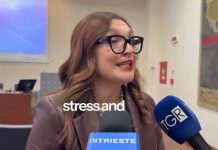
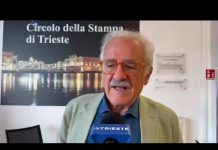
Interviews: Caterina de Gavardo, Councilor for Urban Security Policies, Municipality of Trieste; Alessandro Brescia, Inspector, Trieste Local Police and Self-Defense Instructor
In response to growing demand for training and prevention programs, the municipal police force in Trieste is expanding its team of instructors specializing in operational techniques and self-defense. The initiative reflects both increased internal training requirements for officers and rising interest from local high schools seeking practical safety lessons for students.
The city’s Local Police Department has long maintained an internal group responsible for training personnel in operational procedures, self-defense methods and the use of equipment such as pepper spray and extendable batons. Over time, these officers have developed teaching skills that have earned them recognition beyond the city itself. The group has been included in the official regional register of instructors for municipal police forces maintained by the regional government of Friuli Venezia Giulia.
While their primary role has been to train fellow officers, instructors have also increasingly brought their expertise into classrooms. Since 2012, the program has offered high school students lessons on self-defense techniques and personal safety practices designed for young people.
The initiative was presented at a press conference on Thursday at City Hall attended by Caterina de Gavardo, Trieste’s municipal councillor for urban security policies. She was joined by several members of the police training unit, including Manuela Cunsolo, head of the force’s training office, and instructors Fabio Sgambati, Alessandro Brescia and Giulio Giannini.
“Over the past few years, the Local Police Department has made significant progress both in the number of officers and in the scope of its activities,” Ms. de Gavardo said. “In this context, the group of instructors specializing in operational techniques has also grown.”
The training unit traces its origins to the early 2000s and is composed of officers who, alongside their daily duties, have pursued specialized training in defensive tactics and operational procedures. Their work now focuses on two main areas: training police personnel and offering educational programs in local schools.
Demand for both types of instruction has increased notably in recent years. Between 2024 and 2026, requests for training rose sharply, according to city officials. In 2025, the department introduced a plan to extend operational training to the entire force, ensuring that all officers receive a basic level of instruction as well as four hours of refresher training every two months.
To support the expanded program, the number of certified instructors has grown to 17, including five women.
Interest from schools has grown as well. The program is aimed at students in their final two years of high school and consists of three two-hour lessons typically held during physical education classes. During the 2025–26 school year, more than 350 students participated, up from roughly 250 the year before.
The primary goal, officials say, is prevention. Lessons focus on recognizing potentially dangerous situations, knowing when and how to ask for help, and learning simple self-defense techniques that can be used in everyday circumstances.
Ms. de Gavardo said the program also aims to build trust between young people and law enforcement.
“It is important for students to know who to call and where to turn,” she said, “but also to understand that law enforcement is there for everyone, including the youngest members of the community.”
During the sessions, instructors assess students’ physical abilities and introduce basic defensive strategies using common objects — from keys to umbrellas — emphasizing techniques that are accessible rather than specialized.
Inspector Alessandro Brescia, one of the program’s longest-serving instructors, said feedback from both students and fellow officers had been largely positive.
“In schools, students understand that they are not alone and that, if necessary, they can rely on someone,” he said.
Mr. Brescia added that the classes often evolve into broader conversations. As students become more comfortable with the instructors, they sometimes share personal experiences or situations in which they felt vulnerable or unsure how to react. These discussions, he said, allow the officers to address concerns through dialogue as well as practical instruction.
Beyond the school programs, the training unit also provides operational instruction to other municipal police forces across the region. The curriculum includes procedures ranging from searches and handcuffing techniques to safely transporting individuals in police vehicles and stopping vehicles during traffic interventions.
The goal, Mr. Brescia said, remains consistent: ensuring that officers can carry out their duties as safely and effectively as possible.