



















by InTrieste
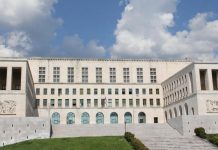
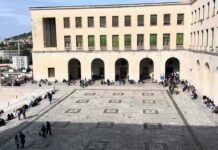
The University of Trieste opened its 103rd academic year on Friday, reporting a 22.6% increase in new enrollments and a student community that now exceeds 20,800, including doctoral and master’s program participants.
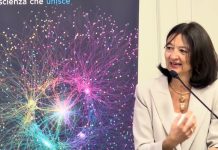
At the ceremony, Rector Donata Vianelli highlighted the university’s growing role in research, innovation and regional development, while pointing to the challenge of securing additional resources to sustain its expansion.
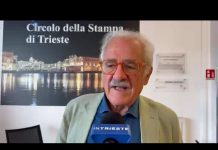
Speaking to InTrieste, Vianelli said the priority was to ensure that the university had the resources needed to continue its successful development, particularly as exceptional funding from Italy’s National Recovery and Resilience Plan (PNRR) comes to an end.
The 2025-26 academic year closed with nearly 19,000 enrolled students. New enrollments for the current academic year are up 22.6% compared with the same period last year. The university community, including doctoral candidates and master’s students, now numbers more than 20,800, equivalent to about 10% of Trieste’s population.
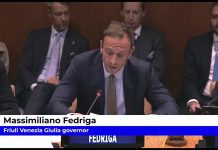
Regional governor Massimiliano Fedriga told InTrieste that Friuli Venezia Giulia was investing heavily in education, with the aim of attracting new talent and encouraging graduates and skilled professionals to remain in the region.
The university is seeking to strengthen links with local institutions and businesses, while expanding research in fields including artificial intelligence, quantum technologies, hydrogen, medicine and climate change. In 2026, it launched eight projects funded by the Italian Science Fund, worth approximately €8 million, alongside 10 national PRIN research projects valued at more than €2 million.
Employment prospects remain a significant attraction. According to the university, employment rates among master’s graduates approach 100%, with salaries above the national average.
Vianelli also called for continued investment in classrooms, study areas, student accommodation and shared spaces to meet the needs of the growing student population. She described cooperation between the university, regional authorities and businesses as essential to turning academic growth into wider economic and social development.
The university’s international outlook remains another priority, including through its participation in the European alliance Transform4Europe and efforts to improve services for international students. Vianelli also reaffirmed the institution’s commitment to supporting students arriving from conflict-affected areas.