










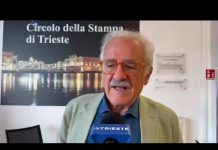
video report by Maximiliano Crocamo
Interviews: Pierpaolo Roberti, Councilor for Local Autonomies, Security, and Immigration; Caterina De Gavardo, Councilor for Public Safety and Local Police; Walter Milocchi, Commander of the Local Police (Polizia Locale) in Trieste
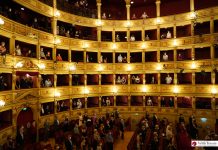
The city of Trieste will expand its public video surveillance system with four new high-definition cameras along Viale XX Settembre, extending coverage around the Politeama Rossetti as part of a broader effort to strengthen urban security.
City officials presented the project on Friday, saying the new installation will complete surveillance coverage along one of Trieste’s busiest pedestrian and cultural corridors. The €20,000 project is financed through regional funds dedicated to municipal security infrastructure.
The new cameras will be positioned at key intersections on Viale XX Settembre and the surrounding streets of Via Rossetti, Via Strehler, and Via Zovenzoni. Each multisensor device provides a 180- or 360-degree field of view and is connected to the city’s fiber-optic network, allowing footage to be monitored by the Local Police.
Sandra Savino, Italy’s undersecretary at the Ministry of Economy and Finance and Trieste’s councillor for General Services, said the city’s surveillance network now includes 179 cameras and 28 license plate recognition cameras. She noted that installing cameras in the historic city center requires coordination with heritage authorities, including painting the devices to match existing street lighting infrastructure so they blend into the protected urban landscape.
Caterina de Gavardo, Trieste’s councilor for Urban Security, described video surveillance as both a deterrent and an investigative tool. She said the Local Police monitor the network continuously, operating 24 hours a day, seven days a week, and that the city’s system now provides more than 230 viewing points because many cameras capture multiple angles simultaneously.
De Gavardo also highlighted a protocol signed last month between the municipality and the local police headquarters that allows law enforcement agencies to share surveillance footage across institutions, creating what she called an integrated security network.
Walter Milocchi, commander of the Trieste Local Police, said the regional funding made it possible to extend coverage beyond the section of Viale XX Settembre already monitored, from Largo Bonifacio to the Rossetti theater district.
Regional councilor Pierpaolo Roberti, who oversees local authorities and security in Friuli Venezia Giulia, said the region has invested heavily in surveillance over recent years, allocating €20 million to help private property owners install security and anti-intrusion systems. Publicly operated surveillance networks across the region now include more than 4,000 cameras, he said.
The four new cameras will be mounted on existing public lighting poles and finished in matte dark gray to comply with the area’s landscape and architectural preservation requirements.