













by Nastassja Martin
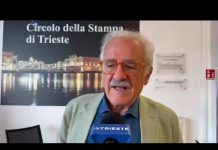
Interview: Caterina de Gavardo, City Councilor for Public Safety
Trieste has increased evening inspections of bars, restaurants and other nightlife venues this summer as local authorities seek to balance the city’s growing social scene with residents’ concerns over noise, public order and compliance with regulations.
City officials said Friday that the municipal police’s Commercial Police Unit, a specialized team of 10 officers, has expanded its presence in nightlife districts, carrying out regular inspections of businesses and monitoring compliance with the city’s “Movida” regulations governing late-night activity.
The unit oversees a broad range of commercial enforcement, including inspections of permanent shops, street markets, fairs, accommodation facilities and taxis. Its responsibilities also include verifying that bars and restaurants comply with licensing requirements and local rules designed to regulate nightlife. Some operations are conducted jointly with national police forces, including plainclothes patrols.
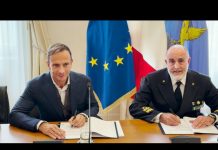
Speaking at the San Sebastiano police headquarters, City Councilor for Public Safety Caterina de Gavardo said inspections have intensified steadily since the beginning of the year, with a significant increase from April onward. In May, authorities expanded the areas under surveillance, while June saw the introduction of additional foot patrols in popular nightlife districts, including the seaside neighborhood of Barcola.
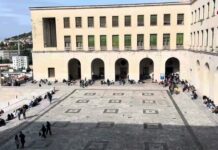
Officials said inspections now cover not only the historic Cavana district and Piazza Unità d’Italia, long associated with Trieste’s evening entertainment, but also Borgo Teresiano, the Ponterosso area and Barcola. Monitoring also extends to residential neighborhoods in response to reports from residents.
Authorities said enforcement focuses on compliance with public space permits, commercial regulations and laws prohibiting the sale and serving of alcohol to minors, as well as addressing unauthorized commercial activities.
Walter Milocchi, commander of the municipal police, said officers had conducted 45 inspection operations this year, averaging one every two or three days.
“The objective is to preserve the spirit of the regulations by maintaining a balance between the public’s right to enjoy the city and residents’ quality of life,” Milocchi said. He added that, despite the city’s active nightlife, Trieste has not experienced the level of public-order issues seen in some larger urban centers.
Milocchi also noted the emergence of so-called “morning parties” — events typically held between 10 a.m. and 3 p.m. — but said those observed so far have remained within legal limits.
Pierluigi Marchetti, deputy commissioner and head of the Commercial Police Unit, said the city’s commercial police specialize in regulatory enforcement and continually update their expertise to respond to evolving urban trends.
He said most business owners comply with regulations, although a smaller number continue to commit violations. According to city figures, officers have already issued 32 fines during this year’s summer season, compared with nearly 35 issued during the entirety of last summer.
Officials attributed the similar number of sanctions to a higher frequency of inspections and a more visible police presence, which they said has also had a deterrent effect on repeat offenders.