

















by Alessandra Ressa
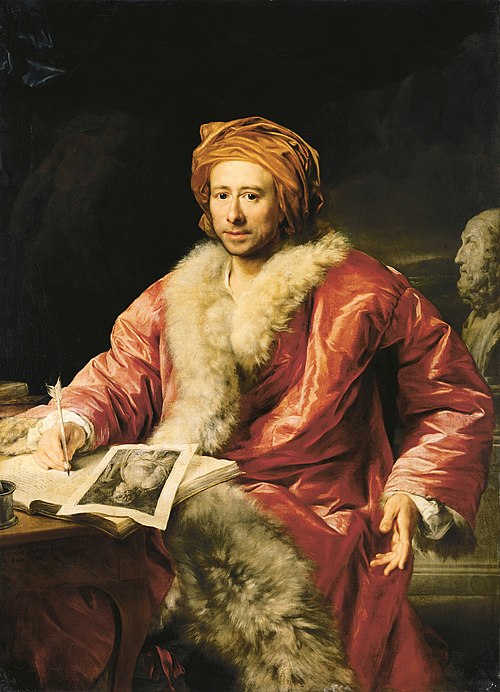
When Johann Joachim Winckelmann arrived in Trieste in June 1768, the celebrated German art historian and pioneer of classical archaeology was at the height of his fame. His writings—especially History of the Art of Antiquity—had reshaped Europe’s understanding of beauty, culture, and the ancient world. Yet within days of stepping into the port city, his brilliant life was abruptly and violently cut short.
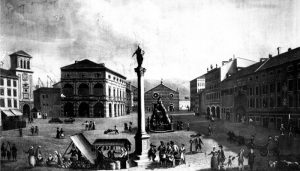
Trieste, then part of the Habsburg Empire, was a bustling crossroads of merchants, diplomats, and sailors—a fitting place for a man who had spent years traveling between intellectual capitals. Winckelmann was returning from Vienna and planning to make his way back to Rome, the city he loved. Exhausted from travel, he checked into a modest inn, unaware that fate had already placed a dangerous figure in his path.
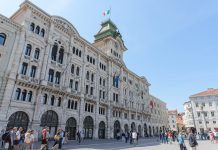
That figure was Francesco Arcangeli, an itinerant cook and petty criminal whose life intersected with Winckelmann’s by apparent chance. The two men shared meals, conversations, and perhaps a fragile sense of trust. The inn was the Locanda Grande (also called the Osteria Grande), located in what was then Piazza Grande in Trieste — today’s Piazza dell’Unità d’Italia. The original building no longer exists, but the place corresponds roughly to the side of the square facing the sea, where the old lodgings for travelers once stood.
But in the early morning hours of June 8, 1768, the atmosphere shifted from camaraderie to horror. Arcangeli attacked Winckelmann with a knife, stabbing him repeatedly in a small, dimly lit room. The motive? Officially, robbery. Unofficially, it has remained a matter of speculation for over two and a half centuries.
Rumors flourished. Some whispered of a political assassination; Winckelmann, after all, had connections to European elites. Others suggested a crime of passion, fueled by emotional tensions between the men—though no evidence ever confirmed such theories. What endured was the mystery: why would a struggling cook kill one of Europe’s most brilliant minds?
Winckelmann died shortly after the attack, his last hours marked by pain and confusion. Arcangeli was swiftly arrested, tried, and executed, leaving behind more questions than answers. The murder shocked Europe’s intellectual circles. Figures from Goethe to Lessing were devastated, sensing that the classical revival had lost one of its guiding lights.
Today, Winckelmann’s legacy remains monumental. His vision of ancient Greek art as the embodiment of “noble simplicity and quiet grandeur” shaped modern aesthetics. Yet his death continues to cast a dark, intriguing shadow over his life’s work.
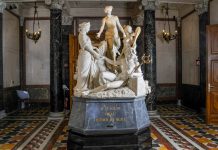
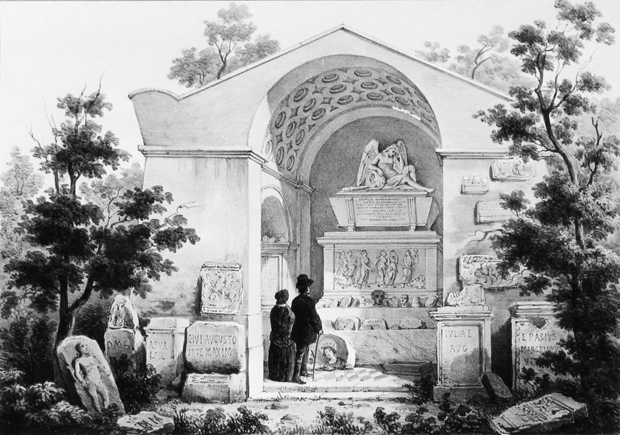
Trieste still remembers him, quietly, almost reverently. The Winckelmann Museum in Trieste, located at Via della Cattedrale 15, on the San Giusto hill, originated in the 19th century as a repository for the city’s ancient heritage. Adjacent to the museum, the Orto Lapidario displays Roman inscriptions, sculptures, and monuments, including the neoclassical tempietto dedicated to Winckelmann.
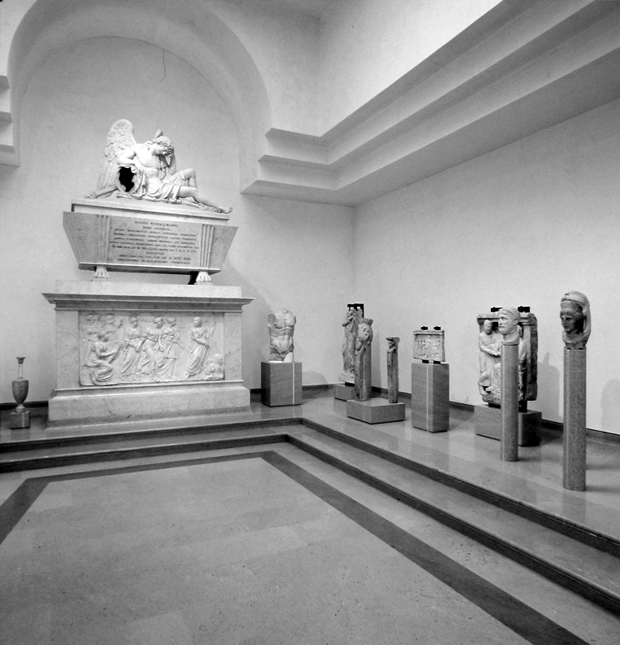
Benefactor Domenico Rossetti spent decades chasing a dream that seemed always just out of reach: giving Winckelmann a worthy monument in the city where his brilliant life ended. Since Winckelmann’s bones had vanished into a common ossuary, Rossetti envisioned a cenotaph, first inside San Giusto Cathedral and later within a standalone “little Pantheon” overlooking the hill. Rebuffed again and again by authorities and finances alike, he ultimately scaled his vision down to a monumental niche among ancient local relics. Only in 1831 did Trieste finally grant the space, allowing Rossetti’s stubborn devotion to crystallize into a memorial that bound Winckelmann’s legacy to the city’s own ancient soul.
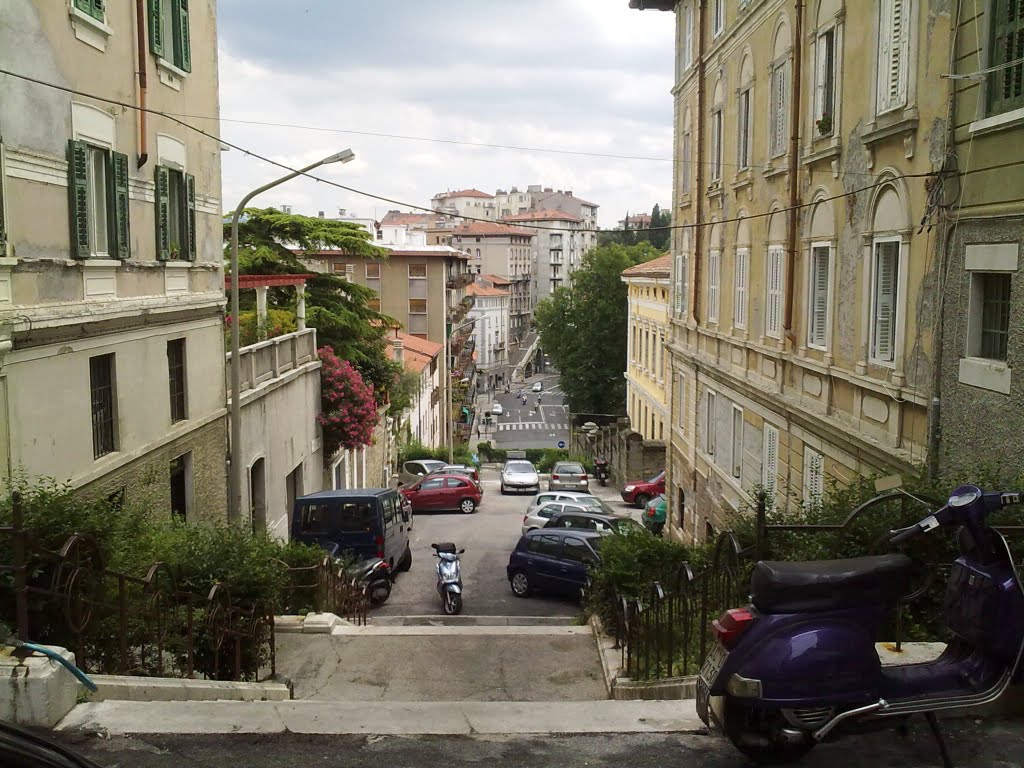
Further away, Scala Winckelmann, a quiet, atmospheric staircase, climbs up to San Giusto hill, not too far from where the German scholar was brutally killed.
More than 250 years later, the murder of Winckelmann remains one of the most haunting unsolved puzzles of cultural history: a crime born from chance, necessity, or something deeper that history has chosen not to reveal.