

report: Nina Vaclavikova
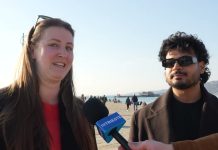
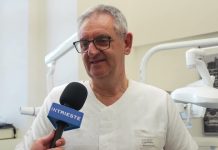
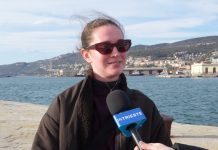
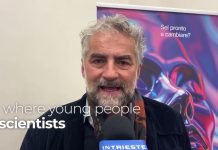
Interviews: Gabriella Robba- member of the NoOvovia committee, Davide Salucci, filmmaker
On Monday evening, the Cinema Ariston will host a public event organized by the Comitato No Ovovia, the civic group that has led opposition to the proposed cable car linking the Porto Vecchio waterfront with the Karst plateau. Rather than presenting court rulings or environmental studies, the group has chosen to stage a cultural evening built around irony and storytelling.
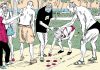
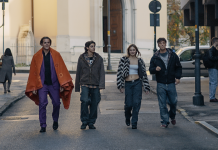
The program includes the screening of five short films by the Trieste-based filmmaker Davide Salucci, as well as the presentation of a new satirical pamphlet by the writer Diego Marani, a native of Ferrara who has long lived in Trieste. The booklet, titled Un’ovovia in fondo al mare (“A Cable Car at the Bottom of the Sea”), imagines the project in absurd and surreal terms.
The event marks a shift in tone for a movement that, for more than four years, has focused on legal appeals and administrative challenges. The cable car — intended to connect the historic port area with the hills above the city — has been repeatedly blocked by rulings of the regional administrative court, which upheld objections raised by opponents on procedural and planning grounds.
William Starc, one of the founders of the No Ovovia committee, said the evening is not merely meant to entertain but to signal a broader moment in the long-running dispute.
“The hope is that this really is the end,” Mr. Starc said in an interview. “After four years of public money and human resources being invested, and after all the decisions of the administrative court that confirmed the validity of what we had pointed out, it would be reasonable to finally close this chapter.”
Although regional and municipal authorities have not formally abandoned the project, the repeated legal setbacks have left its future uncertain. The cable car has become a symbol of deeper divisions within Trieste, touching on questions of environmental protection, urban development, tourism and public spending.
Mr. Marani, whose text is at the center of the evening, said he approached the subject not as a technical expert but as a storyteller responding to what he sees as an almost surreal situation.
“I insist on satire and irony,” he said. “I have nothing directly to do with the cable car, and I don’t know all the technical details. But this strange story of a cable car in Trieste inspired me. Trieste keeps inspiring me, and that is a good thing.”
Whether the project will ultimately be shelved or revived remains unresolved. But for one night, at least, a debate that has shaped Trieste’s recent political life will be explored not through court documents or engineering plans, but through laughter, fiction and film.