














by Nina Vaclavikova
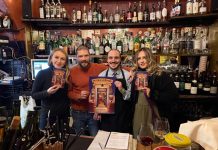
Interview: Silvio Pozenu, President of Altamarea Eventi, manager of Kaiserfest
Piazza Ponterosso, once the commercial heart of the Habsburg port city, came alive Saturday morning with the opening of the eighth edition of Kaiserfest, Trieste’s annual celebration of its imperial past. The event was inaugurated in the presence of Martina Lucia Marsi, who served as the festival’s honorary patron, and Silvio Pozenu, president of the organizing association Alta Marea Eventi.
Running through November 2, the festival transforms the city center into a stage for guided tours, historical reenactments, open-air dances in 19th-century costume, and an artisan market. It is promoted by Alta Marea Eventi in collaboration with the Municipality of Trieste, the cultural association Trieste Ottocento APS, Agenzia Viaggi Mittelnet, Serenissime Danze…800, and the Postal and Telegraphic Museum of Central Europe.
A Journey Through the City’s Austro-Hungarian Roots
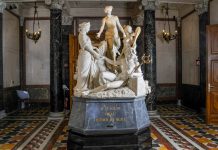
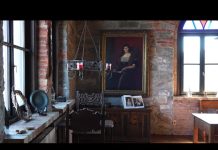
The nine-day festival offers a diverse program designed to immerse visitors in the city’s cultural and architectural legacy. Highlights include guided tours of Trieste’s monumental Catholic cemetery of Sant’Anna, marking its bicentennial, visits to the Psacaropoulo Artist’s House and Museum of Friuli Venezia Giulia, and walks through the city’s historic public gardens and the redeveloped Porto Vecchio area, home to the former Hydrodynamic Power Plant.
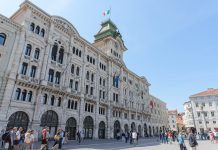
A popular feature of the event, the grand historical parade and ballroom dance in Piazza Unità d’Italia, returns on November 2. Organized by Trieste Ottocento APS, the performance evokes the elegance of Vienna’s late-19th-century dance halls, set to the melancholic yet spirited tones of Schrammelmusik, the popular musical style born in imperial Vienna and still resonant across the regions of the former empire.
This year’s edition also features a musical afternoon titled Kaiserwalzer: From the Danube to the Sea, performed by pianist and conservatory professor Luca Sacher at the Casa della Musica.
From Trieste to Monfalcone and Beyond
In addition to the city’s traditional guided tours, the 2025 program expands beyond Trieste’s borders with a trip to nearby Monfalcone. Visitors can explore the medieval Rocca and the town’s early shipbuilding heritage in a tour led by historian Zeno Saracino.
Another much-anticipated return is the visit to the Postal and Telegraphic Museum of Central Europe, housed in the grand Palazzo delle Poste in Piazza Vittorio Veneto. Built in 1894 by Austrian architect Friedrich Setz—who also designed the post offices of Ljubljana, Graz, and Bolzano—the building is a monument to the region’s fin-de-siècle architecture. The museum preserves original architectural drawings by Setz, along with collections that trace the evolution of postal services from the Austrian era to the present.
The museum’s exhibits include antique telegraph machines, postal maps, field office equipment, and a reconstructed late-19th-century post office, offering a tangible link to the period when Trieste served as the empire’s main Adriatic port.
A Market and Festival Atmosphere
Throughout the festival, Piazza Ponterosso hosts a daily market from 9 a.m. to 11 p.m., featuring local artisans and merchants. The setup recalls the square’s historic role as a bustling marketplace for goods arriving from across the Mediterranean and Central Europe.
The 2025 Kaiserfest program reflects Trieste’s growing interest in rediscovering and celebrating its Mitteleuropean identity—a blend of Italian, Austrian, and Slavic influences that continues to shape the city’s character today.
As the waltzes play once more in Piazza Unità d’Italia, the festival reminds residents and visitors alike that, in Trieste, history is not merely remembered—it dances back to life.