

















by InTrieste
A mountain road connecting the municipalities of Paularo and Arta Terme with Austria is undergoing a major upgrade, with €750,000 invested in the first phase of works and a further €600,000 allocated to complete the route.
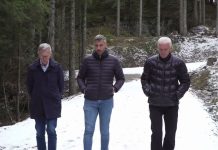
The renovated section, inaugurated on Nov. 9, covers three kilometers of the Valbertat Bassa-Cordin-Stranig Alm route, which runs through the Carnic Alps and provides access to mountain areas frequented by residents, visitors and travelers arriving from Austria.
The first phase improved three of the route’s total 4.5 kilometers, extending from the end of the paved road to the national border. The works began in autumn 2024 and were carried out at an altitude of approximately 1,600 metres, within a protected Natura 2000 area.
The project required careful planning because of the area’s environmental conditions and seasonal weather. Construction activities were concentrated between July and October. The road, which remains unpaved, previously had narrow sections and steep gradients, making passage difficult for cars, motorcycles and service vehicles.
The first phase was carried out by the Carnia Mountain Community using national government funding allocated to the Friuli Venezia Giulia Region.
A second €600,000 phase is scheduled to begin in 2027 and will address the remaining sections needed to complete the cross-border connection. The funding has been allocated through Italy’s national Civil Protection Department and transferred to the municipality of Arta Terme through the regional Civil Protection authority. The project is already at an advanced stage of the authorization process.
The road passes through an area known for its mountain pastures, accommodation facilities and hiking routes. Among the sites along the route are Cason di Nelut, Malga Ramaz, Malga Meledis Bassa and the Al Cippo agriturismo, as well as the junction leading to the Pietro Fabiani mountain refuge.
The nearby Forra de Las Calas trail, which combines natural and historical features, includes a tunnel approximately 200 meters long and sections carved directly into the rock. Cason di Nelut, a building reminiscent of traditional shelters used by lumberjacks, is also scheduled for restoration.
The projects are intended to improve access to the area while supporting its hiking, cycling, hospitality and agricultural activities.