










by Maximiliano Crocamo
Interviews: Massimiliano Fedriga, governor of Friuli Venezia Giulia; Marco Consalvo, President of the Eastern Adriatic Sea Port Authority (Trieste and Monfalcone)
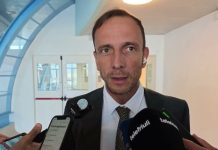
Friuli Venezia Giulia is seeking to strengthen its role as a logistics hub linking northern Adriatic ports with markets in Central and Southern Europe, regional President Massimiliano Fedriga said Thursday.
Speaking at a conference in Trieste titled The Future of the Adriatic in Global Scenarios, Mr. Fedriga called for closer coordination among the ports of northern Italy and further investment in rail and road connections. The event brought together officials and industry representatives to discuss ports, industry and energy, including Marco Consalvo, president of the Eastern Adriatic Sea Port Authority.
Mr. Fedriga said the ports of Trieste and Monfalcone were important not only to the regional and Italian economies but also to European trade. He argued that Friuli Venezia Giulia should work with Veneto and Emilia-Romagna to develop a more integrated logistics network and strengthen the Adriatic corridor, which he said had historically received less attention than routes along Italy’s Tyrrhenian coast.
He also pointed to the India-Middle East-Europe Economic Corridor, or IMEC, as a potential element of Europe’s broader trade strategy. The corridor, he said, should be viewed not simply as an alternative to the Suez Canal but as an additional route that could increase the resilience of European supply chains and strengthen commercial ties with India and the Gulf states.
Mr. Fedriga also linked logistics policy to maritime security, arguing that recent international tensions had highlighted the importance of protecting commercial shipping routes. Safeguarding maritime traffic, he said, was necessary to reduce the risk of disruptions to supply chains and the wider economy.
Looking ahead, Mr. Fedriga said Trieste should expand its role beyond traditional port logistics to include digital infrastructure and other services, with closer integration with the Balkans.
He called for long-term cooperation between regional and national authorities, regardless of changes in political leadership, to support infrastructure development and economic security.