















interview by Maximiliano Crocamo
In a city shaped by the Adriatic, the sea is not simply a backdrop. For generations of residents, learning to sail has been a way of learning how to live.
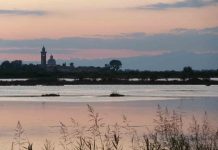
In Trieste, the sea is rarely far from view. The city stretches along the northeastern Adriatic, its waterfront opening toward a horizon that has long shaped the lives, work and imagination of its residents.
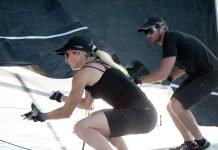
For many children here, an introduction to the sea comes early. Local sailing clubs teach youngsters to handle small boats, read the wind and work with a crew. Some eventually move into competitive sailing, while others simply continue to spend their weekends on the water.
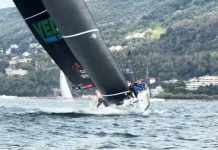
At the University of Trieste, that tradition extends into student life. The university’s sailing team brings together students from different fields, many of whom have been sailing since childhood. In April, university crews competed successfully at regattas in Livorno and Dubrovnik, adding to the institution’s long connection with the sport.
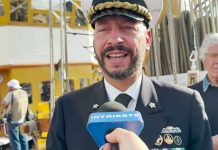
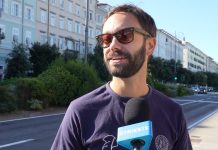
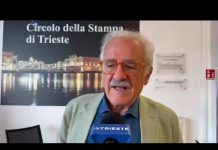
But for Piergiorgio Trevisan, a linguistics professor at the University of Trieste and a lifelong sailor, the importance of sailing goes well beyond competition. Trevisan grew up in the province of Udine and first encountered sailing as a child, when his father owned a boat. “I started out as a child because my father used to own a boat when I was six or seven,” he said. Years later, while living in Australia for two years, he returned to the water in a different way. Sailing, he recalled, was deeply embedded in the surrounding culture.
“Everything is about sailing,” he said. “I met some people that were into sailing. I started sailing with them, and that was what I would do every week, every weekend.” When he returned to Italy, he decided to continue. Then he moved to Trieste.
“I found myself in Trieste,” he said. “I know which is the capital of sailing. And suddenly I said, ‘OK, I cannot be here without sailing.’”
The city’s relationship with the sea is difficult to separate from its identity. Trieste has been a major port for centuries, and its waterfront remains one of the defining features of the city. Every October, the Gulf becomes the setting for the Barcolana, one of the world’s largest sailing events, drawing thousands of boats and spectators.
But Trevisan sees sailing as something more fundamental than an annual spectacle. “In Trieste, the sea is really part of people’s identity,” he said. “The sea and the wind and the salt are kind of entangled to people’s lives since they are kids.”
For children who grow up here, he said, the sea can alter their understanding of where the city ends.
“They learn quite early that the limits of this city do not finish at the river,” he said. “They continue. The horizon is longer.”
That idea of the horizon also helps explain why Trevisan sees value in sailing as an education. On a boat, decisions have consequences. Conditions change quickly. Crew members must communicate, adapt and trust one another. There is no screen between the sailor and the environment.
Modern life, he said, often creates the impression that mistakes can simply be erased. “We’re all nowadays used to just pressing the Undo button,” he said. “OK, I can start from scratch again.”
The sea does not offer that option. “None of these things can be really learned through a screen,” Trevisan said. “It’s just unmediated experience. It needs to be there with salt on your hands and on your face.”
The boats that leave its waterfront today are no longer carrying the same commercial cargoes that once passed through its port. But the instinct to look toward the horizon remains. For Trevisan, that is perhaps the enduring appeal of sailing.
“In Trieste, sailing is more than a sport,” he said. “It’s a way of life.”
And for those who learn it young, the lesson is not necessarily about winning a race. It is about understanding the conditions around you, making a decision and living with its consequences — with the wind, the water and the horizon all still in front of you.