























by InTrieste
Spain has given Italy until Sunday to lift temporary identity checks imposed on travelers arriving from Spain, warning that it will introduce corresponding controls on passengers arriving from Italy if Rome does not reverse the measure.
The dispute, which has lasted more than a week, has exposed differing views within the European Union over how governments should respond to irregular migration while preserving the passport-free travel system at the heart of the Schengen area.
In a statement, the Spanish government described Italy’s decision as “unjust” and “discriminatory towards the Spanish population.” It said the checks had been introduced unilaterally and argued that the Italian government’s justification did not comply with the Schengen Borders Code.
Madrid has asked Rome to withdraw the controls by Aug. 9. If Italy does not do so, Spain said it would adopt “proportionate measures” of its own, a formulation understood to refer to equivalent checks on travelers arriving in Spain from Italian airports and ports.
How the dispute began
Italy announced on July 31 that it would temporarily restore checks on maritime and air connections with Spain, citing concerns over a migrant crisis in Ceuta, the Spanish enclave on Morocco’s northern coast.
The decision followed the arrival of tens of thousands of migrants in Ceuta over several days. Italian Prime Minister Giorgia Meloni described the measure as an extraordinary step intended to protect national security and prevent possible repercussions from the crisis. Foreign Minister Antonio Tajani called it a necessary decision made unavoidable by the circumstances.
The checks began Aug. 1 and are scheduled to remain in place for one month. They apply to non-European Union citizens arriving from Spain at Italian airports and ports, including Rome’s Fiumicino Airport and Milan’s Malpensa and Linate airports.
Italian authorities have said the checks would be selective, with passengers asked to present a passport or other valid identification when required. The stated aim is to avoid significant disruption to the movement of passengers. Italian and Spanish citizens and other European Union travelers are not subject to the measure.
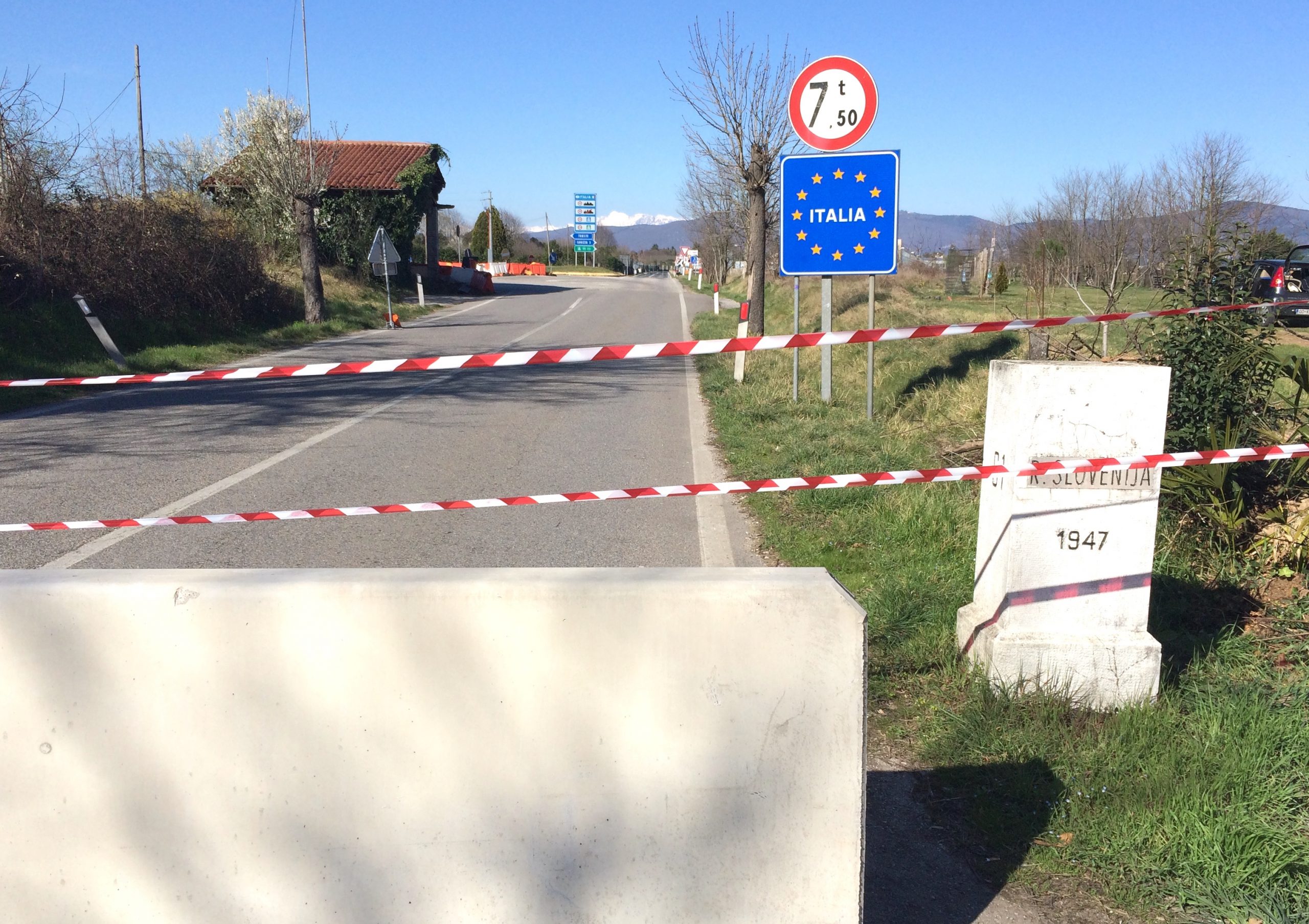
Italy has also reached an agreement with France to strengthen joint controls along their shared land border.
Spain rejects Italy’s justification
Spanish officials have disputed the connection between the events in Ceuta and the need for controls on travel between Spain and Italy.
The Spanish government has argued that Ceuta has a special border regime and that migrants who entered the enclave could not simply continue into the wider Schengen area. Travelers leaving Ceuta for mainland Spain are subject to police identity checks, Madrid says.
Spain’s Interior Minister Fernando Grande-Marlaska described Italy’s decision as unnecessary and disproportionate, arguing that the integrity of the Schengen area had not been compromised.
Prime Minister Pedro Sánchez has appealed to European Union institutions for intervention. He has written to António Costa, the president of the European Council, and Ursula von der Leyen, the president of the European Commission, seeking a response from Brussels.
Mr. Sánchez has also pointed to European border agency Frontex data in arguing that Spain has not been the principal route for irregular migration into the European Union in recent years.
“Solidarity and empathy are optional. Respect for European treaties and for the facts is not,” Mr. Sánchez wrote in a social media post responding to criticism of Spain.
Pressure from Brussels
The dispute has also highlighted divisions among European governments over migration policy and the use of internal border controls.
Ms. Meloni has received support from Denmark’s Prime Minister Mette Frederiksen and from Finnish government officials, while French President Emmanuel Macron has expressed support for Mr. Sánchez.
Ms. Meloni and 21 other European leaders have jointly called on Brussels to convene an urgent meeting of interior ministers to discuss a common European response. Mr. Sánchez has separately appealed to European institutions, making the case that Italy’s controls are unjustified.
The European Commission has emphasized that temporary controls at internal Schengen borders are intended to be a last resort and must be exceptional, proportionate and limited in duration. Brussels has also indicated that Italy had not yet formally notified the Commission of its decision to suspend normal Schengen arrangements.
The immediate question is whether Rome will withdraw or modify the controls before Sunday’s deadline. If it does not, Spain could impose similar checks on travelers arriving from Italy, creating a reciprocal system of controls between two countries that normally operate without routine internal border checks.
The confrontation comes as European governments continue to debate how to reconcile national responses to migration with the preservation of free movement within the European Union.