





















by Maximiliano Crocamo
Interviews: Marco Consalvo, president of the Trieste and Monfalcone ports; Professor Massimo Campilla, lecturer in Naviation and Transport Law at the University of Trieste
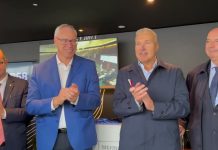
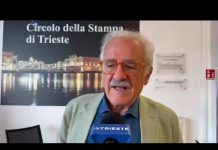
The University of Trieste hosted the conference “Powers and Competences in the Italian Port System” on Wednesday, 6 May 2026, organised by the IUSLIT Department. The event brought together legal, institutional and academic experts to discuss the regulatory evolution of Italy’s port system and the future role of the port of Trieste within the national framework.
Rector Donata Vianelli underscored the university’s role in analysing port-related challenges through economic, legal and engineering perspectives, describing the port sector as one of the most strategically important elements for the region’s future.
Marco Consalvo identified three structural factors that are expected to shape the port system in the coming years.
First, he highlighted the infrastructural evolution of ports as integrated logistics systems. Consalvo described the port of Trieste as unique within Italy, serving a destination market located more than 1,500 kilometres away and operating within broader European logistics networks — a specificity he argued must be safeguarded in any future regulatory framework.
Second, he pointed to increasingly complex market positioning, driven by international instability and mounting competitive pressures.
Third, Consalvo addressed the financing outlook. He warned that within the next decade, once PNRR and complementary public funds are exhausted, alternative instruments — including public-private partnerships — will be needed to sustain infrastructure investment in Italian ports.
Professor Massimo Campilla examined the reform proposal currently under political discussion, which envisages the creation of Porti d’Italia S.p.A., a state-owned company capitalised at one billion euros. Under the proposal, responsibility for major port infrastructure works would be centralised under the new entity through a ninety-nine-year concession, removing such competences from individual port authorities.
Campilla raised three principal concerns.
First, he argued that the proposal would dismantle the current model, in which a national regulatory framework coexists with local operational autonomy, despite the distinct territorial and logistical needs of each port.
Second, he noted that the new company would be funded in part by diverting an estimated 15–20 per cent of the resources currently managed by individual port authorities. According to Campilla, this would deprive them of funds necessary for ordinary operations independent of large-scale infrastructure projects. He cited the Servola station project, which alone requires an estimated 500 million euros, as an example of infrastructure whose financing cannot realistically be handled by a single centralised entity.
Third, he argued that the distribution of decision-making powers under the proposed structure remains unclear.
On the specific issue of Trieste’s International Free Port, Campilla observed that if Law 84/94 (Article 6, paragraph 12) remains unchanged, the competences governing the Free Port would continue to rest with the president of the Trieste port authority and would not be transferred to the new company.
During the conference, the volume The Governance of Ports and National Economic Unity by Alessandro Lauro was presented, further contextualising the legal and institutional questions raised throughout the debate.
Among the participants was Carlo Modica de Mohac di Grisì, who also contributed to the discussion.