
























by InTrieste
Seasonal work remains a crucial pillar of the labor market in Friuli Venezia Giulia region, where roughly one in three hires made throughout the year is for a temporary position tied to tourism or other seasonal industries, regional officials said this week.
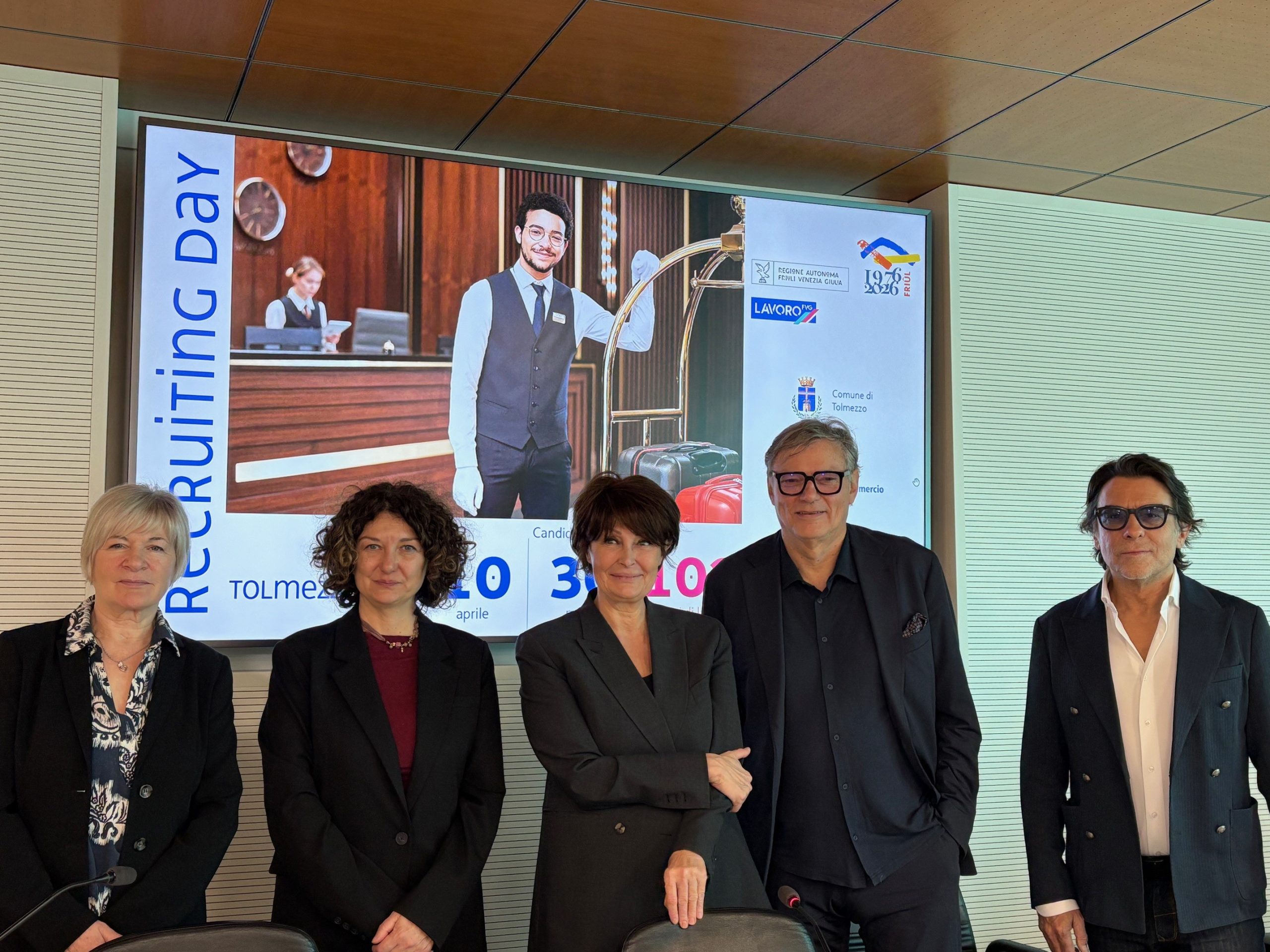
Speaking in Udine on Tuesday, the regional councillor for labor, education, research and family policies, Alessia Rosolen, presented a new recruiting initiative aimed at matching workers with employers ahead of the summer tourist season in the mountains.
The event, known as a Recruiting Day, will take place on April 10 at the Luigi Candoni Municipal Theater in Tolmezzo, a town in the Carnic Alps that serves as a gateway to some of the region’s best-known mountain resorts.
“Seasonal work represents a very significant component of our labor market,” Rosolen said. “For this reason, we must continue to improve the quality of job opportunities by strengthening the connection between training, services for businesses and tools that support hiring.”
The initiative will bring together 24 businesses — including hotels, mountain lodges and restaurants — offering a total of 102 seasonal positions. The jobs are concentrated in hospitality and tourism services across the Friulian mountain area.
Organized by the region’s employment centers, the recruiting day aims to facilitate direct meetings between employers and job seekers preparing for the summer tourism season. Positions include roles in reception and guest services, restaurant service and bar operations, kitchen work, housekeeping, maintenance and wellness services.
Applications for the event are open until March 30 through an online portal: https://bit.ly/RAFVG2026_RD_Tolmezzo_TurRistS.
Regional officials say younger workers already play a major role in the sector. More than half of seasonal workers are under 35, according to the regional labor department, making tourism an important entry point into the workforce.
“It is important to dispel the idea that young people do not want to work,” Rosolen said. “Seasonal employment often provides their first opportunity to gain experience and develop professional skills.”
At the same time, the regional government has been trying to encourage longer-term employment. Incentive programs in Friuli Venezia Giulia prioritize permanent hires for young people and women, as well as apprenticeship programs that combine training and work.
Supporting apprenticeships, Rosolen said, “means investing concretely in the professional future of young people and in the growth of companies.”
The tourism labor market in the region continues to show signs of growth, regional officials said. More than half of seasonal hires occur between April and July, the peak period leading into the summer travel season.
Friuli Venezia Giulia attracts visitors both to its Adriatic coastline — including destinations like Trieste and Grado — and to its alpine resorts near the borders with Austria and Slovenia. Officials say the mountain areas, in particular, depend heavily on seasonal staff during the warmer months.
The region has also seen a rise in temporary contracts later converted into permanent ones, suggesting that seasonal work can sometimes lead to stable employment.
“The recruiting day is the result of teamwork between businesses, employment centers and public institutions,” Rosolen said. “Only through this collaboration can we improve the match between labor supply and demand and strengthen the quality of mountain tourism, which represents a strategic asset for Friuli Venezia Giulia.”
Among the participating businesses are hotels and restaurants across the alpine area, including properties in Tarvisio, Sappada, Malborghetto, Arta Terme, Forni di Sopra and other mountain towns that rely heavily on seasonal tourism.