

























by Guisela Chiarella
Italy’s lower house of Parliament approved a contentious bill last week that would allow sex education in middle schools — but only if parents sign off — igniting a new round of political and cultural debate in a country where such instruction remains rare.
The measure, backed by Prime Minister Giorgia Meloni’s right-wing coalition, passed 151 to 113 and now heads to the Senate. If confirmed, it would apply to students ages 11 to 14 and bring middle school policy in line with high schools, where parental consent is already required.
Supporters of the bill, led by the League party, argue that parents must retain control over what children learn about sexuality and identity. Critics from the center-left say the law effectively limits access to information at a time when educators are calling for more, not less, guidance for adolescents.
“This puts obstacles in the way of schools,” said Sara Ferrari of the Democratic Party, calling comprehensive sex education “a primary tool for combating violence against women.”
The government, meanwhile, has accused opponents of pushing “gender propaganda” into classrooms. Rossano Sasso, a League lawmaker, said the bill aims to protect younger children from “theories that are difficult to understand and can cause confusion,” insisting that older students should be included only with parental approval.
The clash comes amid heightened anxiety over gender-based violence. Just last week, outrage erupted after students at a Rome high school discovered a so-called “rape list” scrawled in a bathroom — an incident that reignited calls for better education on consent and respect.
Italy is one of the few European Union countries without compulsory sex education. It remains banned outright in primary and preschool settings, and no national curriculum exists.
Yet in parts of the country, schools are moving ahead on their own. Several institutions in Friuli Venezia Giulia — the northeastern region bordering Slovenia and Austria — have quietly begun introducing relationship and consent workshops, often led by psychologists and local associations.
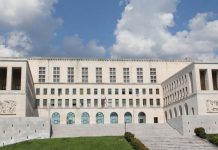
To gauge public opinion, we spent an afternoon in downtown Trieste, the region’s capital, asking residents what they thought. Many welcomed the idea of structured programs in schools, while others argued that such conversations should take place at home.
As the Senate prepares to take up the bill, the debate over who should teach Italy’s youth — and what they should be taught — is far from over.