

























by InTrieste
Nearly 40 years after Italian voters rejected nuclear power in the wake of the Chernobyl disaster, Parliament has approved legislation that lays the legal groundwork for the country’s possible return to atomic energy.
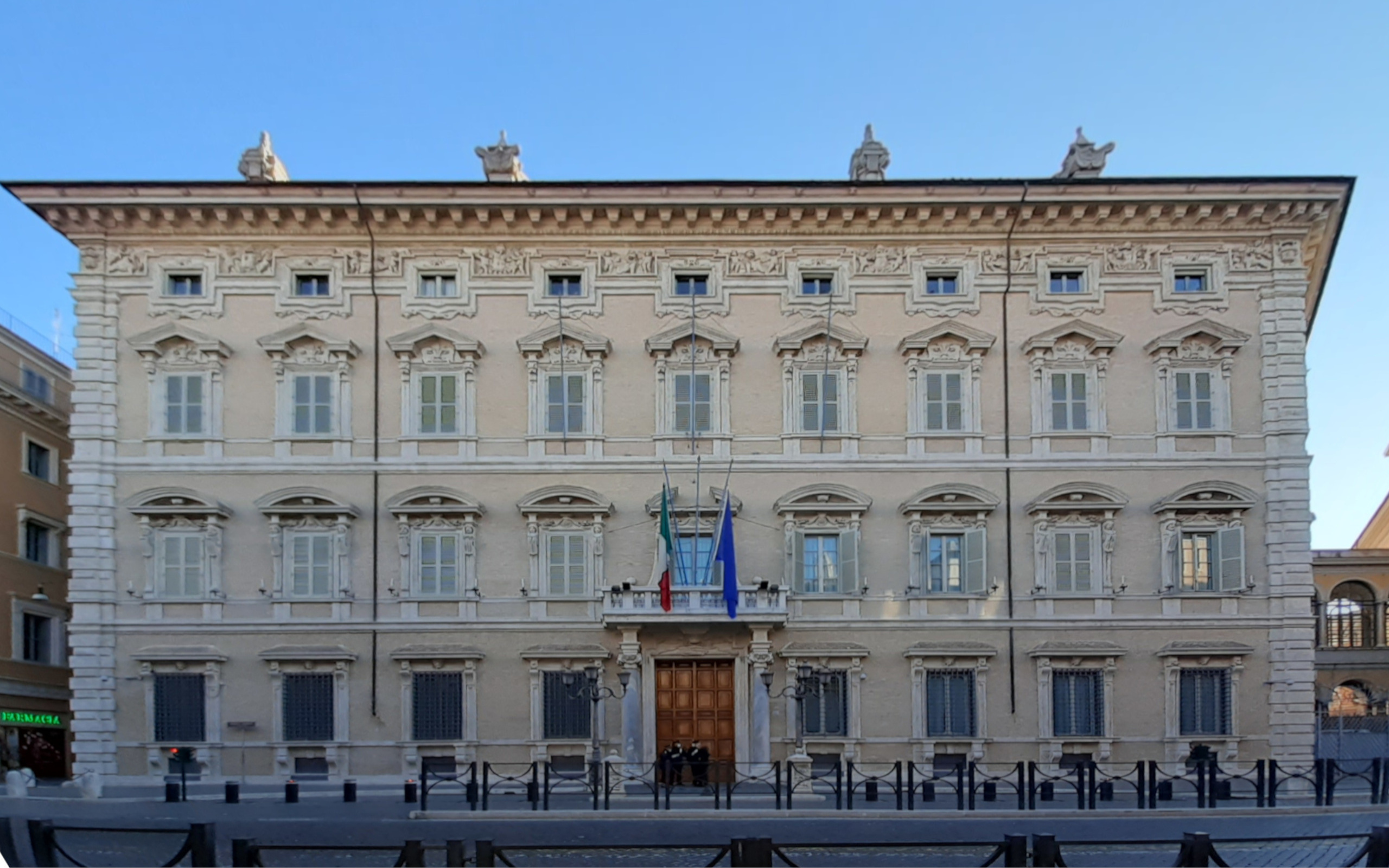
The Senate voted 81 to 51, with 7 abstentions, to pass an enabling law that authorizes the government to create a regulatory framework for what it calls sustainable nuclear energy. The measure, already approved by the Chamber of Deputies in June, does not authorize the construction of any reactors. Instead, it begins a process of drafting the rules that would govern future projects.
The distinction is significant. No sites have been selected, no plants have been approved, and no construction can begin until the government issues a series of implementing decrees, expected within the next 12 months.
Building the Rules Before the Reactors
Rather than approving a single power station, the law delegates broad regulatory authority to the government. It covers the licensing and management of nuclear facilities, hydrogen production powered by nuclear energy, the treatment of spent fuel, radioactive waste management and operational safety standards.
Environment and Energy Security Minister Gilberto Pichetto Fratin, who introduced the legislation, described the vote as a turning point in Italy’s energy policy. He has argued that nuclear power should function alongside renewable energy, providing stable electricity generation while supporting Italy’s goal of reaching climate neutrality by 2050.
The government has until September 2027 to publish the implementing decrees, with an additional two years available for amendments and refinements to the framework.
A Long Timeline
Even under the government’s most optimistic projections, Italy’s return to nuclear energy remains distant. Officials estimate that the first reactors would not become operational until 2033 or 2034, placing the country years behind other European nations already developing new nuclear capacity.
Much of the coming debate is expected to focus on radioactive waste, one of the issues that has shaped public opposition for decades. Italy still lacks a permanent national repository despite continuing to manage waste from its former nuclear plants and from hospitals and research facilities.
Pichetto Fratin has said the new framework distinguishes between high-level radioactive waste — a relatively limited volume that would remain in temporary storage pending a European geological repository — and the far larger quantity of low- and medium-level material generated through decommissioning and medical use.
A Familiar Political Divide
The vote exposed long-standing divisions over nuclear energy.
Prime Minister Giorgia Meloni hailed the legislation as a pragmatic decision that restores Italy’s ability to regulate and eventually produce nuclear energy after decades of inactivity.
Opposition lawmakers offered a different assessment. Mariolina Castellone of the Five Star Movement argued that the advanced reactor technologies cited by the government are not yet commercially established, while Angelo Bonelli of the Greens and Left Alliance questioned the project’s economic viability and called for greater transparency over its costs and financing.
Returning to an Old Question
Italy once operated four nuclear power plants — at Latina, Garigliano, Trino and Caorso — before the 1987 referendum led to their closure. A second referendum in 2011, held after the Fukushima disaster in Japan, reaffirmed the country’s rejection of nuclear power.
The energy crisis triggered by Russia’s invasion of Ukraine in 2022 revived the discussion, as rising fuel prices prompted renewed interest in diversifying Italy’s electricity supply. The legislation approved this week represents the first concrete parliamentary step toward rebuilding a nuclear sector, though its future will depend on regulations that have yet to be written and on public acceptance of a technology Italians have twice voted to abandon.
For now, the Senate’s vote marks the beginning of a regulatory process rather than the start of construction — leaving Italy’s nuclear future an open question, not a completed project.