


















by InTrieste
The Friuli Venezia Giulia regional government has rejected a proposal to appoint a special commissioner for climate change policies, arguing that the region’s existing environmental governance framework is already functioning under current legislation.
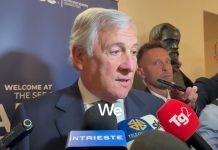
Speaking during a regional council session on Tuesday, Fabio Scoccimarro, the regional councillor for environmental protection, energy and sustainable development, said the request was unnecessary because the mechanisms established by the FVGreen law are already being implemented.
Scoccimarro said the region is updating its Sustainable Development Strategy, while the Regional Climate Plan has entered the Strategic Environmental Assessment process, a key step before adoption. A separate Climate Strategy is also being drafted and will be submitted to the regional steering committee, where it will define the coordination and governance of future climate actions.
The region is simultaneously developing a digital platform with technical support from Insiel and the Regional Environmental Protection Agency (Arpa FVG) to monitor and manage climate-related policies.
“We are not dealing with instruments that still need to be invented,” Scoccimarro told the council. “We are implementing a system that is already provided for by law.”
Energy policy remains central to the region’s climate strategy. According to Scoccimarro, the energy sector accounts for approximately 86 percent of Friuli Venezia Giulia’s greenhouse gas emissions. He said the Regional Energy Plan (PER)sets operational measures extending to 2045, five years ahead of the European Green Deal’s 2050 climate neutrality target, and is already in an advanced stage of implementation.
The councilor also said the regional administration is continuing to finance projects supporting municipalities and residents while broader climate planning is finalized, rather than waiting for the new policy framework to be formally approved.
The motion calling for a special commissioner was discussed as part of a broader debate on the region’s response to climate change. Scoccimarro maintained that future environmental policy should be built through existing institutions and long-term planning rather than by creating an additional extraordinary office.