






















by InTrieste
On San Giusto Hill, a centuries-old episcopal palace and noble residence are being transformed into a new chapter for one of Italy’s most intriguing cities.
For centuries, the buildings stood watch over Trieste. From their perch atop San Giusto Hill, overlooking the Adriatic Sea, they witnessed Venetian sieges, Habsburg emperors, the rise of a free port, the evolution of public healthcare and, eventually, the routines of military administration. Generations passed through their corridors. History accumulated in layers.
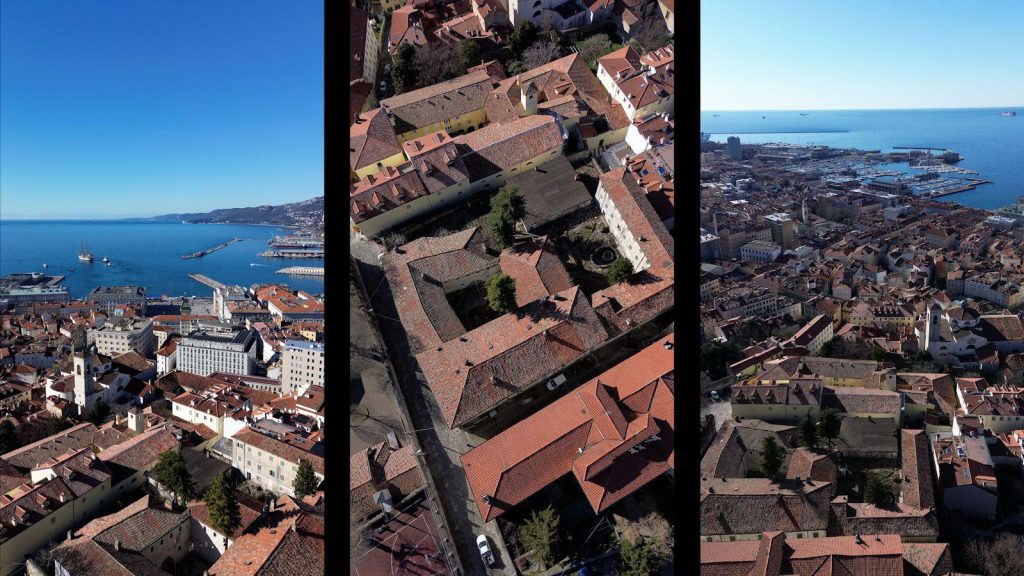
Now, two of the city’s most significant historic properties—Palazzo Vescovile and Casa Marenzi—are preparing for yet another transformation, one that reflects not only a new future for the buildings themselves, but perhaps for Trieste as a whole.
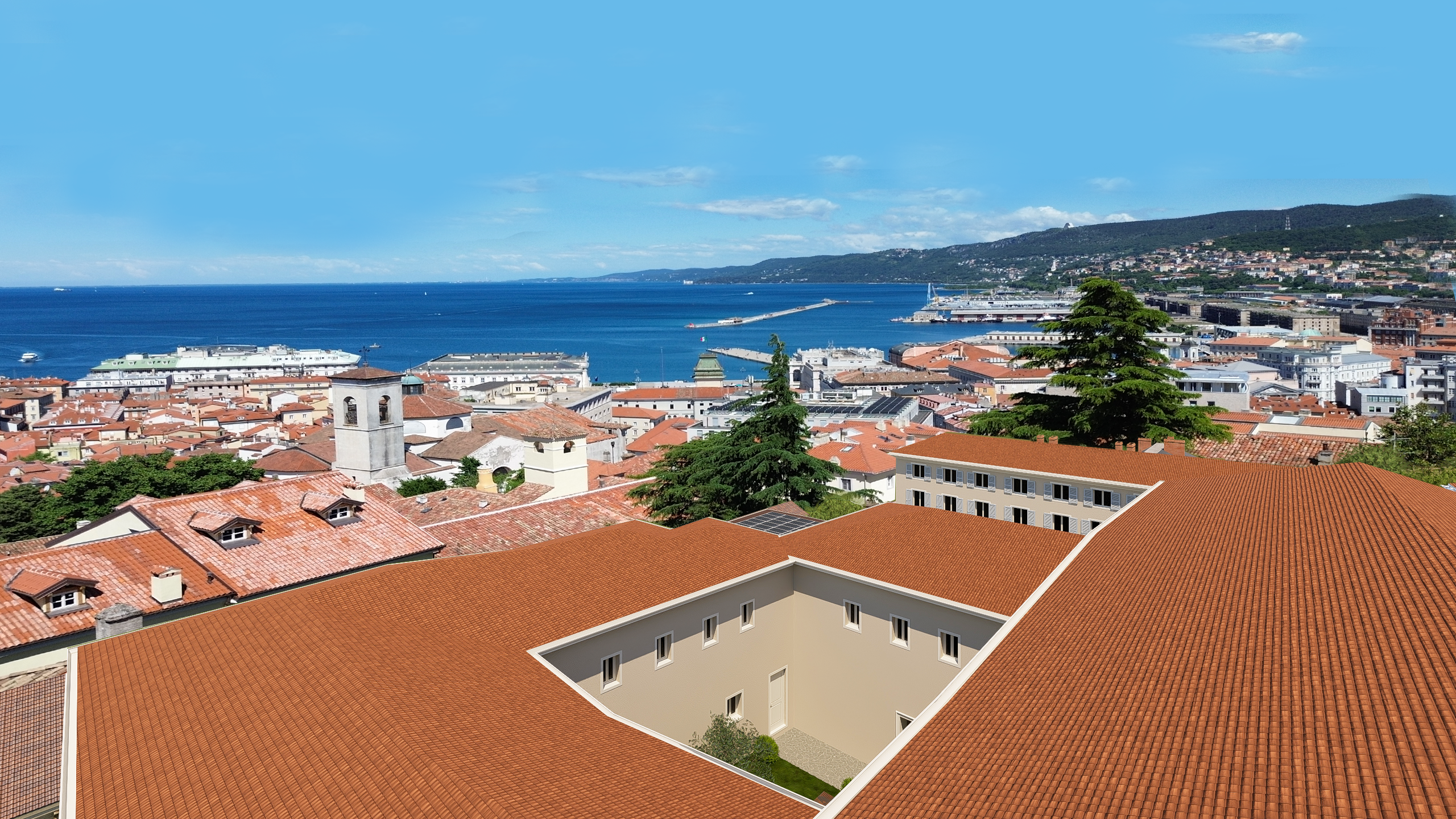
The ambitious restoration project, led by Edil Group, is breathing new life into a long-neglected section of the former military district on San Giusto Hill. More than a real estate development, the initiative represents a broader effort to reconnect one of Trieste’s most historically important sites with the life of the city below.
In an era when European cities are increasingly searching for ways to balance preservation with growth, the redevelopment offers a compelling case study in how history can be repurposed without being erased.
A Hill That Holds the Story of a City
Few places encapsulate the history of Trieste as completely as San Giusto Hill.
Long before the city became a cosmopolitan port of the Habsburg Empire, this elevated plateau served as the center of political, religious and civic life. Roman remains, medieval fortifications and ecclesiastical institutions coexist within a remarkably compact landscape.
The origins of Palazzo Vescovile stretch back to the late Middle Ages and are closely intertwined with the city’s uneasy relationship with Venice.
The original episcopal residence stood elsewhere on the hill but was destroyed during the Venetian siege of 1368-1369. Historical records indicate that Bishop Angelo Canopeo subsequently relocated the bishopric in 1381 to what is today Via del Castello, establishing the foundation of the complex that survives today.
For centuries, the palace functioned as one of the city’s principal centers of authority. Emperors including Leopold I and Charles VI stayed within its walls, underscoring its significance within the political and religious life of the region.
Yet the building’s role evolved alongside Trieste itself.
As the city embraced its identity as an international trading hub in the 18th century, the palace entered a new phase. Sold to government authorities in 1785, it became a civil hospital, later serving as a psychiatric institution, municipal headquarters and eventually a military district that remained active until 1995.
The building’s many lives mirror the transformations of Trieste itself—a city continually reinventing its purpose while retaining a strong sense of place.
The Noble Neighbor
Adjacent to the palace stands Casa Marenzi, a less imposing but equally significant structure that adds another layer to the story of San Giusto.
Built by Bishop Antonio Marenzi between the late 16th and early 17th centuries as a family residence, the building reflects the aristocratic dimension of life on the hill. Its architecture complements the institutional grandeur of the episcopal palace while offering a more intimate perspective on the area’s past.
During the 20th century, Casa Marenzi acquired a cultural legacy of its own when part of the building housed the studio of renowned Trieste sculptor Nino Spagnoli.
Visitors can still spot traces of that history today.
The original sign of Spagnoli’s workshop remains visible on the façade, a modest detail that connects the building to one of the city’s most beloved artists. Spagnoli’s works—including monuments dedicated to Umberto Saba, James Joyce and Italo Svevo—have become integral parts of Trieste’s urban identity.
The presence of the artist’s former studio highlights the remarkable diversity of stories embedded within the complex. Religious authority, political power, healthcare, military service, aristocratic life and artistic creation have all occupied the same site over the centuries.
That layered history is precisely what makes the restoration so compelling.
Reimagining Historic Living
The redevelopment of Palazzo Vescovile and Casa Marenzi comes at a moment when Trieste is increasingly looking outward.
Over the last decade, the city has benefited from renewed international attention driven by scientific research, logistics, tourism and cross-border economic development. Its position at the crossroads of Central Europe and the Mediterranean has once again become a strategic asset.
Yet international appeal today depends on more than infrastructure or economic indicators.
Cities compete through quality of life, distinctive architecture and the ability to offer authentic urban experiences. Increasingly, historic districts are viewed not as obstacles to modernization but as assets capable of attracting residents, professionals and investors seeking something that newer developments often lack: character.
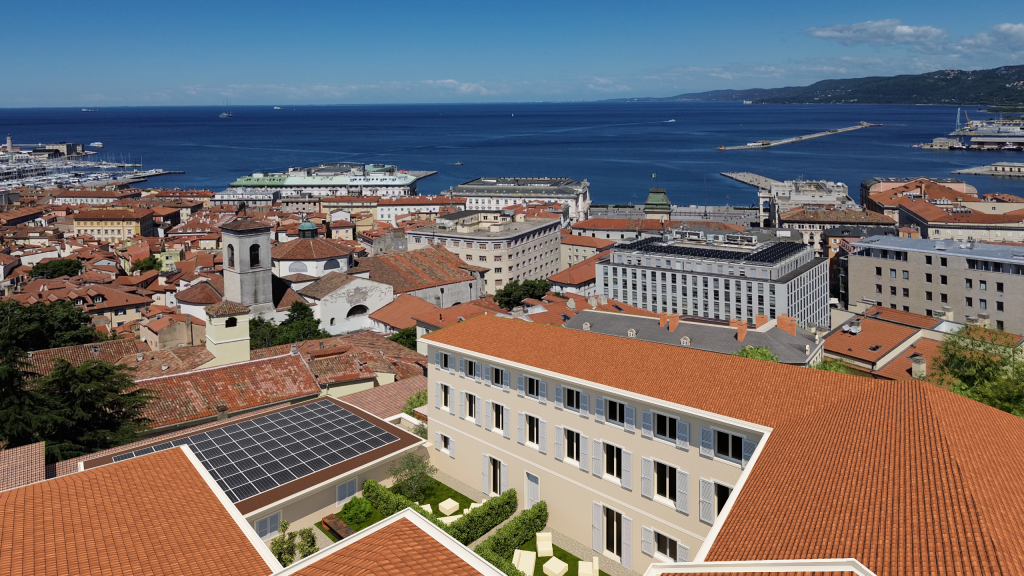
The San Giusto project embraces that philosophy. Plans call for the creation of elegant residences integrated within the existing historic fabric, complemented by underground parking, landscaped green spaces and modern amenities. The challenge lies not simply in restoring old buildings but in making them functional for contemporary life without compromising their architectural integrity.
That balance between preservation and practicality has become one of the defining questions facing historic European cities. When successful, such projects can transform underutilized heritage sites into vibrant urban assets.
A Different Model of Urban Development
The restoration also reflects a broader shift in how urban regeneration is understood. For much of the 20th century, development often meant demolition and replacement. Today, sustainability concerns and growing appreciation for cultural heritage have encouraged a different approach: adaptive reuse.
Rather than consuming new land, projects like Palazzo Vescovile and Casa Marenzi seek to unlock value from existing structures, preserving historical identity while supporting economic growth.
The benefits often extend beyond the immediate site. Thoughtful restoration can elevate surrounding neighborhoods, encourage additional investment and strengthen a city’s overall image. In places like Trieste, where architectural heritage is among the city’s greatest assets, these effects can be particularly significant.
The goal is not to freeze history in place. Instead, it is to allow historic spaces to continue evolving, ensuring that they remain relevant to contemporary urban life.
The Future Hidden in the Past
Standing on San Giusto Hill today, it is easy to see why generations of rulers, clergy, artists and citizens have been drawn to this place. The view stretches across rooftops and church domes to the sea beyond. Layers of history remain visible in every direction.
What is changing is the role these buildings will play in the city’s future.
The transformation of Palazzo Vescovile and Casa Marenzi is ultimately about more than architecture. It represents a belief that heritage can be an engine of renewal rather than a relic of the past.
For Trieste—a city that has long thrived at the intersection of cultures, empires and ideas—that philosophy feels particularly fitting.
The future, after all, is often built from foundations that have been waiting centuries to be rediscovered.