














by InTrieste
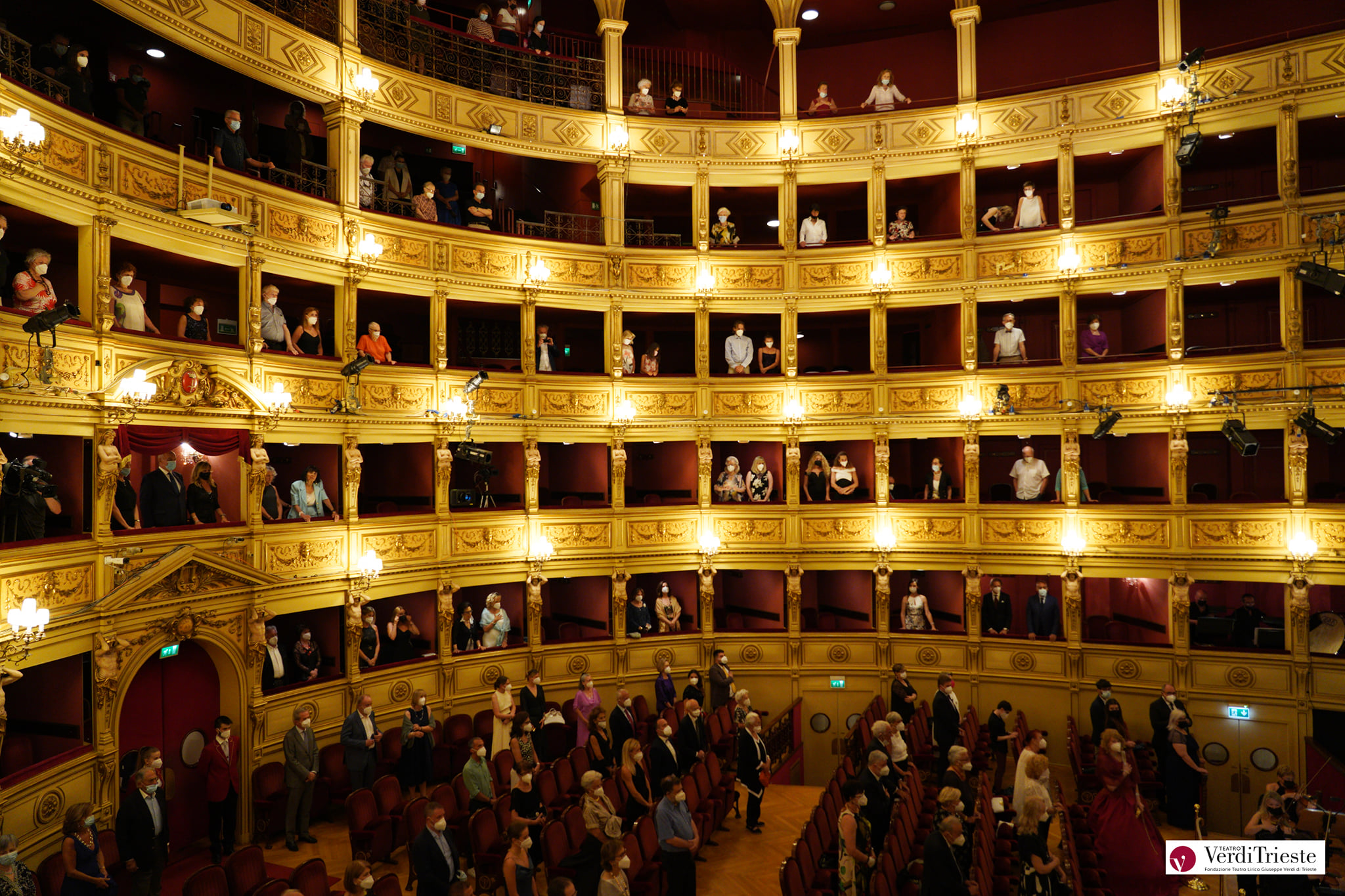
Nearly five decades after its last appearance in the city, Richard Strauss’s Elektra will return to the stage of the Teatro Verdi in June 2026 as part of the theater’s new opera and ballet season.
The production marks the first Trieste staging of the work since 1978 and only the fourth in the city’s history. First performed locally in 1936, Elektra arrived in Trieste at a time when Strauss’s psychologically intense adaptation of the Greek myth was still considered a provocative addition to the operatic repertoire.
The new production, created by the Fondazione Teatro Lirico Giuseppe Verdi di Trieste, will be conducted by Enrico Calesso and directed by Marco Filiberti, a filmmaker and theater director making his operatic debut. Scenic design is by Benito Leonori, with costumes by Daniele Gelsi, lighting by Alessandro Carletti and video design by Mario Spinaci.
Based on Hugo von Hofmannsthal’s adaptation of the ancient Greek story, Elektra follows the daughter of Agamemnon as she seeks vengeance for her father’s murder at the hands of her mother, Klytämnestra, and her lover, Aegisth. Premiered in Dresden in 1909, the opera is widely regarded as one of Strauss’s most influential works, notable for its psychological complexity, dense orchestration and expressionist language.
The opera occupies a particular place in Trieste’s cultural landscape. Written during a period shaped by the intellectual currents of early twentieth-century Vienna, including the emerging fields of psychoanalysis and psychology, Elektrareflects many of the same cultural influences that also left their mark on the literature of the Habsburg port city.
For the Verdi’s new staging, the creative team has chosen an unconventional arrangement that places the orchestra onstage rather than in the pit. The performance space will extend toward the audience, bringing spectators closer to the drama while emphasizing the relationship between music and action. According to the theater, the concept was developed over more than a year under the guidance of Calesso.
The cast features several internationally recognized singers associated with the German and Strauss repertory. The role of Klytämnestra will be shared by mezzo-sopranos Okka von der Damerau and Sanja Anastasia. Elektra will be performed by Elena Batoukova-Kerl and Diana Lamar, while Chrysothemis will be sung by Simone Schneider and Regina Riel. Alexander Schulz will appear as Aegisth in all performances.
The role of Orest will alternate between bass Mikhail Petrenko and bass-baritone Lars Fosser. Supporting roles will be performed by Andrea Pellegrini, Saverio Fiore, Valentina Bilancione, Sophie Haagen, Benedetta Marchesi, Marta Lotti, Veronica Prando, Mandy Fredrich, Vida Matičič Malnaršič, Francesca Palmentieri and Elisa Serafini.
Paolo Longo will prepare the chorus, with performances featuring the Orchestra, Chorus and technical staff of the Teatro Verdi Foundation.
The opera will be sung in its original German, with Italian and English surtitles.
Performances are scheduled for June 19, 20, 21, 26, 27 and 28, 2026, at the Teatro Verdi in Trieste.