


















by Nina Vaclavikova
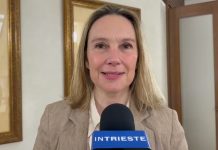
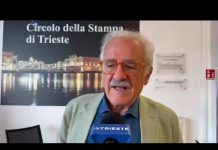
Interviews: Donata Vianelli, Rector of the University of Trieste; Matteo Cornacchia, Delegate for Innovative Teaching
The University of Trieste has introduced a new video production laboratory for digital teaching and launched its first four Massive Open Online Courses, or MOOCs, as part of a national initiative aimed at expanding access to higher education through digital tools.
The effort is part of the DEH ALMA project — Advanced Learning Multimedia Alliance for Inclusive Academic Innovation — funded through Italy’s National Recovery and Resilience Plan (PNRR) under the Digital Education Hub program. The project supports universities in developing digital learning resources and integrating them into traditional teaching.
MOOCs are free online courses designed to be flexible and accessible to large audiences. They are intended both to broaden access to university-level education and to complement traditional classroom instruction with digital learning formats. The courses also align with the growing use of “microcredentials,” short academic certifications that recognize the completion of targeted learning modules focused on specific skills.
The courses developed by the University of Trieste will be included in the national ALMA catalog and are available through the Federica Web Learning platform operated by the University of Naples Federico II, which coordinates the ALMA network.
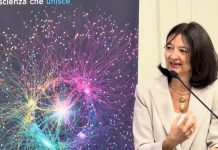
“With the new laboratory and the launch of the first four MOOCs, our university strengthens its commitment to high-quality digital teaching capable of combining technological innovation, inclusion and international openness,” said Rector Donata Vianelli. She described the initiative as part of a broader effort to modernize the Italian university system through strategic investments supported by the PNRR.
The university’s first four courses cover a range of academic disciplines and are designed for an interdisciplinary audience, including participants without specialized academic backgrounds.
One course focuses on data science and statistics. Led by professors Luca Bortolussi, Adriano Peron, Alejandro Rodriguez Garcia, Alessandro Fabris and Teresa Scantamburlo, it introduces the fundamentals of digital data, including how data are collected, organized, analyzed and visualized. The course also addresses ethical issues, data protection and the European Union’s General Data Protection Regulation (GDPR), with the aim of helping participants understand how data can be used responsibly.
A philosophy course taught by Professor Giovanni Grandi explores different interpretations of justice, including distributive and restorative justice. The course examines approaches to conflict resolution associated with restorative justice practices, particularly in criminal contexts.
Another course, created by Professor Pierre Thibault, provides an introduction to X-ray computed tomography (CT). It traces the development of the technology and its applications in medicine, scientific research and industry, while explaining the physical principles behind X-ray interactions with matter and the mathematical methods used to reconstruct CT images.
The fourth course, taught by Federico Berton, Roberta Altin, Giuseppe Grimaldi and Caterina Falbo, addresses contemporary migration with a focus on healthcare. It examines how linguistic, cultural and religious differences affect medical care and emphasizes the importance of training healthcare professionals to work effectively with interpreters and patients from diverse backgrounds.
The new Digital Education Hub laboratory at the university was designed as a multifunctional production space that can be quickly reconfigured for different uses, including recording MOOCs, producing video podcasts, conducting photo shoots and hosting live webinars.
The studio is equipped with 4K PTZ cameras, a multi-camera control room, professional lighting and broadcast-level audio systems. A dedicated 10-gigabit network and advanced storage system support a production workflow that allows for faster recording, editing and post-production.
University officials say the initiative represents a step toward integrating digital tools more fully into higher education, while making academic knowledge more widely accessible.