





















by InTrieste
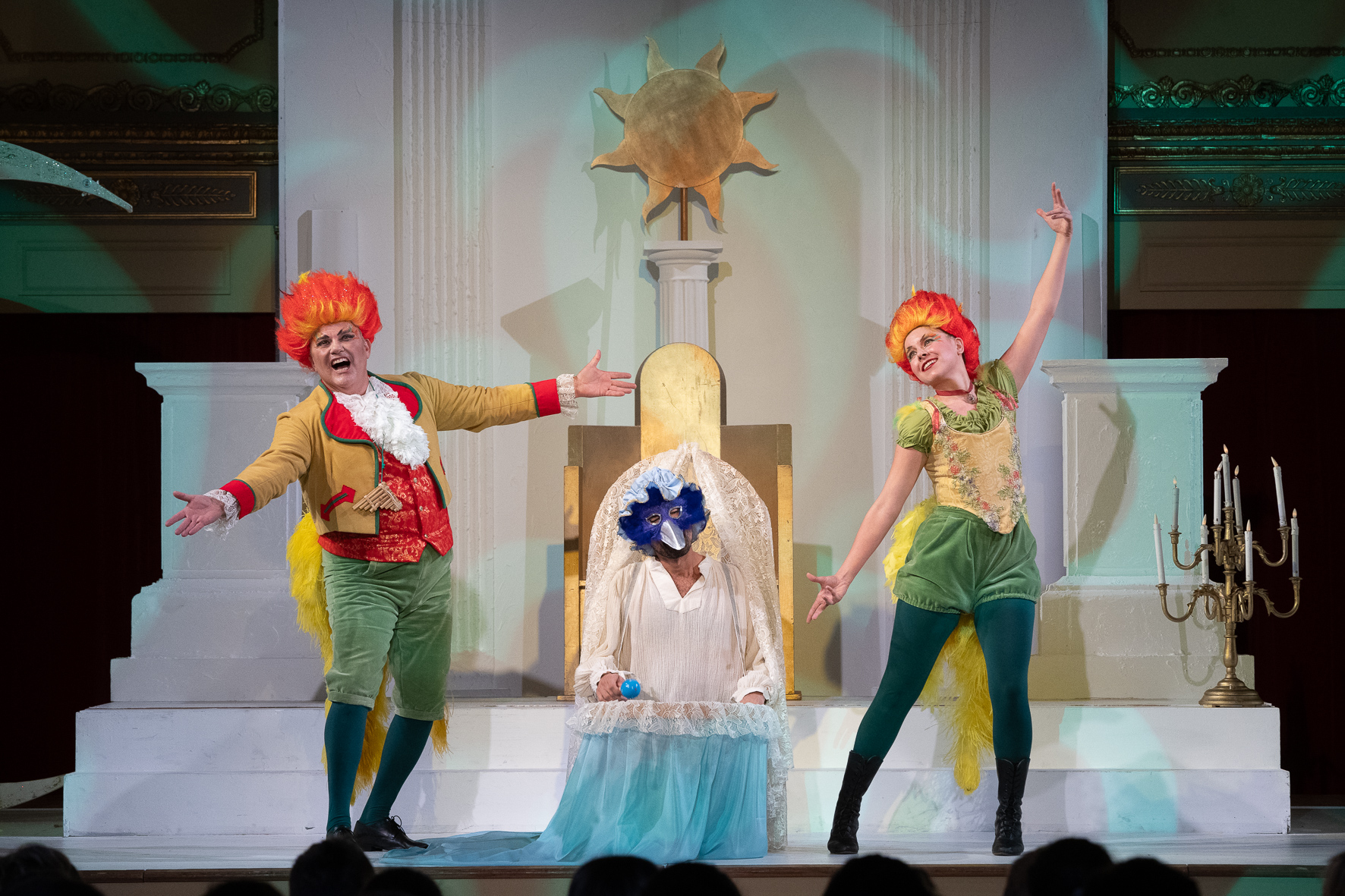
At the Ridotto Victor de Sabata of the Fondazione Teatro Lirico Giuseppe Verdi di Trieste, a streamlined version of one of Mozart’s most enduring works will return to the stage this March. From March 3 to 22, the theater will present Il flauto magico (Fantasia in un atto da Die Zauberflöte), a one-act adaptation of Die Zauberflöte by Wolfgang Amadeus Mozart, conceived especially for schools and families.
The production revisits a staging first introduced here in 2023, with direction, sets and costumes by Andrea Binetti, who also crafted the reduction of the libretto. The new orchestration is by Paola Magnanini, a 26-year-old Italian composer from Arezzo whose recent work has included adaptations and orchestrations for several Italian theaters. The performance will be led from the violin by Stefano Furini, serving as Konzertmeister, with the orchestra of the Verdi in a chamber formation.
Mozart’s original The Magic Flute, which premiered in Vienna in 1791, has long occupied a singular place in the operatic repertory — at once fairy tale, Enlightenment allegory and popular entertainment. Its blend of fantastical elements, moral trials and comic interludes has often made it an entry point for younger audiences, even as its symbolic undercurrents continue to invite scholarly interpretation.
In Trieste, the one-act format condenses the opera’s intricate narrative into a more compact arc. Binetti takes on the dual role of Papageno and narrator, guiding audiences through the story’s shifting allegiances and allegorical motifs. The cast includes the tenor Francesco Napoleoni as Tamino, the soprano Veronika Foia as Papagena, the soprano Atefeh Kadkhodazadeh as Pamina and the bass Kevin Baliviera as Sarastro. Giacomo Segulia appears in multiple roles, including Monostatos and one of the Three Ladies.
Performances are scheduled both in the morning and evening, reflecting the production’s dual focus on student groups and the general public. Tickets are priced at 10 euros, with reduced admission of 5 euros for those under 18 and for school groups.
The Ridotto’s intimate setting — a salon-like space adjacent to the main hall — has in recent seasons become home to the theater’s “Opera in One Act” series, an initiative aimed at broadening access and introducing younger audiences to the operatic canon through shorter formats.
If the enduring appeal of Mozart’s score lies in its balance of immediacy and mystery, this Trieste production seeks to preserve that equilibrium in miniature: a familiar work reshaped for a contemporary audience, without relinquishing its fantastical core.