














by InTrieste
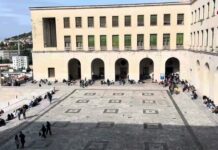
As the academic year draws to a close, the University of Trieste has received one of the highest distinctions available in Italian higher education, securing placement in the top tier of the country’s periodic accreditation system.
The National Agency for the Evaluation of Universities and Research Institutes (ANVUR), Italy’s independent quality assurance body, awarded the university a “fully satisfactory” institutional rating, the highest possible judgment. To date, only four other universities — Pavia, the University of Modena and Reggio Emilia, the Polytechnic University of Turin, and Bocconi University — have achieved the same result among the 33 institutions evaluated so far.
According to ANVUR’s final report, the University of Trieste received top marks in 20 out of 23 assessment areas, or 86.7 percent of the total points of attention. That score exceeds the highest percentage previously recorded among institutions in the same accreditation tier.
“This is an objective and independent assessment that considers the full scope of what we do — from teaching and research to public engagement, health care activities, services, and resource management,” said Donata Vianelli, who became rector in August. She described the outcome as the result of a collective effort involving the entire academic community.
What Periodic Accreditation Measures
Periodic accreditation is ANVUR’s comprehensive review process, carried out at regular intervals, to evaluate the overall quality of Italian universities. The assessment examines not only outcomes but also the internal processes and organizational structures that support education, research, and what is known in Italy as the “third mission” — social impact and engagement beyond academia.
Strengths Highlighted
Among the strengths identified in the evaluation, internationalization featured prominently. In the 2024–25 academic year, international students accounted for 8 percent of total enrollment in undergraduate and graduate programs, one of the highest shares in the country. The university also offers multiple double-degree and joint-degree programs through partnerships with European institutions.
The report noted the active involvement of students in decision-making processes and quality assurance systems, as well as the recognized contribution of technical and administrative staff. It also highlighted investments in teaching innovation, including the work of the Teaching and Learning Centre and expanded technological infrastructure in classrooms.
In research, evaluators pointed to a targeted support program for newly hired researchers, including a €10,000 starting grant for those without existing funding.
How the Evaluation Was Conducted
The accreditation process combined document analysis with on-site visits carried out by an Evaluation Expert Committee appointed by ANVUR and composed of faculty members and students from outside the institution.
Initial remote evaluations of degree programs and doctoral courses took place from May 5 to May 7, 2025. The committee then conducted in-person visits to the university from May 20 to May 23.
The review covered the university as a whole, three departments — Mathematics, Informatics and Geosciences; Medical, Surgical and Health Sciences; and Humanities — as well as 10 undergraduate and graduate degree programs and three doctoral programs spanning fields from medicine and neuroscience to earth sciences and historical studies.
Continuity and Governance
Rector Vianelli emphasized that the evaluation process took place under the leadership of her predecessor, Roberto Di Lenarda, and acknowledged the role of the university’s former governance team and its Quality and Strategic Support Unit.
The accreditation, she said, confirms the robustness of the university’s planning and improvement processes and strengthens its position as a regional and national reference point — particularly in graduate employability, internationally recognized research, and collaboration with local institutions and businesses. Success in European research funding, she added, has also enabled continued investment in infrastructure and innovation.
In a lighter note at the conclusion of her remarks, Rector Vianelli likened the achievement to “winning a gold medal,” invoking the Olympic spirit — a metaphor for a result that places the University of Trieste firmly among Italy’s top-performing public institutions.