

















by InTrieste
Long before sailing became a recreational pastime along the northern Adriatic, a group of enthusiasts gathered in the bustling naval city of Pula with a shared vision: to create a club dedicated to life on the water. That decision, made on Aug. 14, 1886, gave birth to the Società Nautica Pietas Julia, an institution that has since survived two world wars, political upheaval, exile and the disappearance of the country in which it was founded.
On Aug. 14 this year, the sailing club celebrated its 140th anniversary, a milestone achieved by only a handful of Italian sporting organizations. Its history mirrors the turbulent story of the Adriatic itself, where shifting borders and changing governments repeatedly reshaped communities, yet failed to extinguish traditions rooted in the sea.
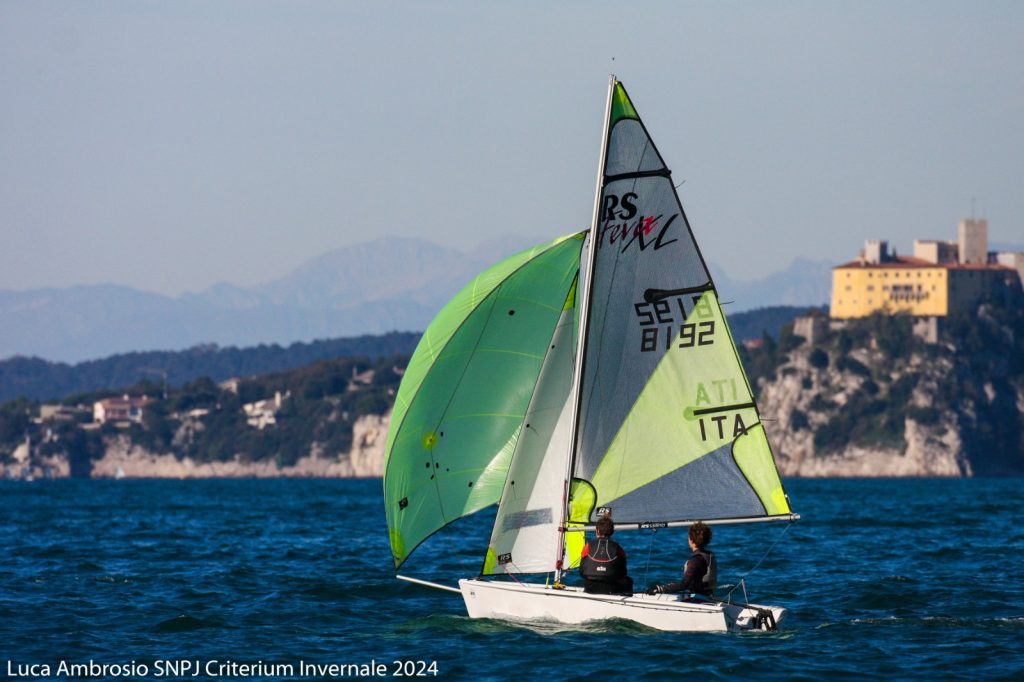
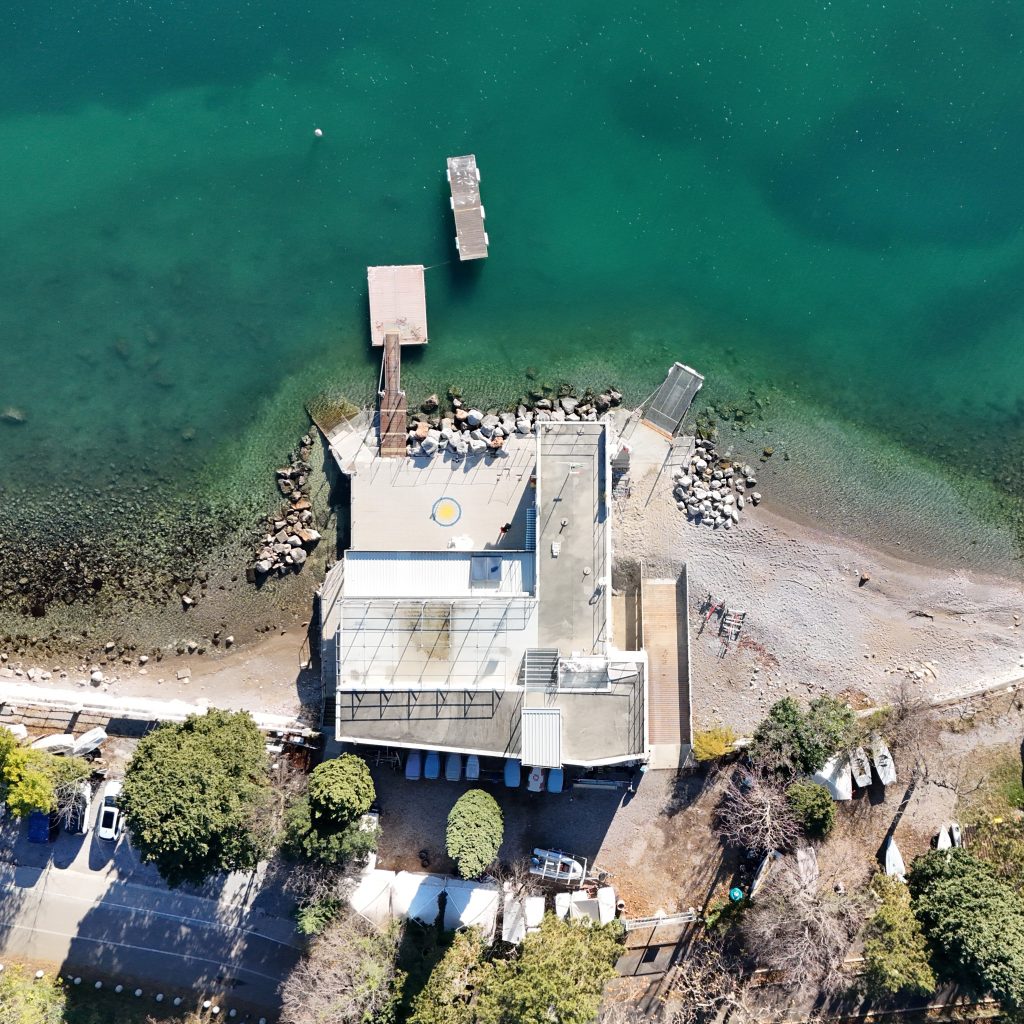
Today, Pietas Julia is based in the picturesque Bay of Sistiana, near Trieste, where hundreds of young sailors train each year. But its origins lie farther south, in Pula — then known by its Italian name, Pola — which was part of the Austro-Hungarian Empire in the late nineteenth century.
Originally devoted to rowing and swimming, the club soon embraced sailing, developing into one of the Adriatic’s most respected nautical societies. For the city’s Italian-speaking population, however, Pietas Julia represented more than athletic competition. It became a cultural meeting place and a symbol of community identity during an era of growing national tensions within the empire. That prominence came at a cost.
When World War I erupted in 1914, Austrian authorities viewed the organization with suspicion, believing it to be a center of Italian nationalist sentiment. The club was dissolved, its president, Oscar Rossi, along with several senior members, was interned, and its activities came to an abrupt halt.
The end of the war brought new opportunities. After Pula became part of Italy, Pietas Julia reopened and entered what many members still regard as its golden age. During the interwar years, the club dominated regattas throughout the Adriatic, fielding yachts with names such as Tartini, Mimi, Eros, Euro, Caprera, Argia and Elly. Their victories became so frequent that the Italian sailing journal La Vela once famously remarked that “the victories of Pietas Julia are endless.” But history intervened once again.
The aftermath of World War II transformed the northern Adriatic. As political control of Istria shifted, uncertainty spread through Pula’s Italian community. The devastating explosion at Vergarolla Beach in August 1946, which killed dozens during a sporting event, deepened fears and accelerated the Istrian exodus. Thousands of Italians left the city as it was ceded to Yugoslavia, carrying with them little more than personal belongings and memories. Among those departing were the members of Pietas Julia.
On Jan. 21, 1947, the club lowered its historic pennant in Pula for the final time. Yet before leaving, members managed to rescue documents, trophies, equipment and the club’s treasured green burgee bearing the initials “PJ.” Those artifacts would prove essential to ensuring the organization’s survival. Rather than disappear, Pietas Julia was reborn.
On June 13, 1948, former members officially re-established the club in Marina Nuova di Panzano, near Monfalcone. The circumstances were modest. Facilities were limited, membership had shrunk dramatically and financial resources were scarce. Still, preserving the club’s identity became a mission that united former residents scattered across northeastern Italy.
A turning point arrived in 1961, when Guido Bernetti became president. He oversaw the transfer of the club to the Bay of Sistiana, where Prince Raimondo della Torre e Tasso made a building available for its headquarters. Under Bernetti’s leadership, membership grew rapidly, increasing from fewer than 100 sailors to more than 230 within two years.
The club’s current headquarters opened in 1972 and remains its home today. By then, sailing had become its defining activity, although the traditions of rowing and swimming continued to be honored.
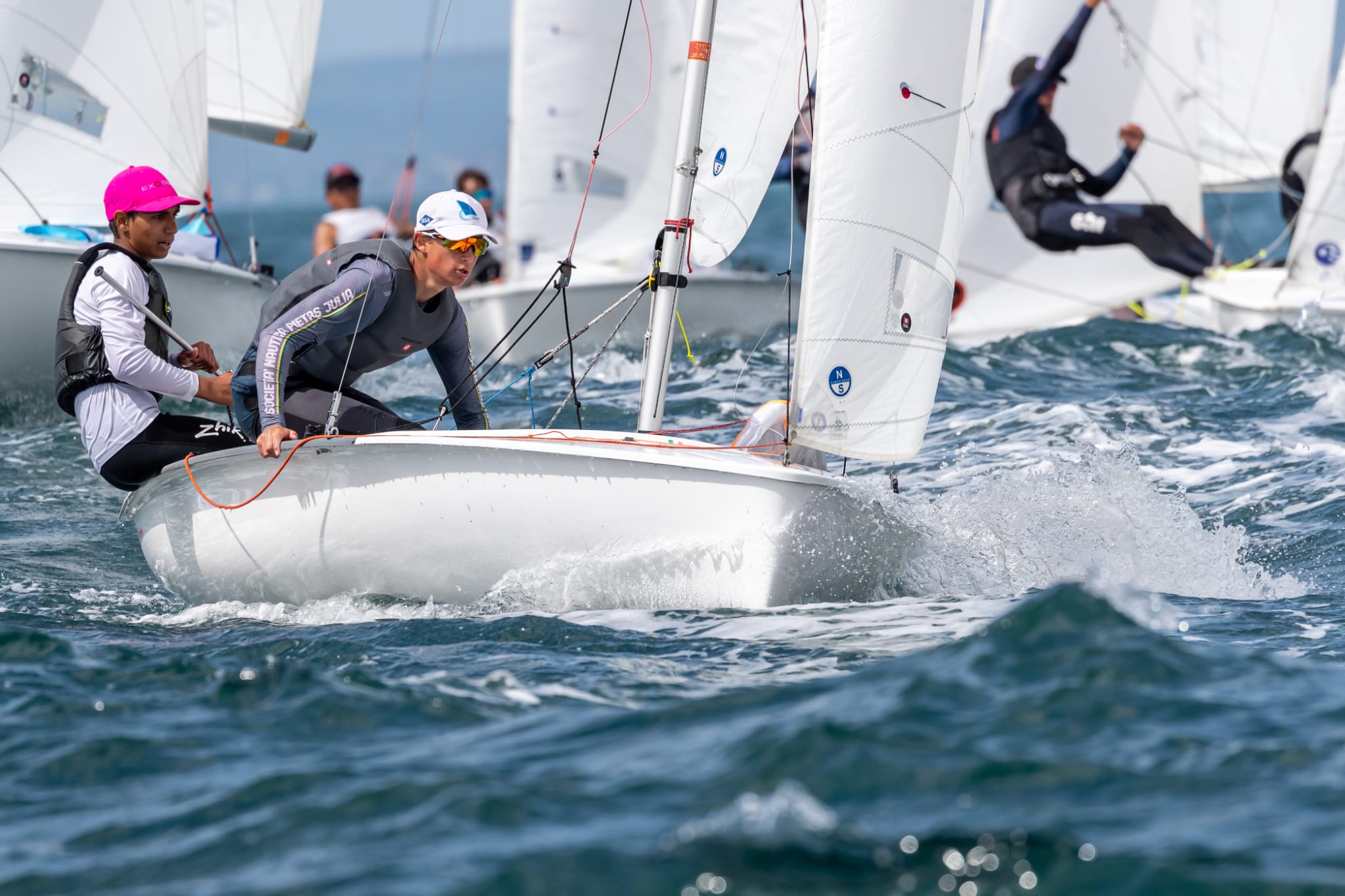
Over the following decades, Pietas Julia established itself as one of Italy’s leading centers for competitive sailing. Athletes representing the club collected national, European and world titles across multiple classes. Maurizio Planine won Italian and European Hobie Cat championships before steering a J24 crew to victories at the Italian, European and World Championships. Brothers Adriano and Giuliano Chiandussi captured Italian titles in the 420 class, while sisters Elisa and Chiara Boschin earned both Italian and world championships. Mattia Pressich added two Optimist world titles to the club’s growing collection of international achievements.
Among the club’s most celebrated alumni is Francesca Clapcich, one of Italy’s most accomplished professional sailors. A two-time Olympian, world champion and the first Italian to win The Ocean Race in 2023, Clapcich has competed at the highest levels of offshore and Olympic sailing and is preparing for the Vendée Globe, the grueling solo, nonstop race around the world scheduled for 2028.
Giovanna Micol, Olympian and winner of the first-ever Women’s America’s Cup with Luna Rossa Prada Pirelli (2024), represented Italy at the 2008 and 2012 Olympic Games and holds, for sure one of the most accomplished Italian sailors of all time, today Sport Director of the Pietas Julia.
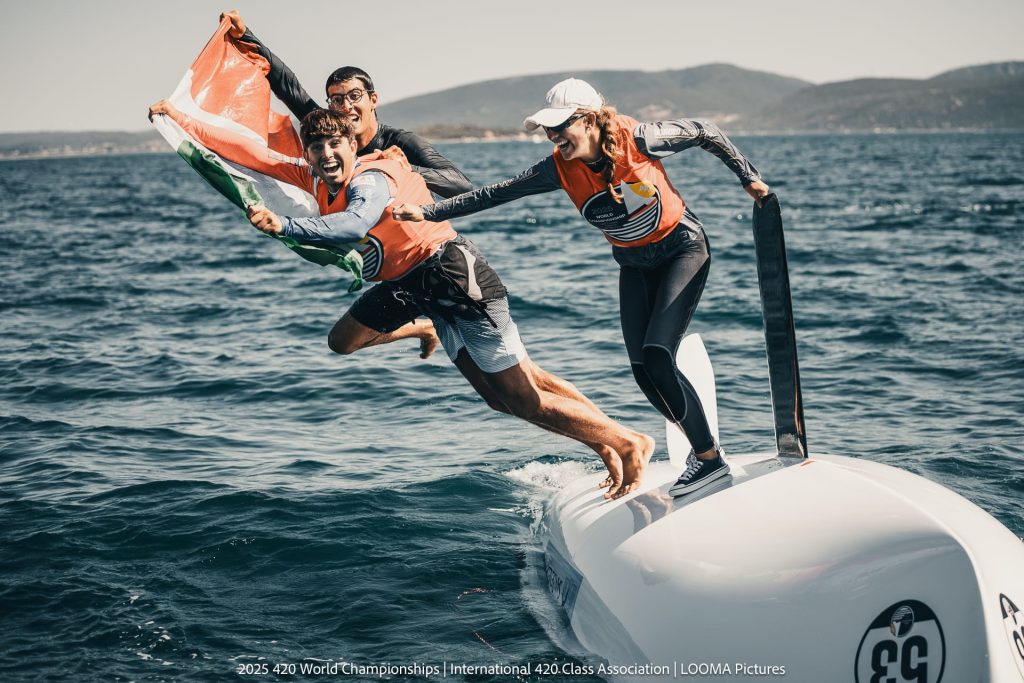
The next generation continues to build on that legacy. Last year, Anastasia Mutti and Lorenzo Centuori claimed both the Italian and World Championships in the mixed 420 class. Earlier this year, Optimist sailor Giulio Calligaris won the AICO Young Cup, finishing first among the country’s best sailors born in 2016.
The club’s achievements have been recognized by Italy’s National Olympic Committee, which awarded Pietas Julia the Gold Star for Sporting Merit in 1989 and the Gold Collar for Sporting Merit in 2006, the highest distinction granted to Italian sporting institutions. Yet competition tells only part of the story.
The club has become equally known for its commitment to youth development. Its sailing school is considered among the finest in the northern Adriatic, introducing hundreds of children to the sport every summer. Coaches emphasize teamwork, environmental awareness and respect for the sea alongside technical instruction.
In recent years, Pietas Julia has expanded that mission through Vento Inclusivo, an innovative initiative that enables children with autism spectrum disorders to learn sailing alongside their peers. Founded by longtime instructor Sara Iugovaz, herself a former student of the club, the program combines specialized educational support with traditional sailing instruction, encouraging inclusion while challenging stereotypes about disability in sport.
The club has also invested in preserving its own past. Through the Fondazione Pietas Julia, volunteers continue to collect photographs, archival documents, trophies and personal testimonies, ensuring that the story of a community shaped by displacement and renewal remains accessible to future generations.
The 140th anniversary celebrations will reflect every chapter of that history. A commemorative regatta from Pula to Sistiana on Aug. 14 will symbolically reconnect the club’s birthplace with its modern home. A rowing event will follow in September, honoring the discipline on which the organization was founded, while the Cliffs Swim through the protected waters of the Duino Cliffs Nature Reserve will precede the 55th Trofeo Bernetti regatta in early October, concluding the anniversary season.
For Pietas Julia, the celebrations are about more than remembering victories. They commemorate an institution that has outlived empires, survived exile and remained anchored by the same ideals that inspired its founders nearly a century and a half ago.
Across generations of sailors, one symbol has endured: the green burgee with its anchor and the initials “PJ,” still flying over the Adriatic as a reminder that while borders may change, traditions carried by people can continue to navigate history.