
























by InTrieste
The gentle rocking of an infant has long been associated with comfort and calm. But new research suggests that rhythmic movement may have broader effects on emotional states, extending beyond mammals and even beyond soothing.
A study published in the journal Annals of the New York Academy of Sciences has found that passive rhythmic motion, including rocking and transport-like movements, can influence the emotional responses of domestic chicks, producing not only calming effects but also signs associated with positive experiences.
The research was conducted by Cinzia Chiandetti, Andrea Dissegna and Paolo Gallina of the University of Trieste, together with Lorenzo Scalera of the University of Udine. Their findings offer new insight into how animals respond to rhythm and movement, and suggest that these responses may be deeply rooted in vertebrate evolution.
In mammals, slow passive movement is a familiar component of parental care. Previous studies have shown that carrying or rocking infants can reduce crying, lower heart rate and promote sleep. Anecdotal observations in humans have also suggested that faster rhythmic activities — from playful tossing in the air to swinging on a playground swing or riding a roller coaster — can elicit excitement and pleasure.
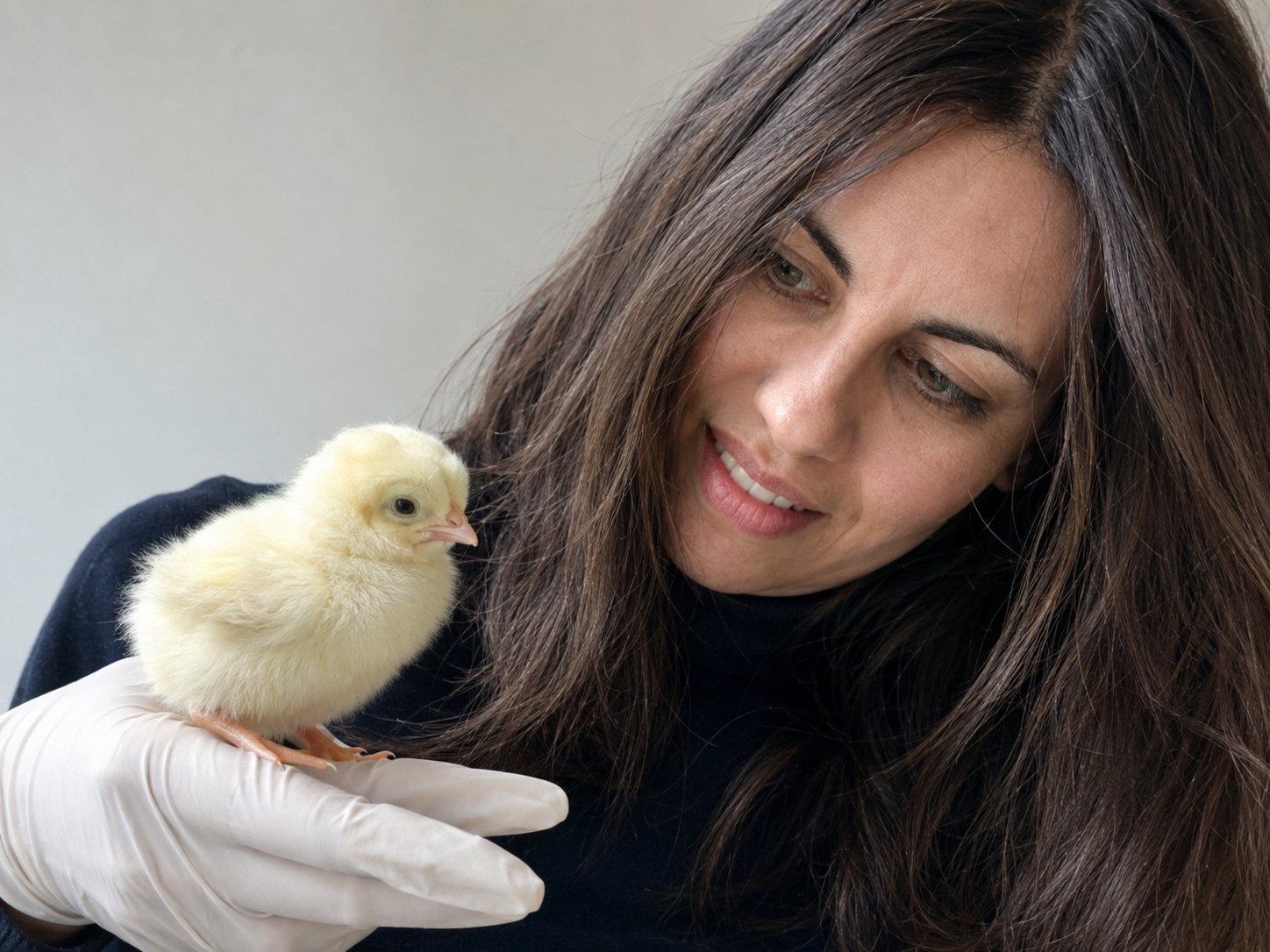
To investigate whether similar effects occur outside the mammalian lineage, the researchers turned to domestic chicks. The choice was unusual. Unlike mammalian young, chicks are able to walk shortly after hatching and are not carried by their mothers.
In the experiment, individual chicks were placed inside an opaque box attached to a precision robotic arm programmed to reproduce different forms of rhythmic movement. The device generated rocking and transport-like motions at varying speeds and directions, including both slow and rapid movements along horizontal and vertical axes.
The researchers monitored the chicks’ emotional states through their vocalizations, a noninvasive method commonly used to assess avian behavior.
The results showed that slow rocking and slow transport-like movements reduced the number of so-called contact calls, vocalizations typically associated with distress, isolation or separation. The finding mirrors the calming effects of maternal carrying previously documented in mammals.
More striking, however, was evidence suggesting that certain forms of rhythmic movement may also generate positive emotional responses.
When exposed to rapid horizontal rocking or faster transport-like motion, the chicks produced significantly more affiliative vocalizations known as brood calls. These calls are generally emitted in safe and socially favorable contexts and are considered indicators of a positive affective state.
Taken together, the findings suggest that the soothing effects of rocking and transport may be part of a broader biological sensitivity to rhythm and movement.
“Our results expand the functional scope of rhythmic stimulation,” the authors wrote, “indicating that it can regulate affective states by producing both calming effects and pleasurable experiences across different vertebrate lineages.”
Because chicks do not experience maternal transport in their natural development, the researchers argue that their responsiveness to rhythmic motion is unlikely to be the result of learned associations with parental care. Instead, it may reflect an evolutionarily conserved mechanism shared across a wide range of vertebrate species.
The study adds to a growing body of research exploring how sensory experiences shape emotional states in animals and raises new questions about the evolutionary origins of behaviors that humans often take for granted — from rocking a baby to seeking out the thrill of motion itself.