
























by InTrieste
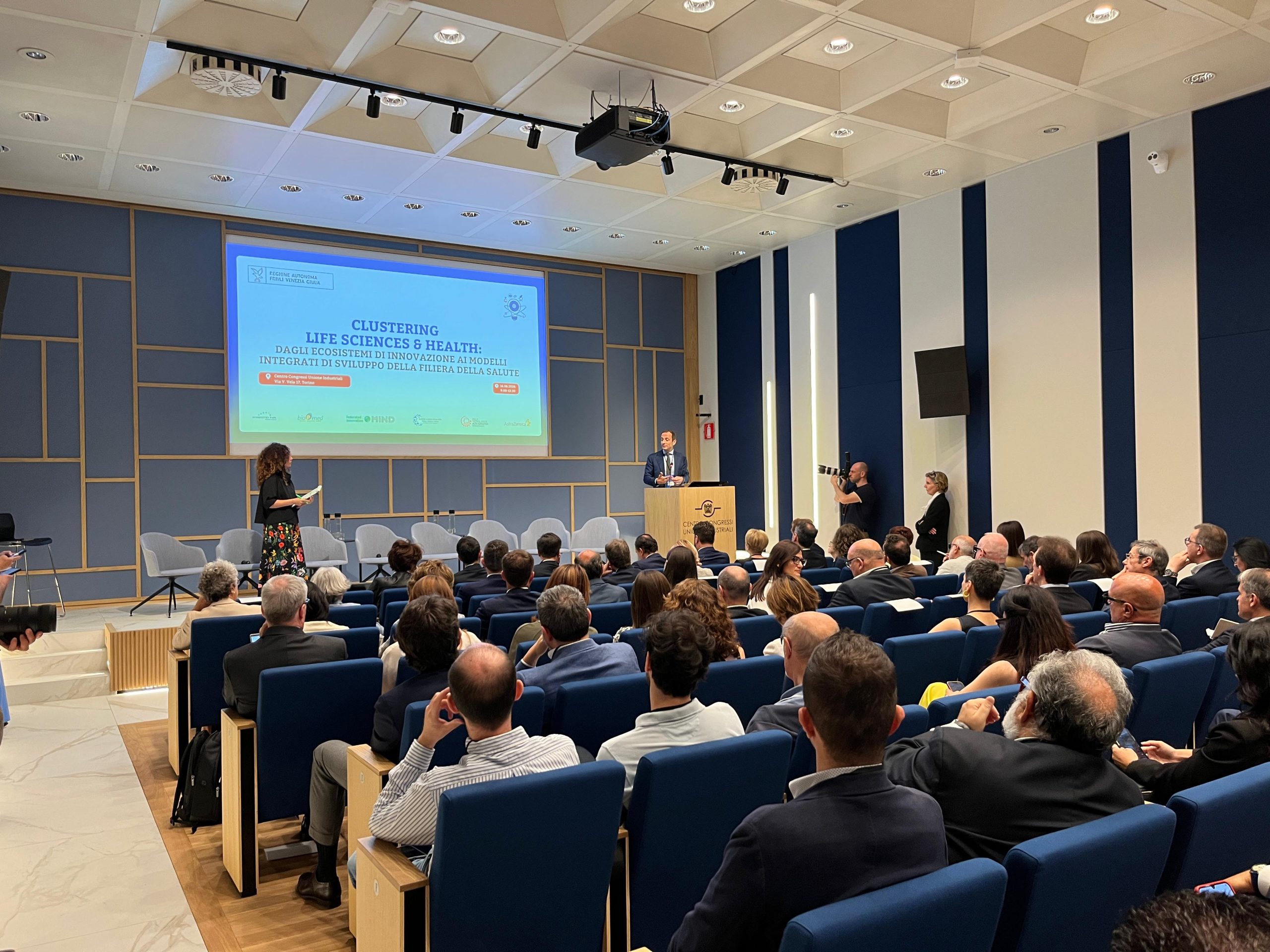
Regional leaders, researchers and industry representatives gathered in Turin on Tuesday to discuss the future of health care innovation and the life sciences sector, with a focus on how emerging technologies can improve patient care and strengthen regional health systems.
Speaking at the conference “Clustering Life Sciences & Health: From Innovation Ecosystems to Integrated Models for Developing the Health Care Supply Chain,” Massimiliano Fedriga, president of the Friuli Venezia Giulia region, said that advances such as telemedicine and artificial intelligence have the potential to improve care for chronic patients and expand access to services, particularly in remote areas.
However, he argued that technology alone is not enough. Health care institutions, he said, must adapt their organizational structures and working methods to fully benefit from digital innovation.
The event, held at the Turin Industrial Union’s conference center, brought together representatives from regional governments, universities, research centers, companies and investors. Among those attending were Alberto Cirio, president of the Piedmont region, Alessia Rosolen, Friuli Venezia Giulia’s regional councilor for research, and Federico Riboldi, Piedmont’s regional councilor for health.
Fedriga also called for a balanced approach to regulating artificial intelligence in Europe, saying that safeguards are necessary but should not hinder innovation or weaken the continent’s competitiveness. He emphasized the importance of collaboration between public institutions and private industry, arguing that stronger partnerships are needed to support research, startup development and long-term growth in the health sector.
The conference was organized by the Friuli Venezia Giulia region and several life sciences organizations and industry partners, including AstraZeneca Italia.